
SCAD Bee Line Bus Service Overhaul
During fall quarter, over 6,000 students move on campus in three days. This influx of new riders, international and new-to-the-area students, creates an opportunity to help students understand and utilize this service for a successful academic career at SCAD.
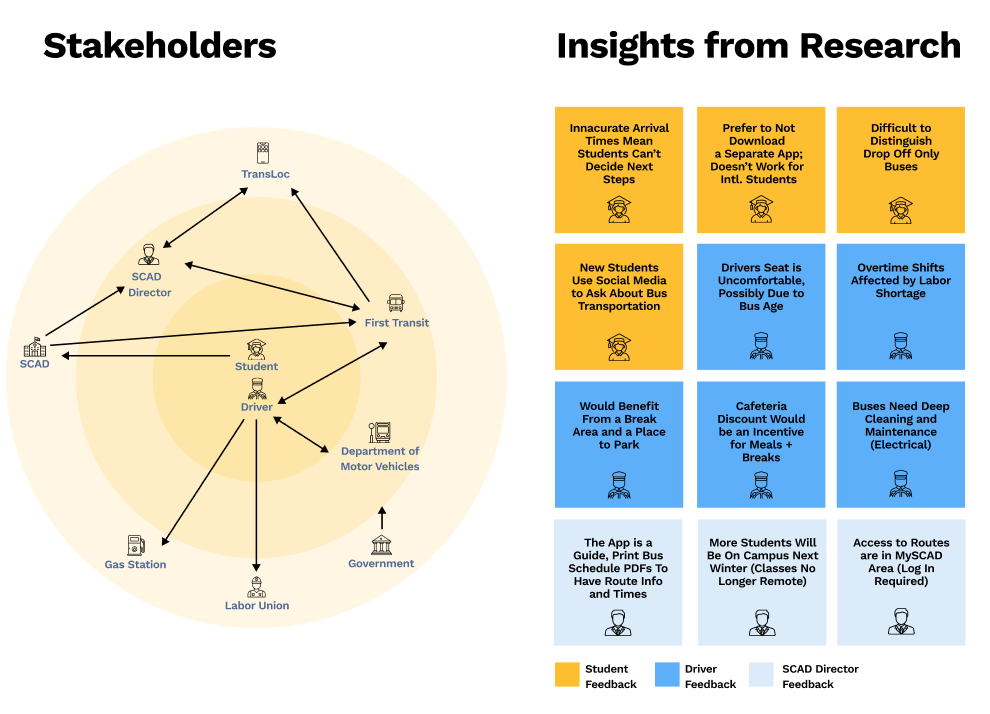
In the first phase of the project, we surveyed and interviewed students to learn more about their experience using the SCAD Bus service. Their struggles with inconsistent timelines, lack of signage in some stops and other issues. We interviewed also Bus Drivers to understand how was a typical work day for them, learning about their problems backstage and more. Finally we got the chance to interview the SCAD Director of Security and Transportation.
We were able to build a Stakeholder map with the information gathered, to have a broad systemic view of the service and how value is co-created.
The insights gathered from those statements gave us the idea of where some problems originated and also allowed us to detect some miscommunication issues in the bus timelines.
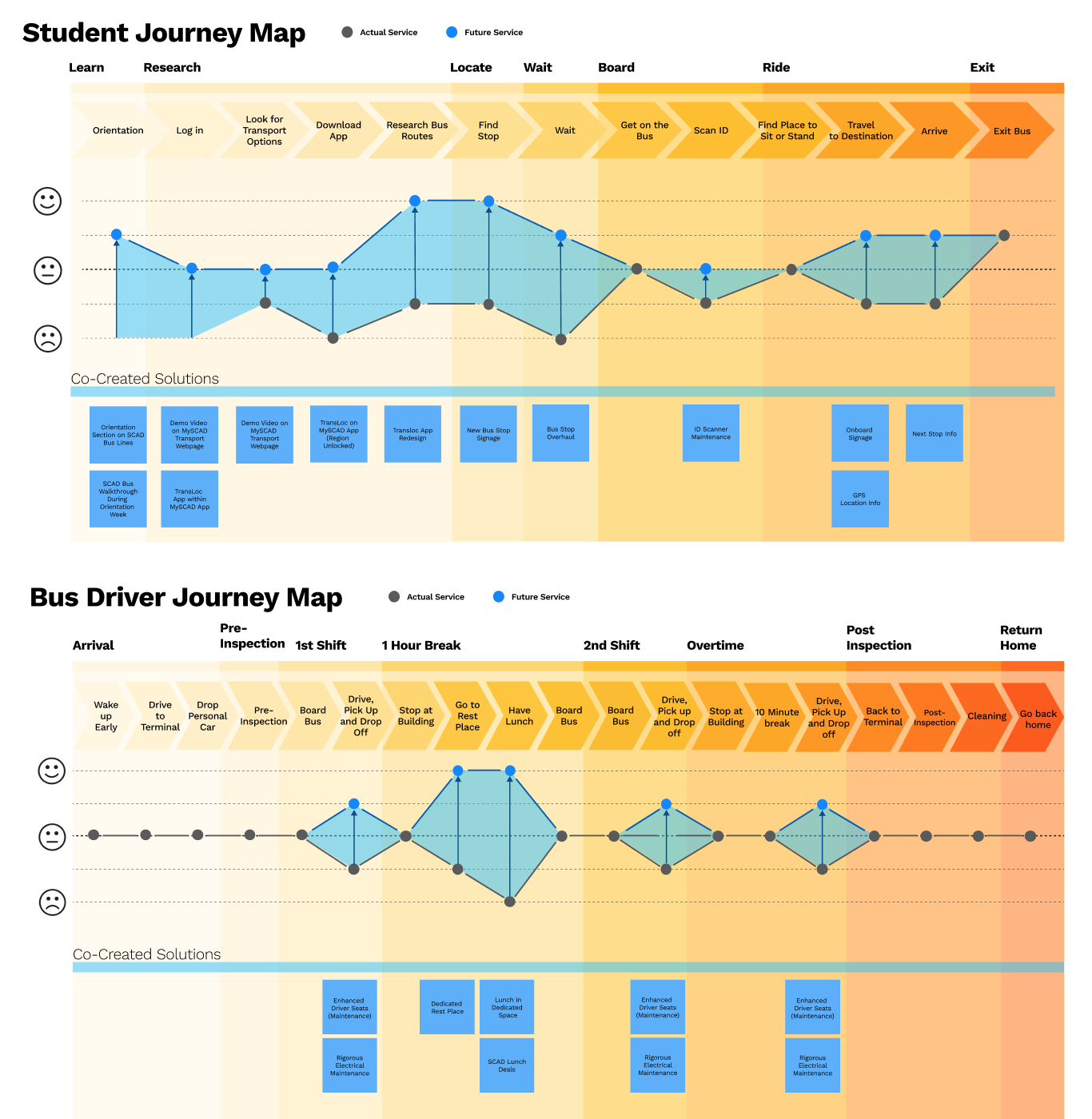
With the gathered data, Journey Maps were created for both Students and Drivers to visualize each step of their experience, with their overall satisfaction level during each step. For the students, most of the cases involved misinformation or other problems before actually boarding the bus: Confusing or misleading information could not let them plan properly their journey to their classes. On the other hand, due to their lack of familiarity with the city they did not know how far they were from their destination. In the case of the Drivers, they lacked a proper rest area or place to lunch, given that they work for long shifts due to both employee shortage and personal economic reasons.
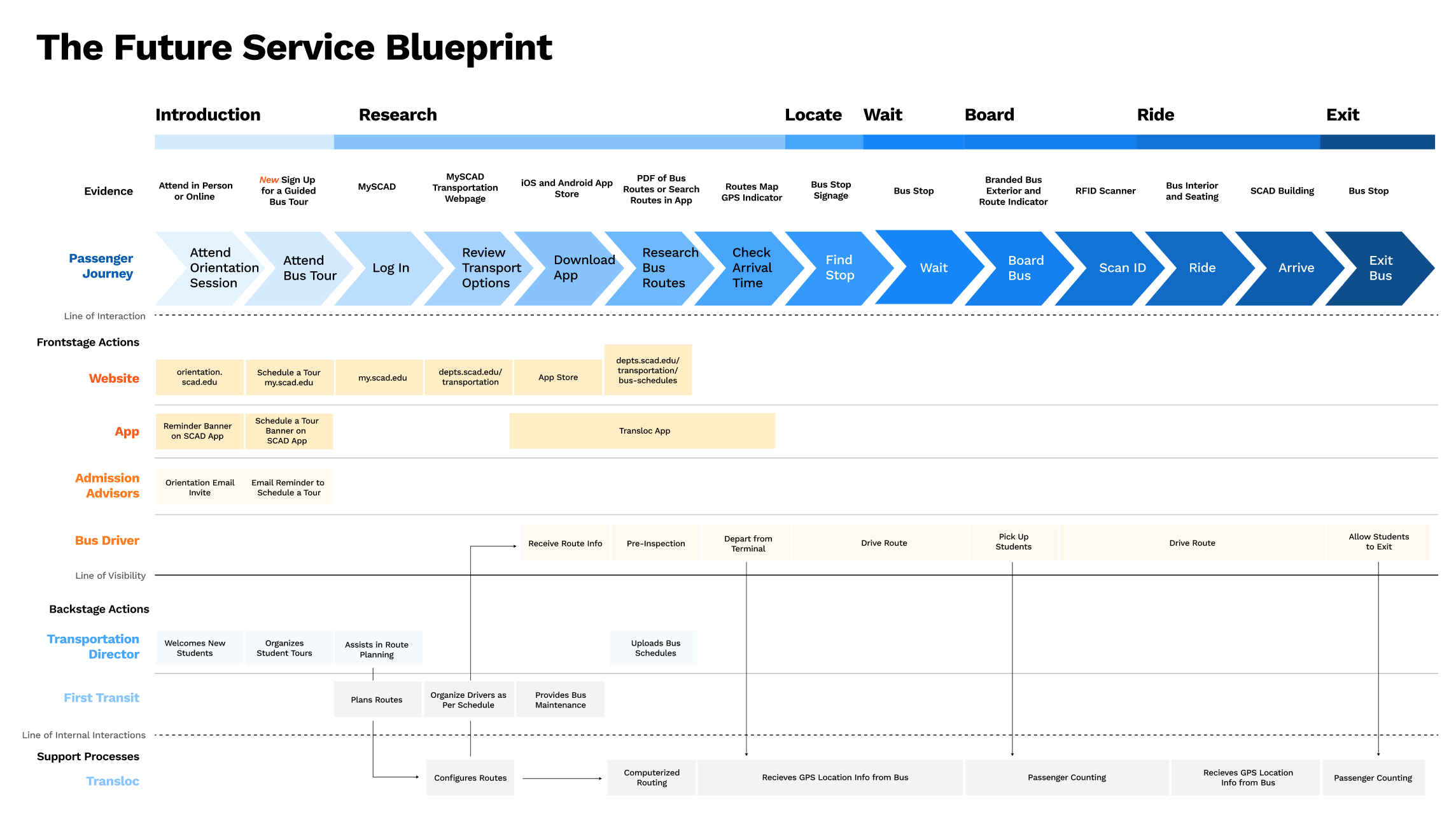
We developed some co-creation sessions of potential solutions to the problems stated above. Based on that input, we categorized and selected some ideas based on their high impact and low effort to implement. We proceeded to build the new service blueprint to visualize and communicate how the proposed solutions will fit the service; The front stage and backstage actions, and the physical evidence that support the new service.
The main solution to be implemented were prototyped to visualize how the new part of the service would look like, to collect feedback from stakeholders and iterate on the proposals.
Prototypes
Online Experience - Student Orientation and Website Experience
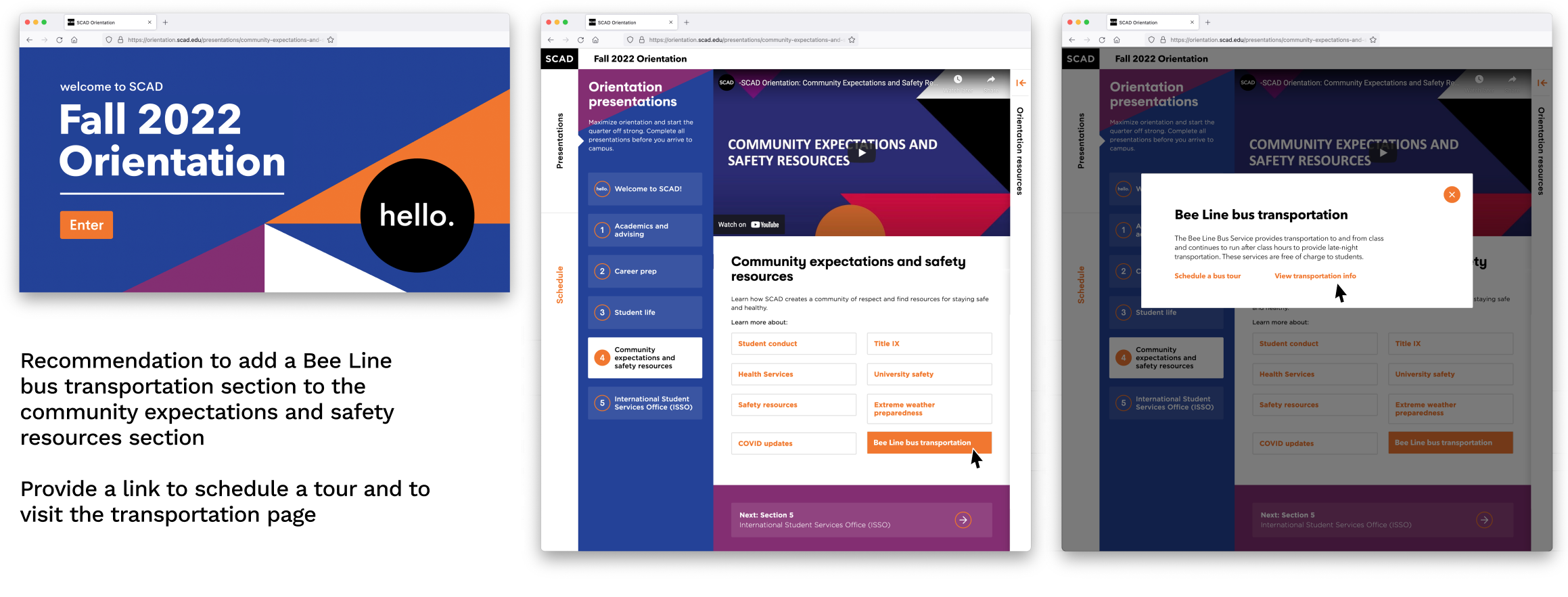
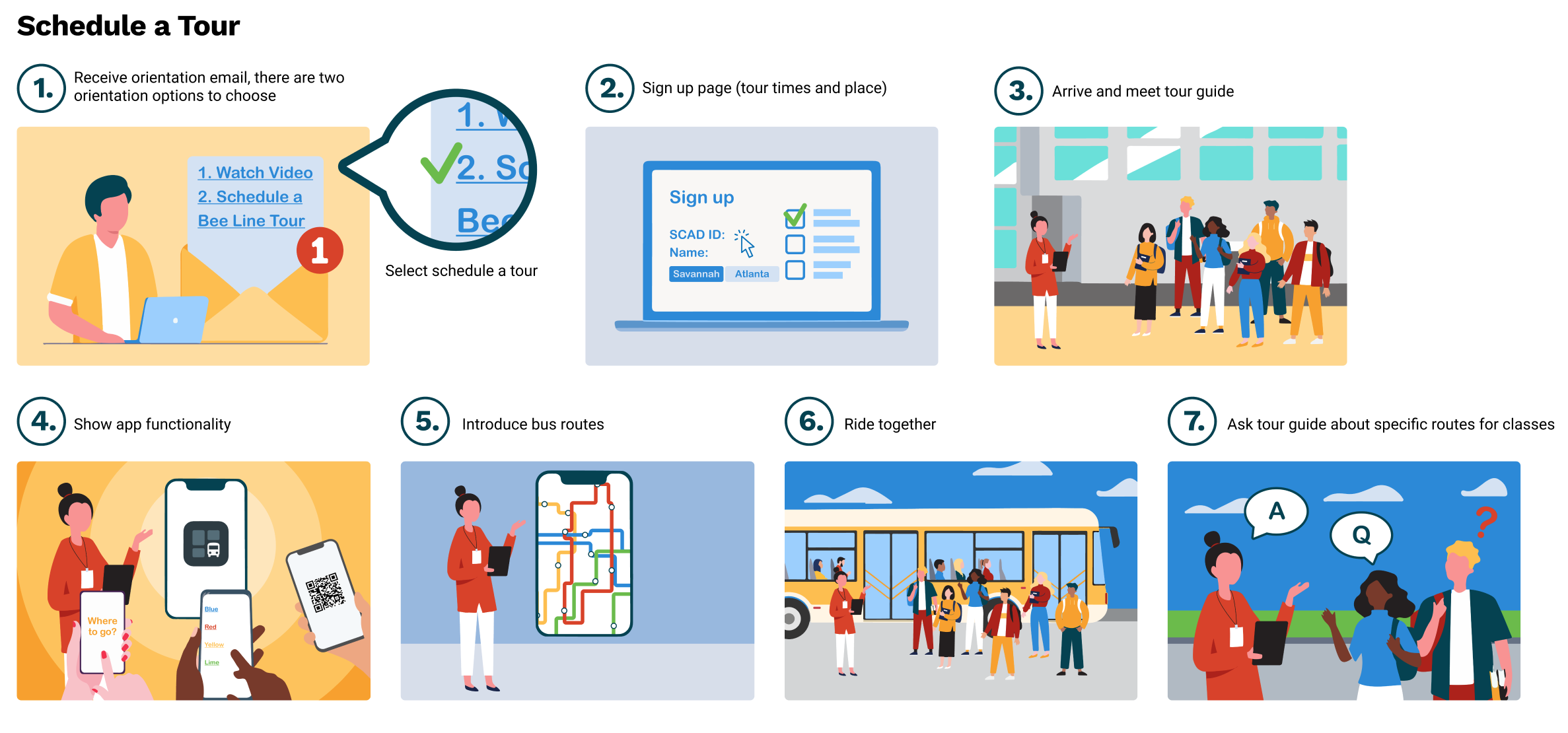
Process storyboarding to communicate how the students may be informed and have an immersive experience before starting classes.
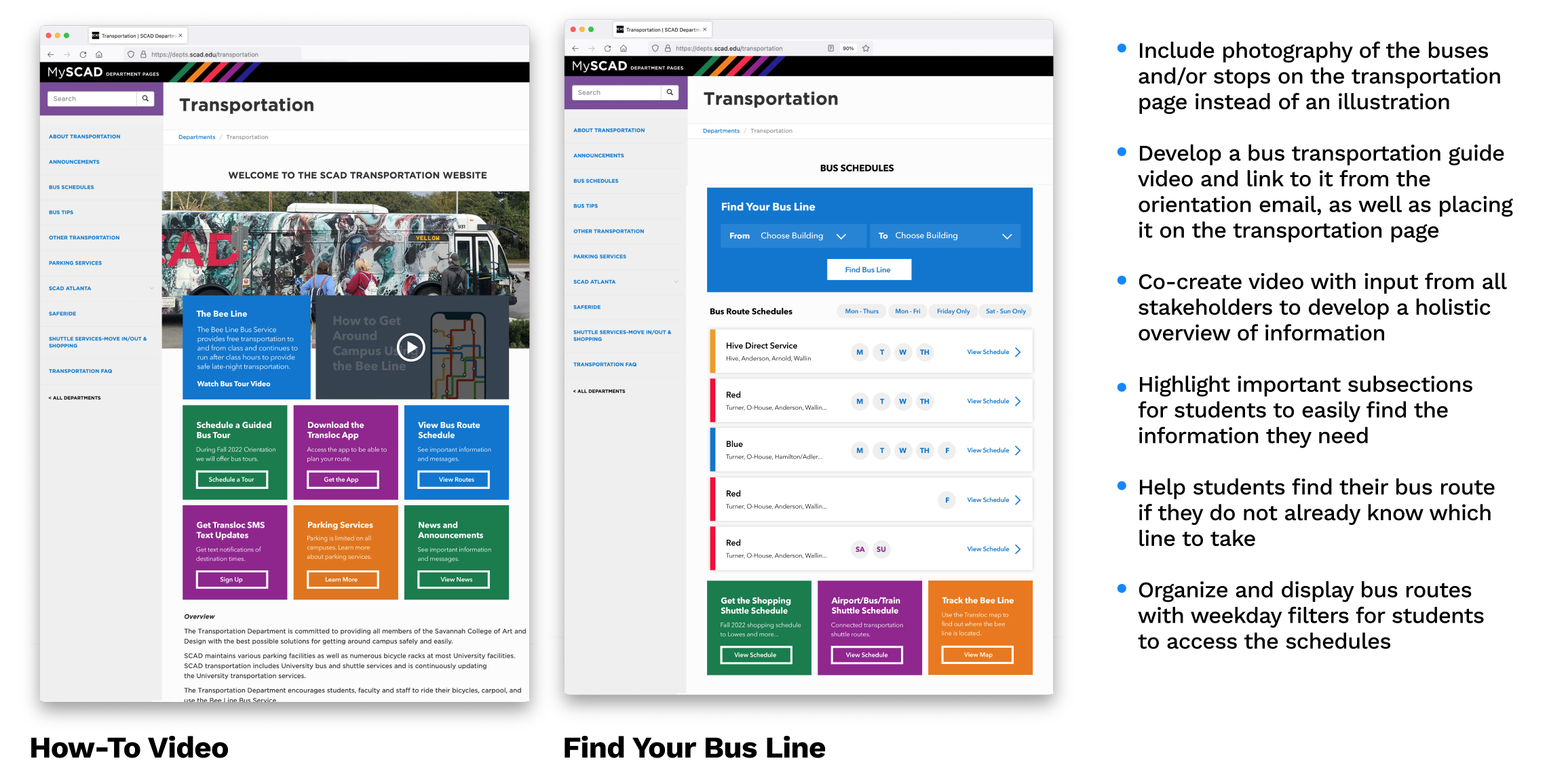
Website redesign to include multimedia orientation to students, and embedded information to replace present spreadsheet-based timelines that students fin hard to understad.
Physical Environment
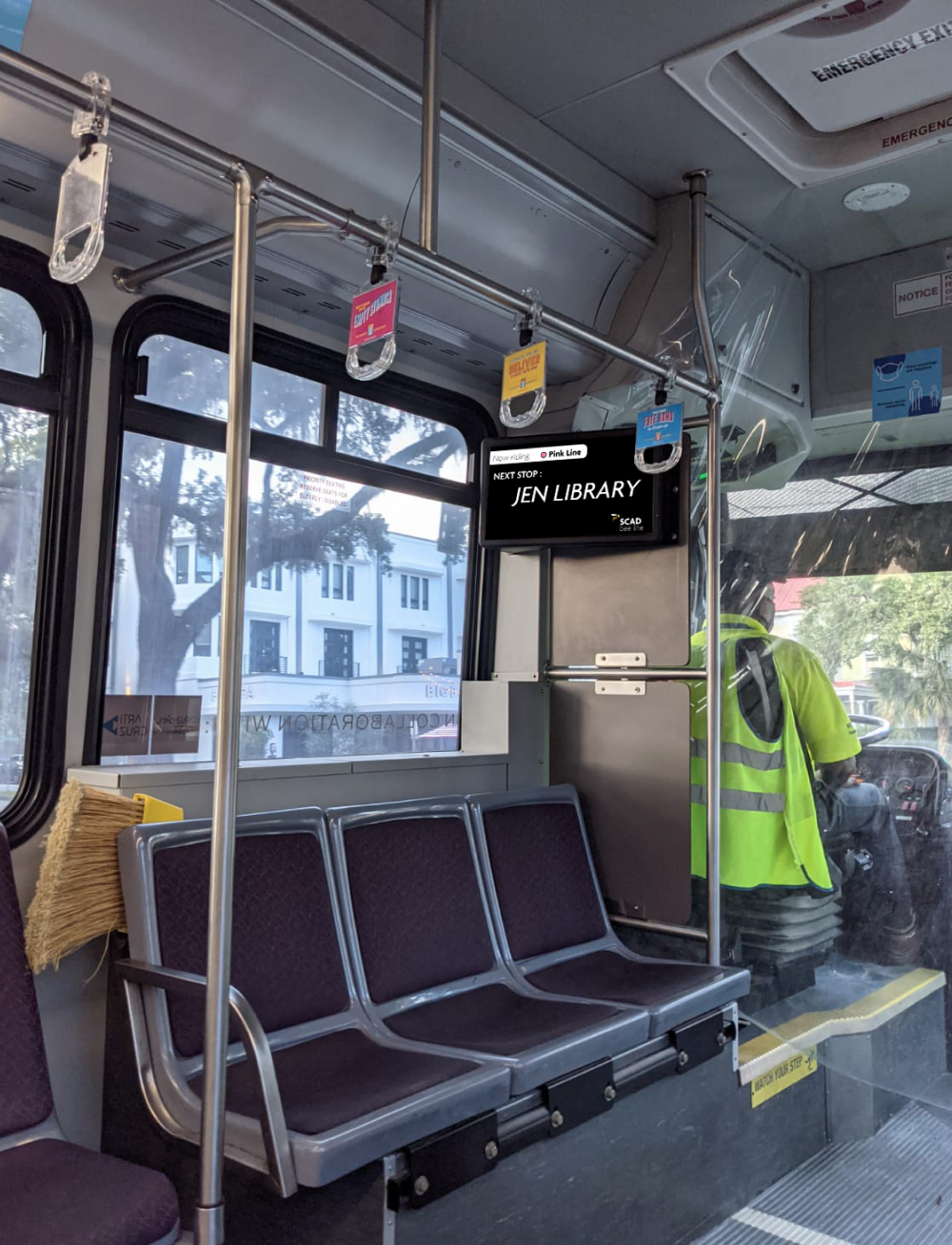
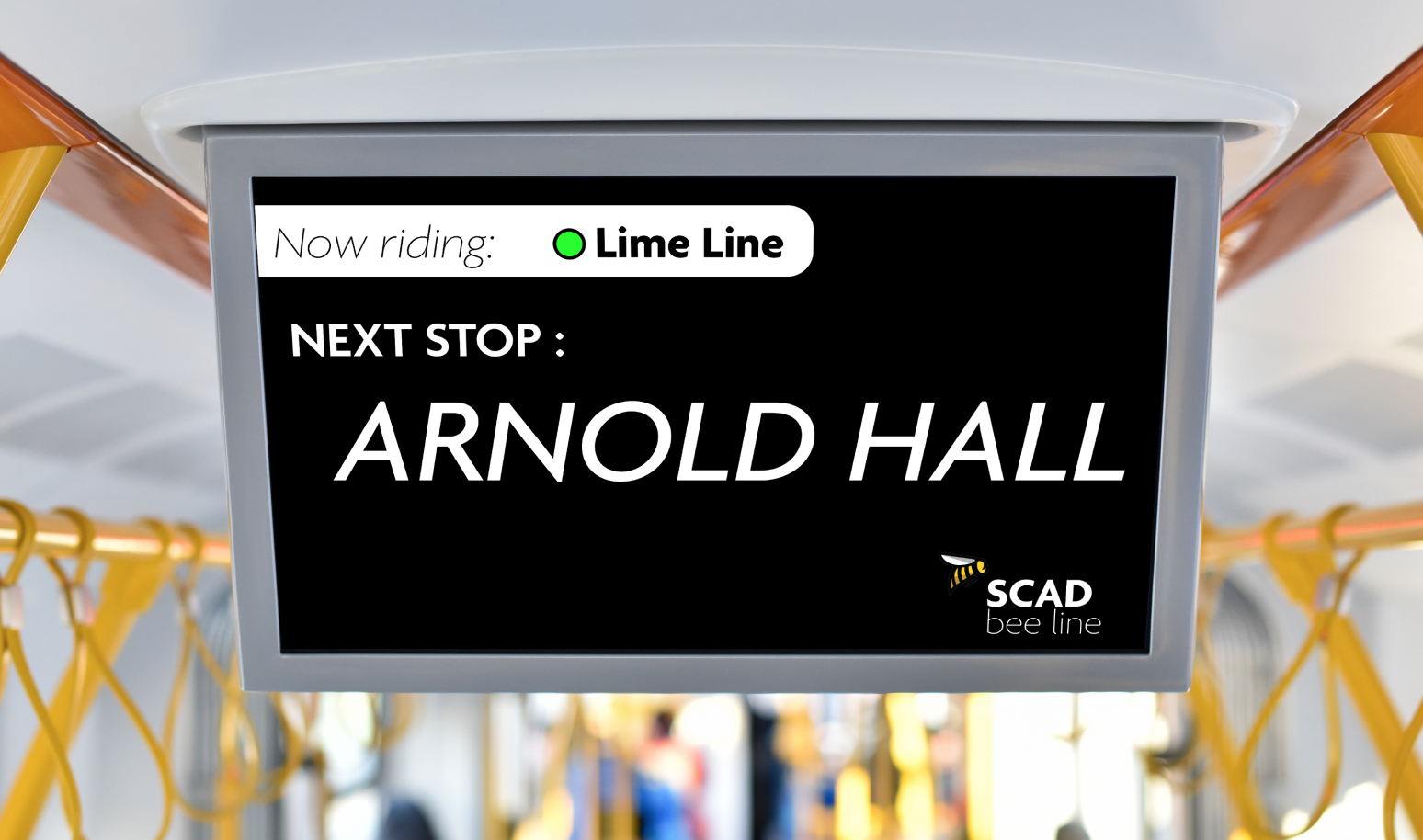
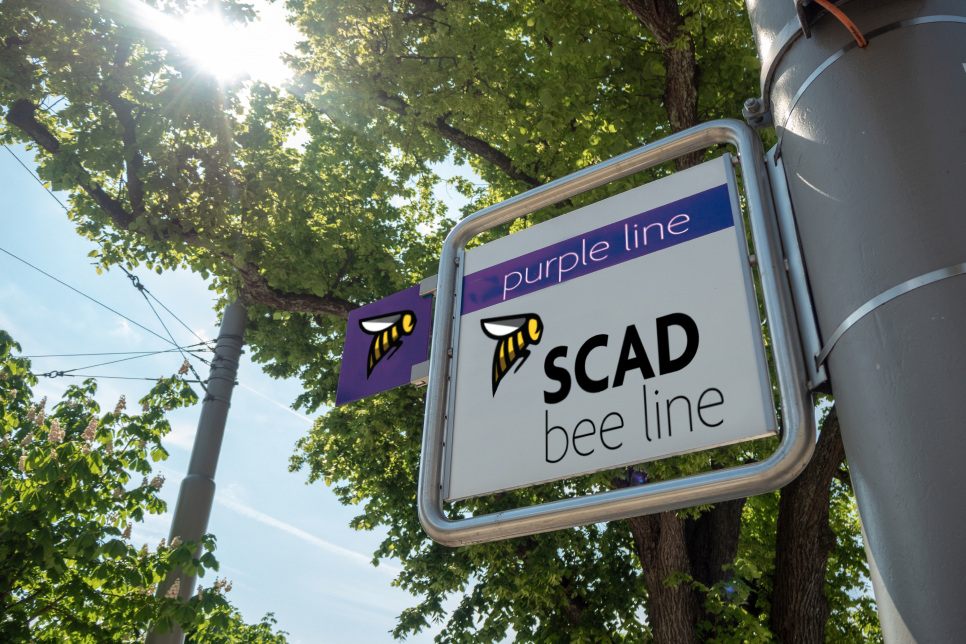
Transloc App Redesign Proposal
-
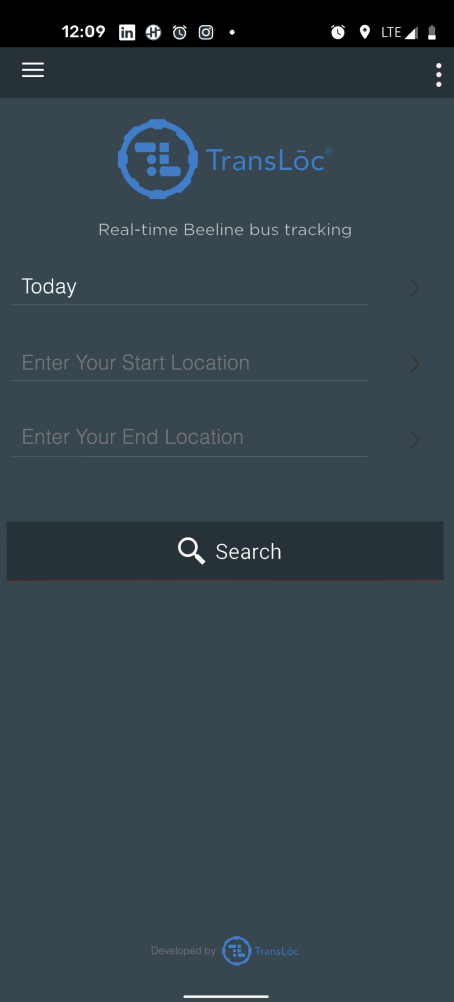
1.
Open the Transloc App and enter your start & end location then hit Search
-
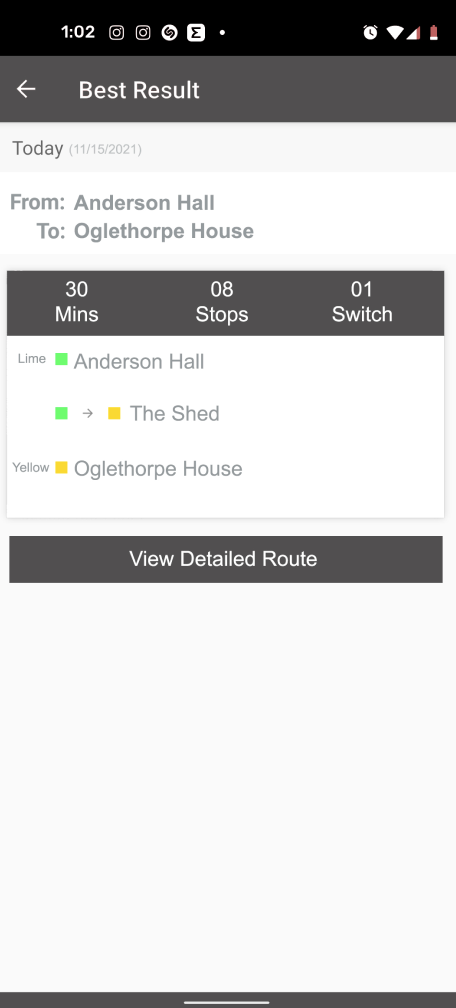
2.
You will be shown the best routes available for your destination
-
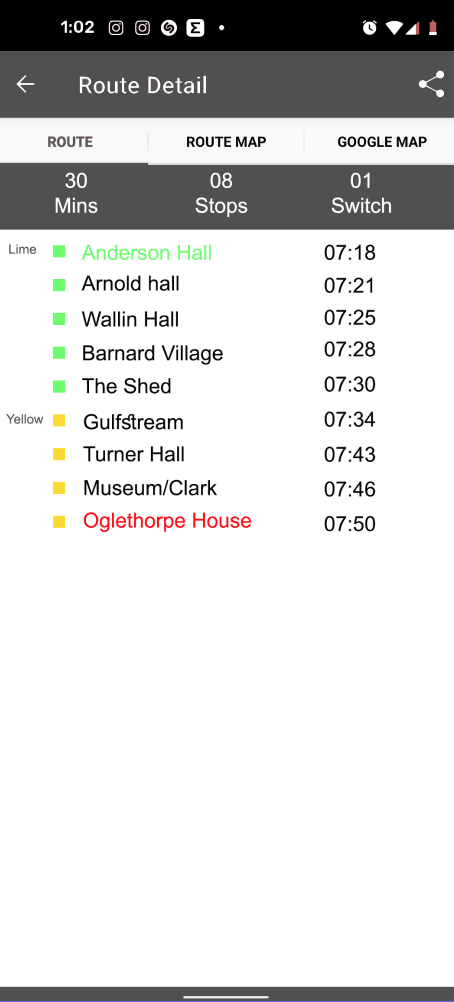
3.
You will be able to see detailed Route information once you hit the route option