
Savannah Clovers: Designing for the Fans’ Experience
Overview
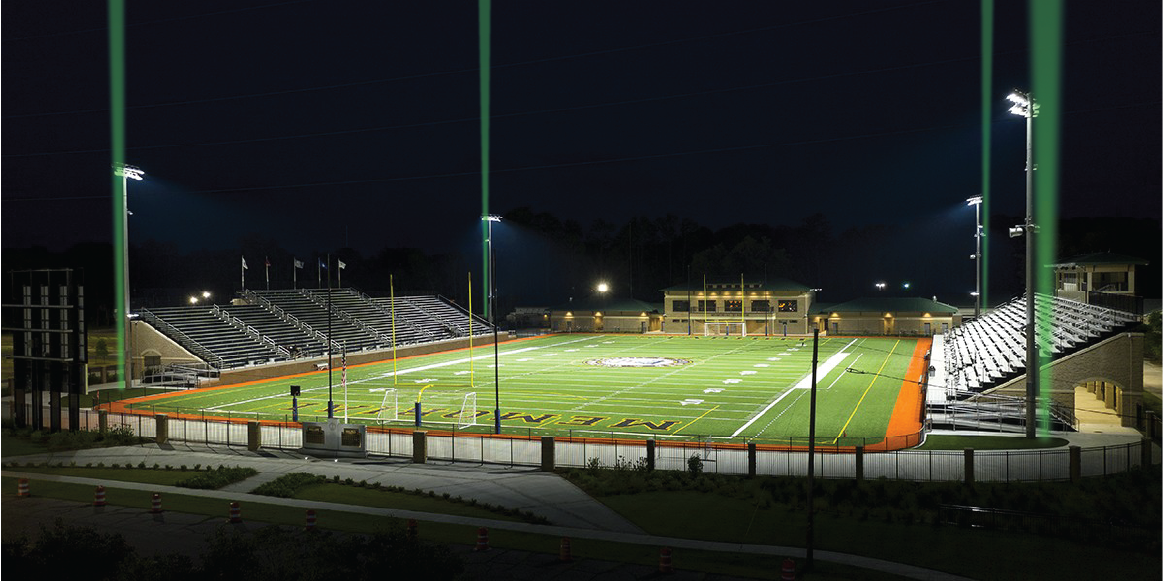
This project explores how Service Design tools and contextual research methodology can impact the offerings of a Soccer Club to their fans by uncovering how their ideal experience might look and feel. Savannah Clovers Football Club is a soccer institution, that would play their first ever professional match in April 2023. As they have had not played an official match for more than a year, this project does not include analysis of a “current state” to improve, but to anticipate the fans’ needs and preferences. They will play at Memorial Stadium, a multi-purpose, county-owned stadium.
After research was conducted, fan/user archetypes were identified, and through multi-user journey mapping the different ideal experiences were plotted and devices and systems were ideated to support their preferences, and avoid friction in certain key moments of the experience.

Secondary Research
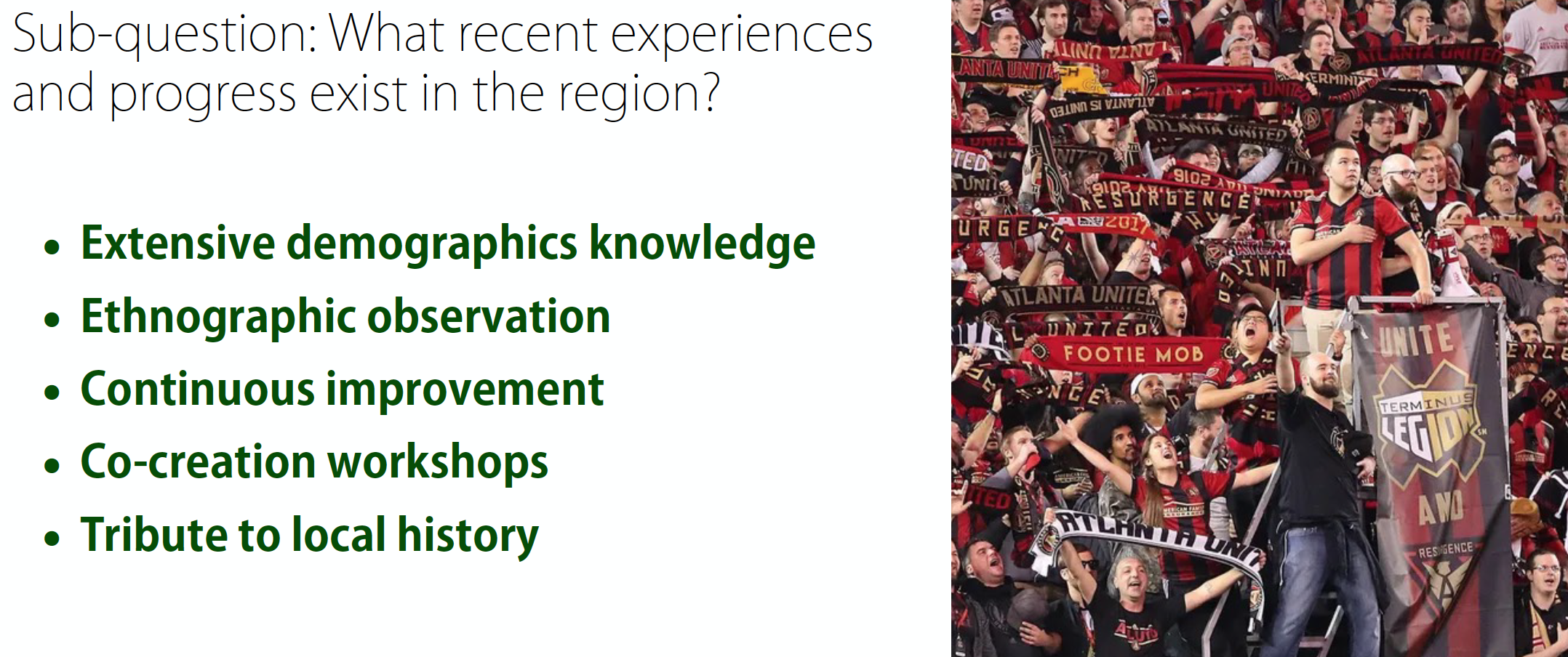
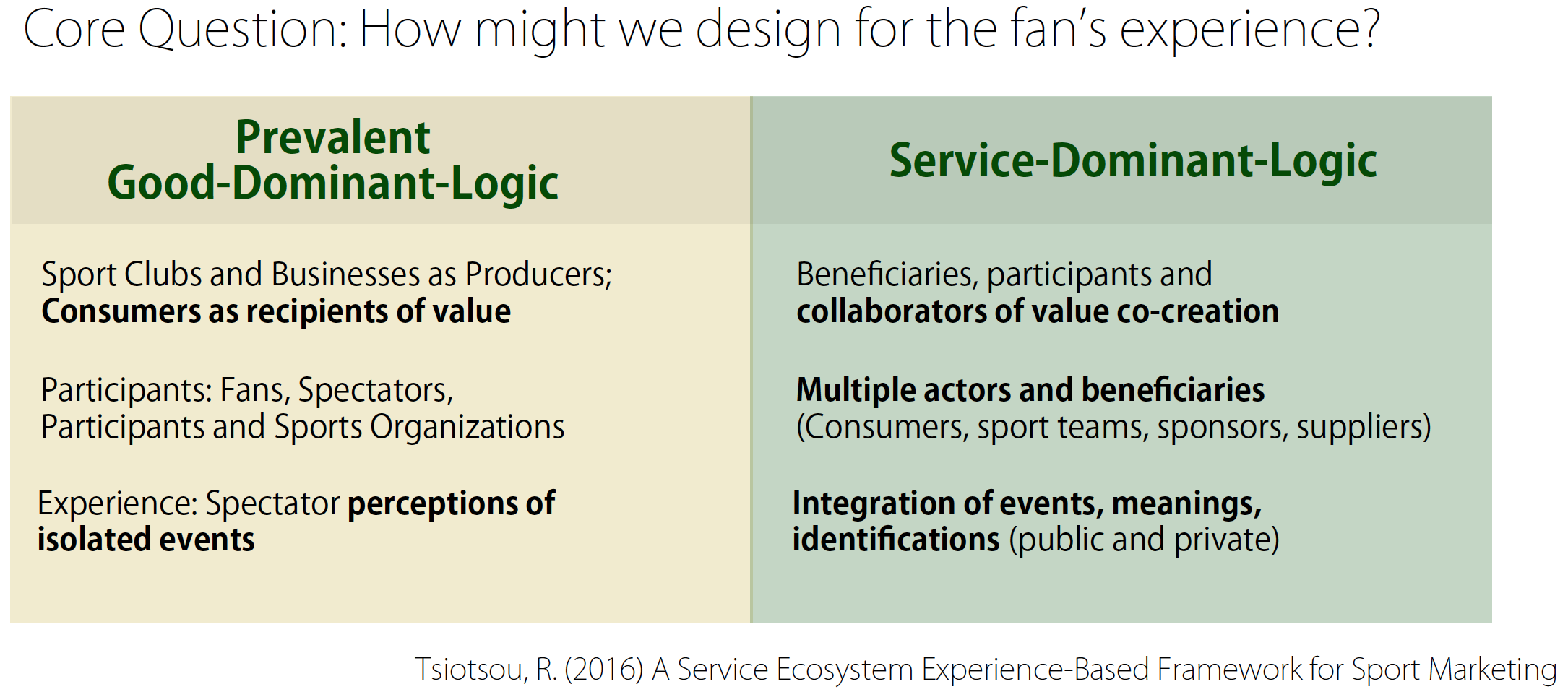
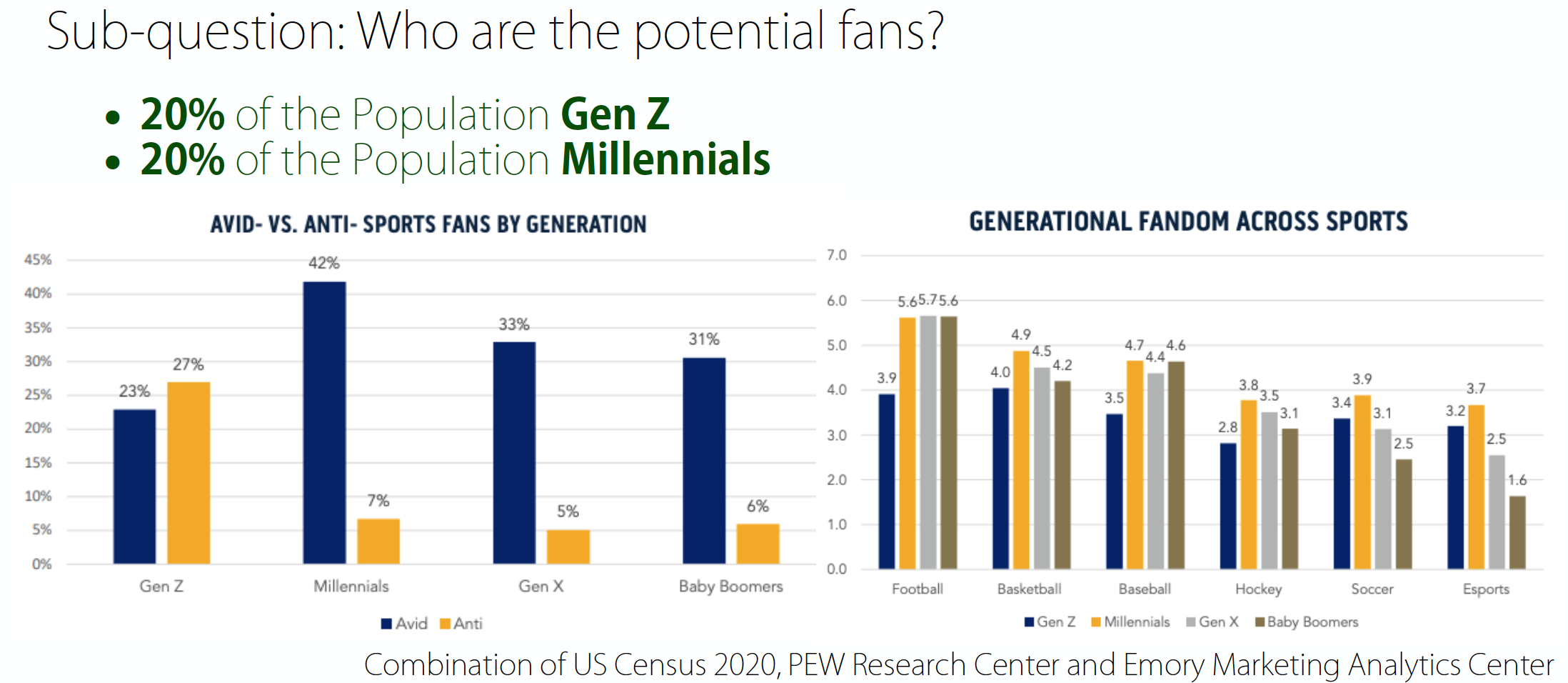
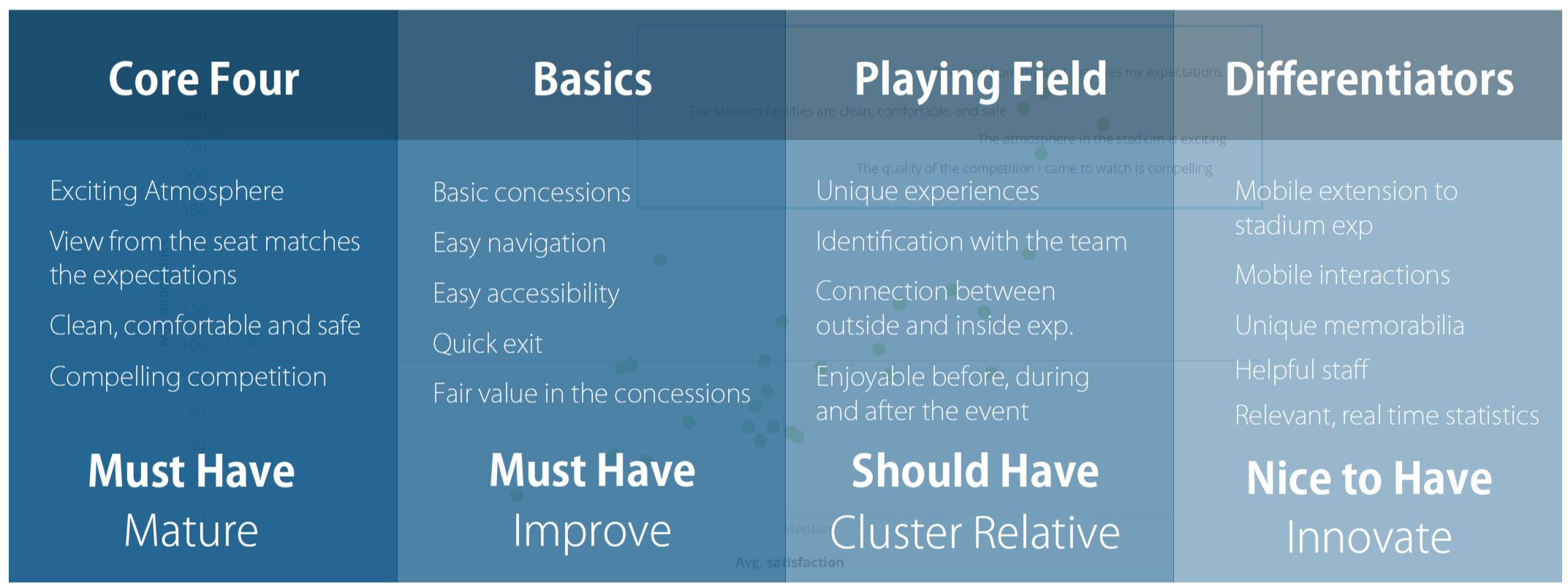
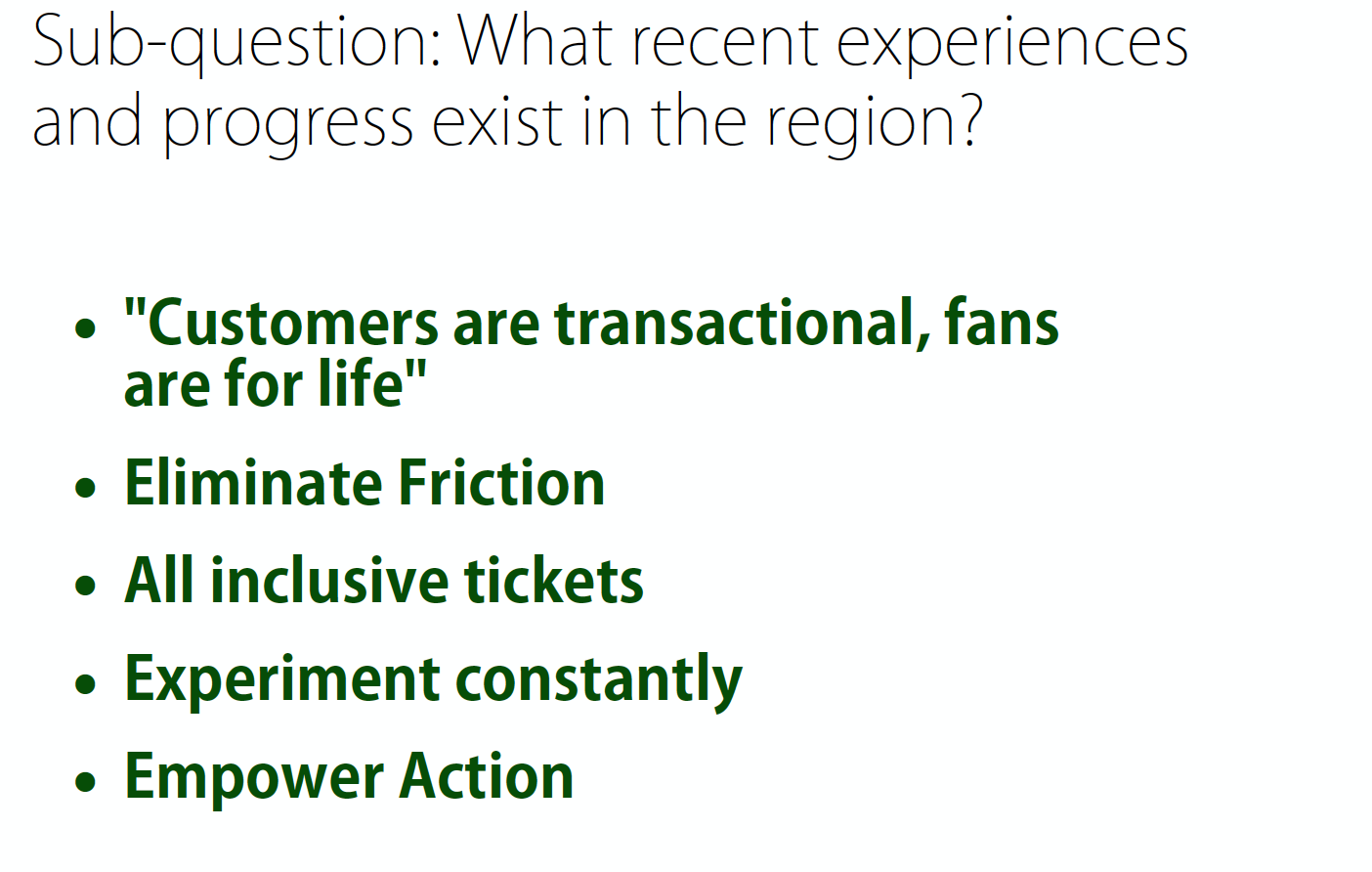
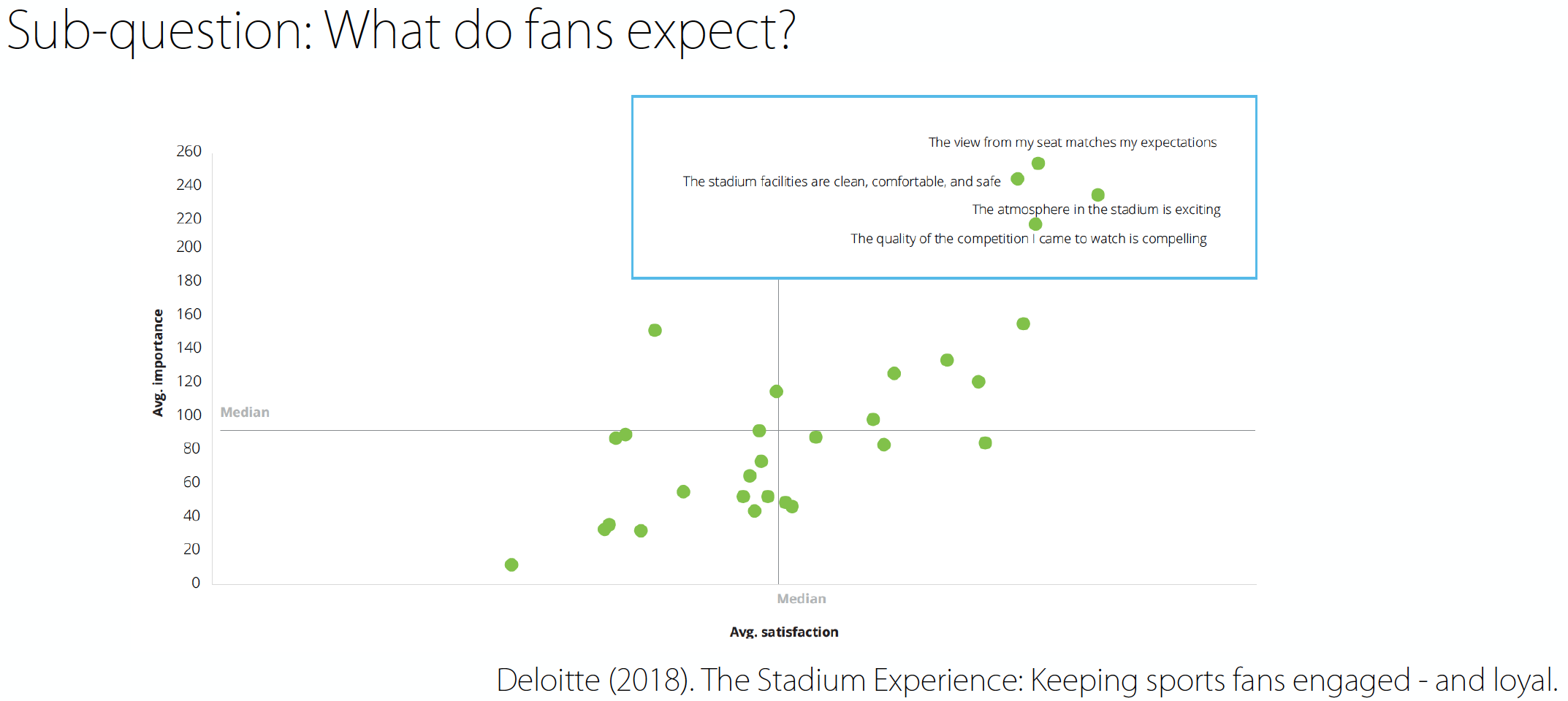
Research activities consisted initially in exploring academic literature, guided by a core research question and subquestions rose from that point. How service design and service dominant logic relates in sports marketing? Reports about spectator sports, and trends related to gen Z and millennial and their attitude towards sports helped understand roughly some possible demographic differences. Case studies about Atlanta United and Savannah Bananas and their approach about their fans’ needs, relevant regionally and locally, also informed how to approach the first survey and stakeholders approached for interviews.
Primary Research
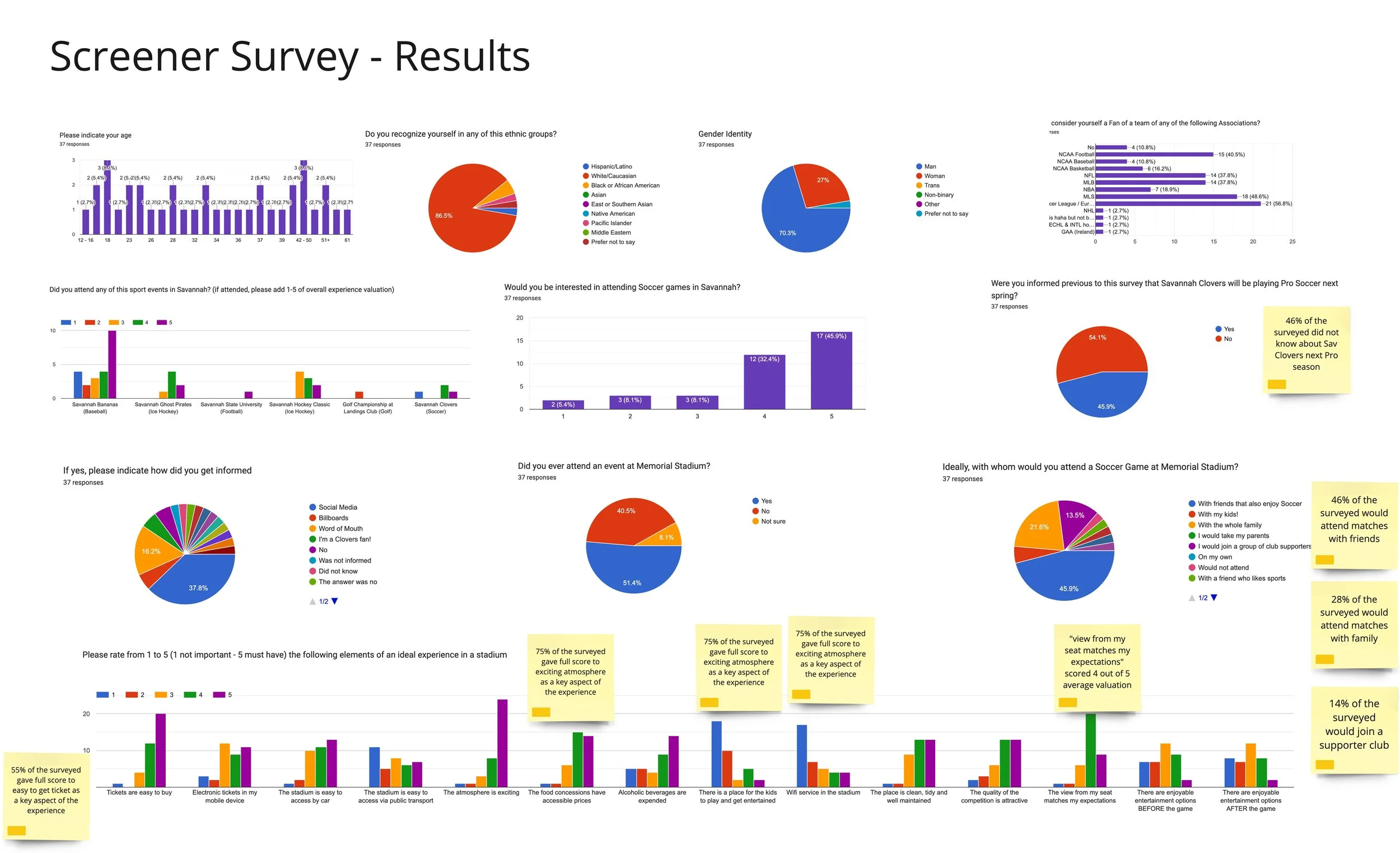
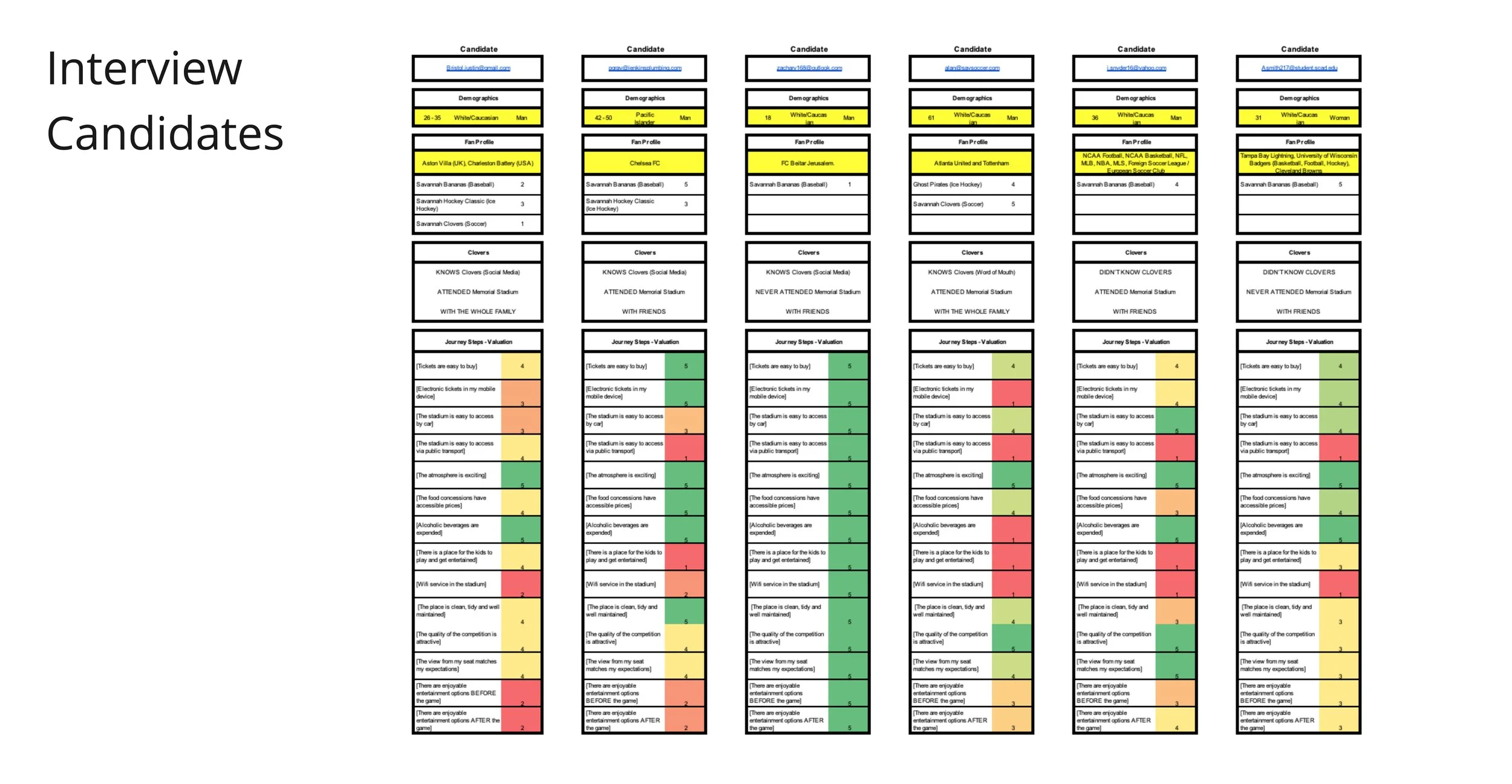
Research planning kicked off with designing a screener survey to know about locals’ preferences and demographics, to select potential diverse interview candidates.
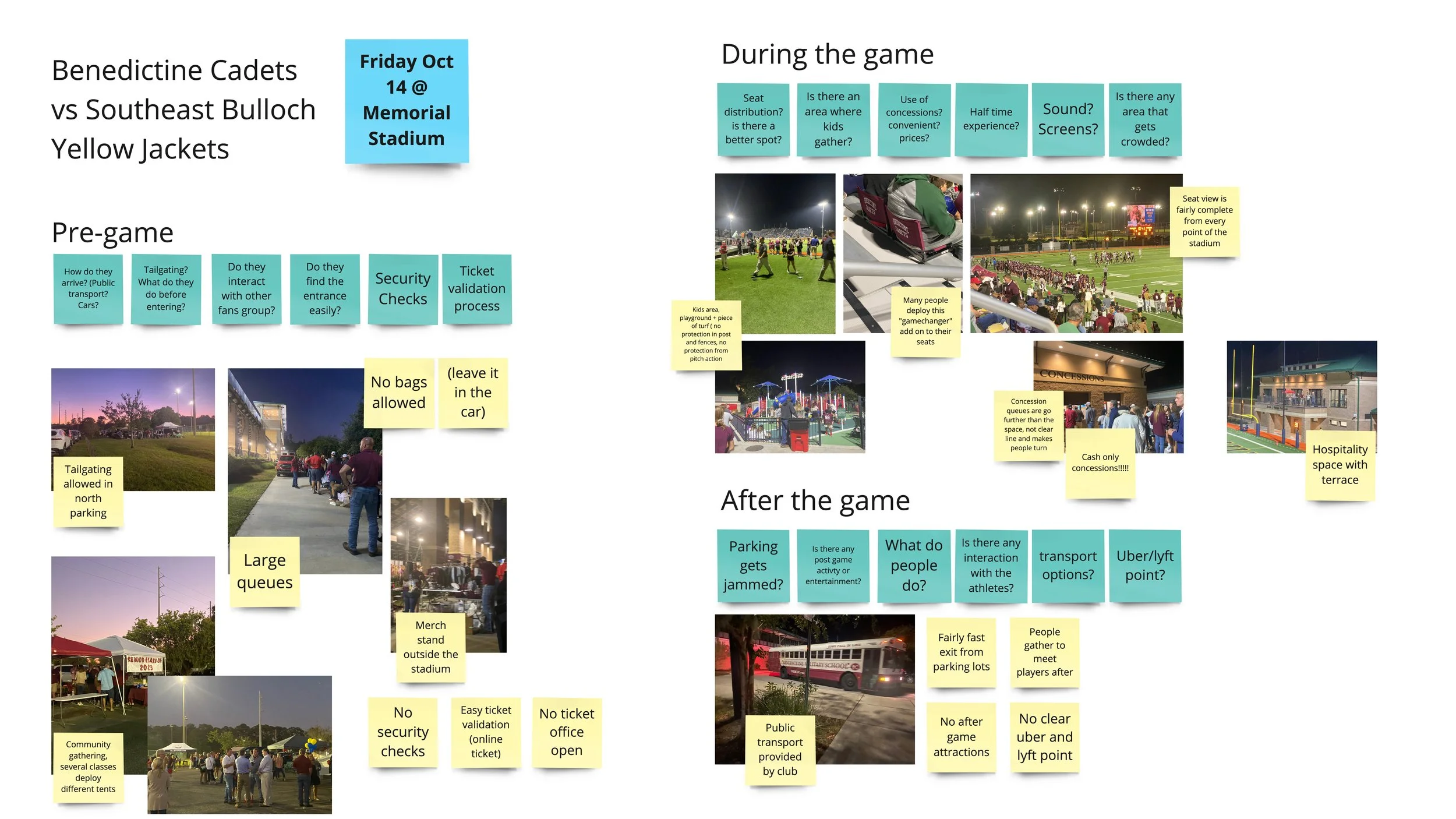
As the Clovers would not play at their stadium during this project, a session of Open Observation at the stadium while High School Football was being played to assess how fans interact with the physical evidence present at Memorial Stadium.
Interviews and Affinitization
After screening through the survey, many fans, along with relevant stakeholders such as Parks and Recreation director (owners of the stadium), Soccer culture beacons of Savannah’s community, and other relevant actors.
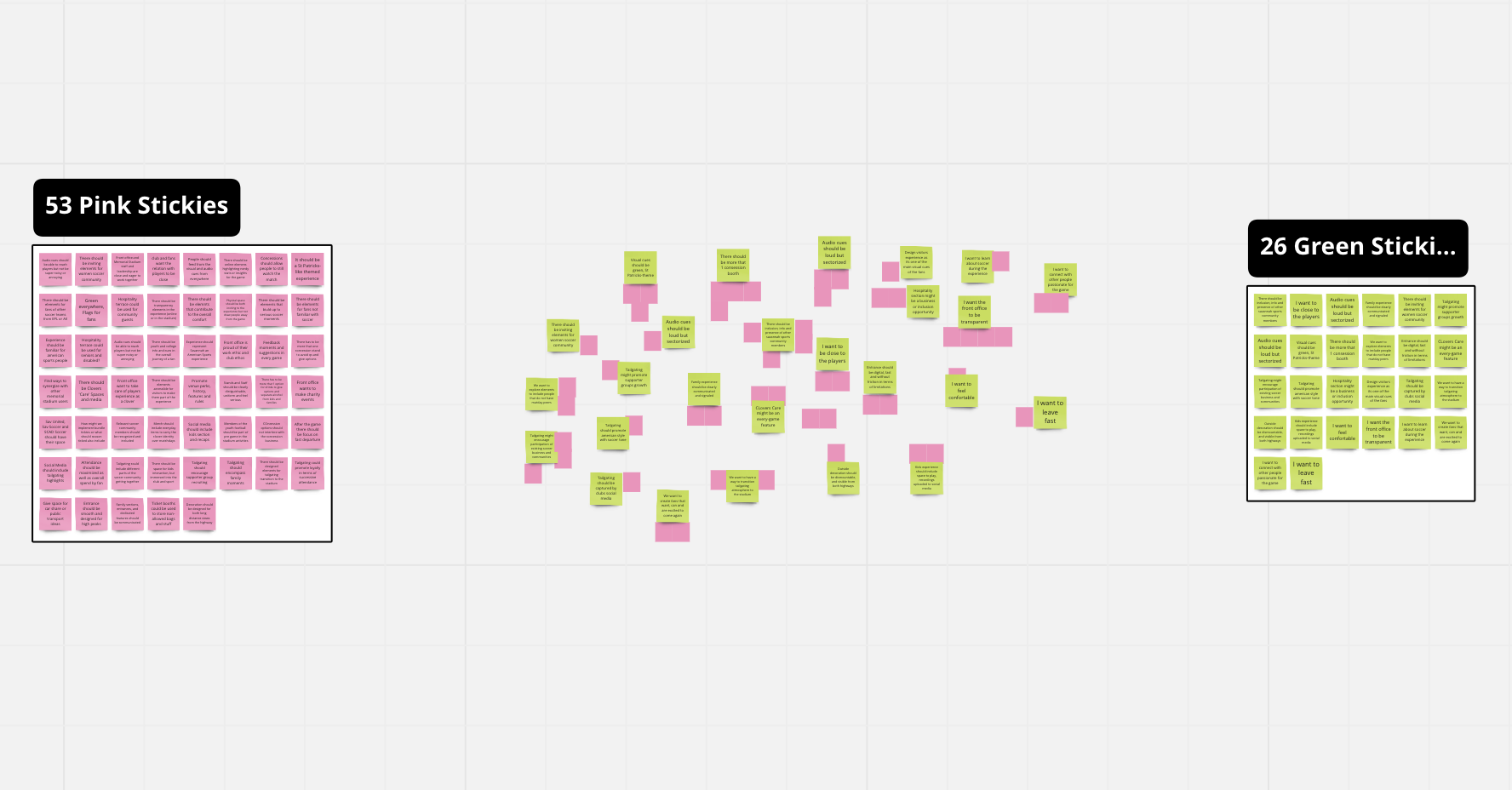
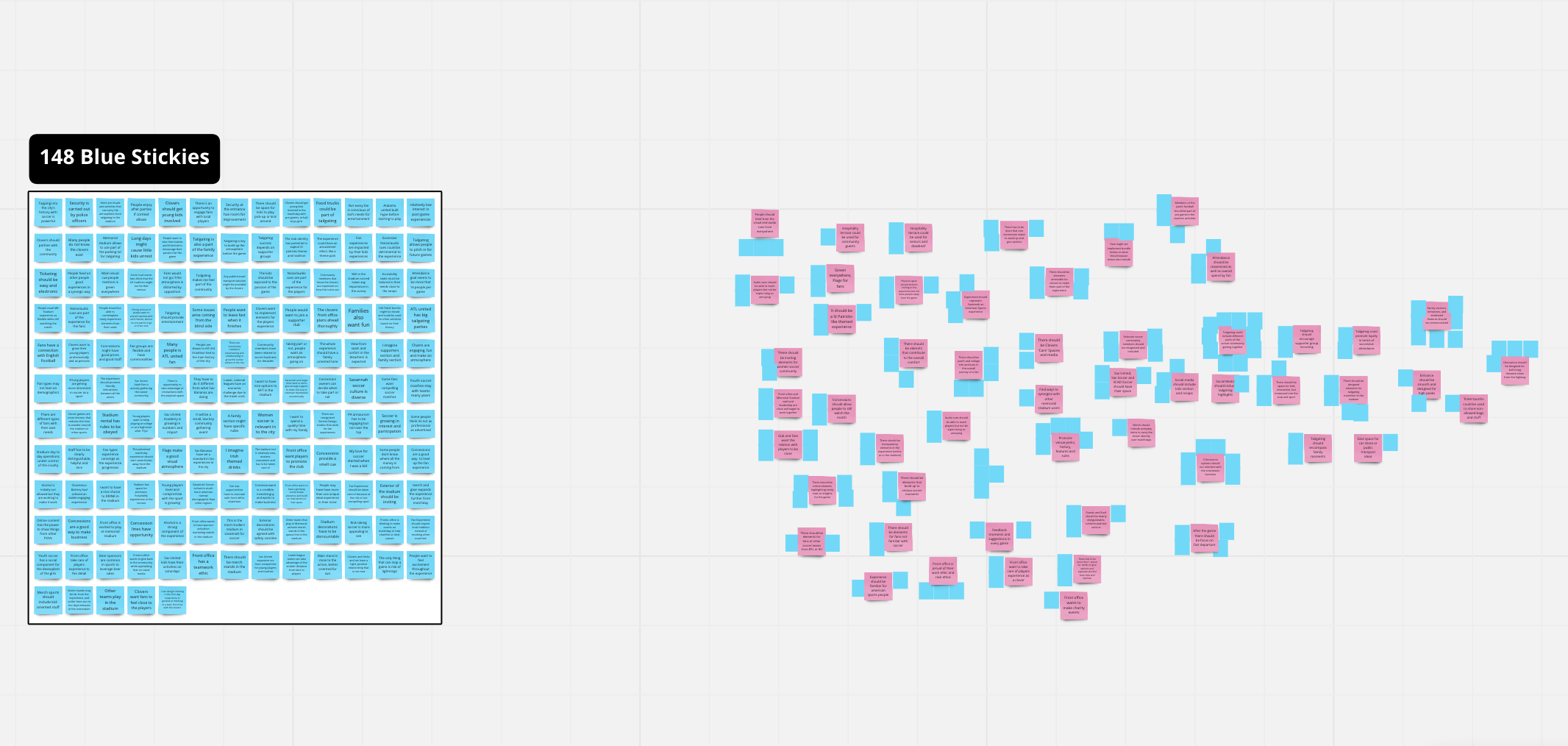
More than 6 hours of recorded interviews, resulting in 500 datapoints.
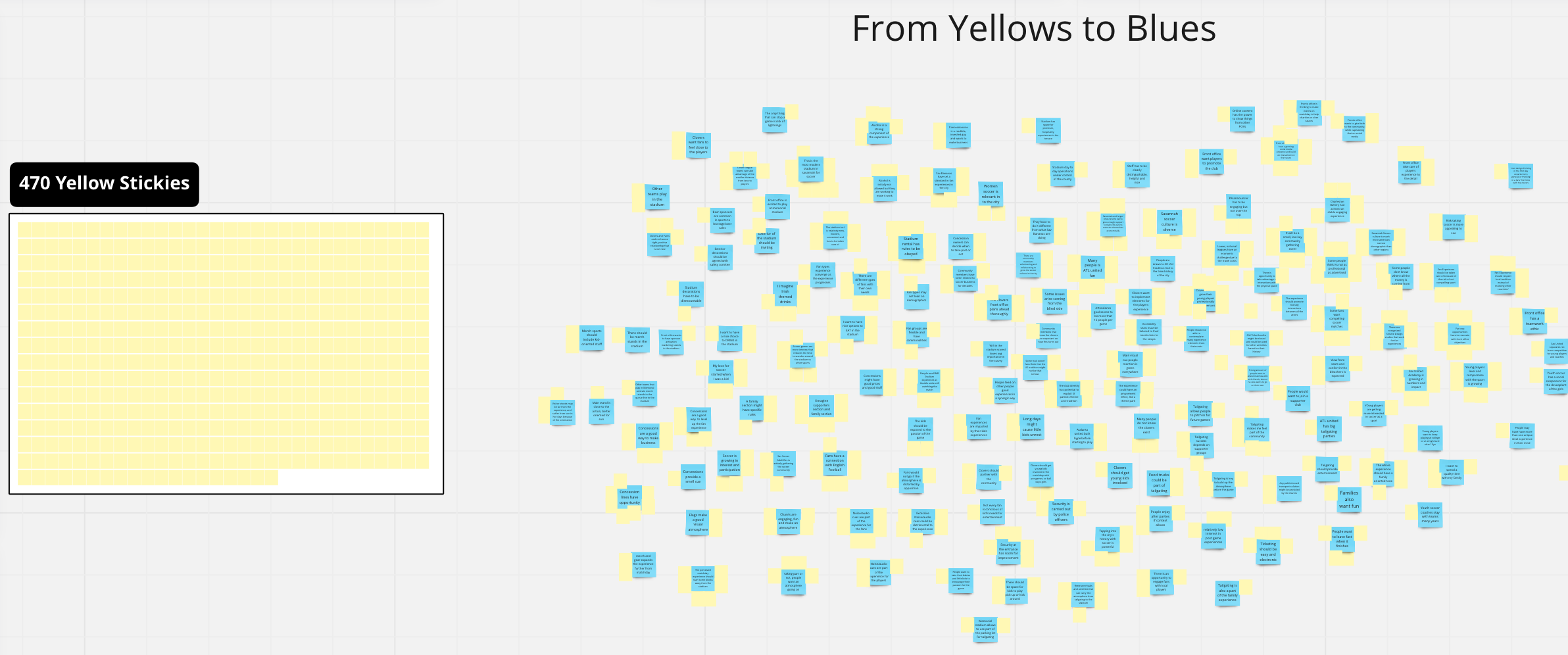
The final insights served as a guide to build the ideal experience of the fans throughout both their journey at the stadium and some touchpoints between games.

Fan Profiles - User Archetypes
Hardcore Supporters are the main atmosphere generators and trailblazers. They will group up in “Supporter Clubs”, and need to grow in numbers.
They want to be part of the clover loyal fanbase, want to have the closest relation with the players, and will be key to carry tailgating, community building, and atmosphere build-up to the home games.
During both surveys and interviews it was clear that fans may have different motivators and preferences while describing their ideal experience. User archetypes for fan profiles were developed.

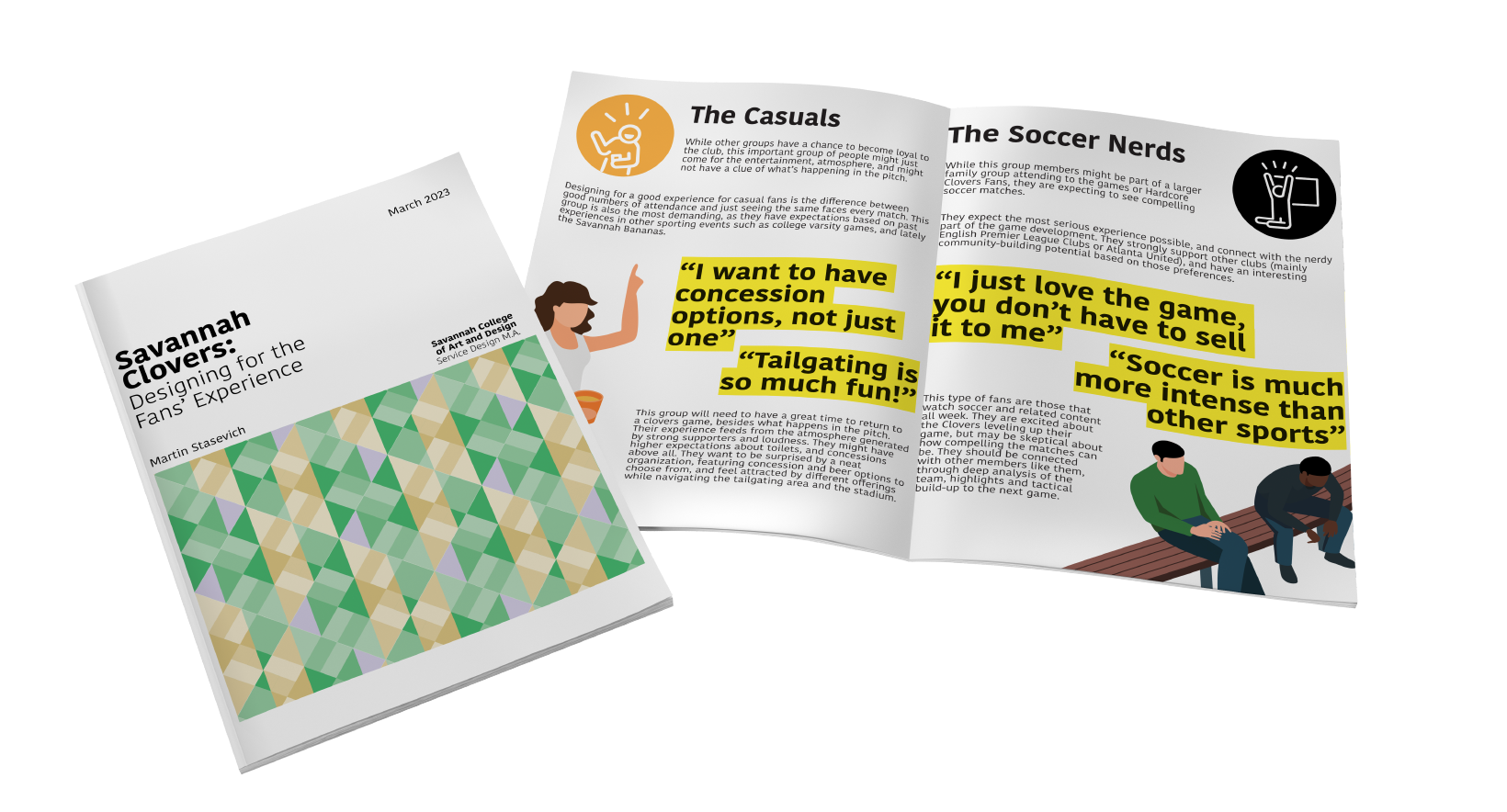
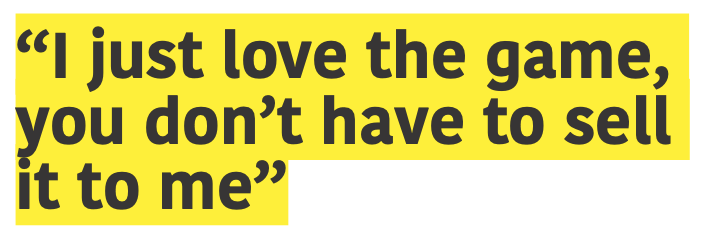
While other groups have a chance to become loyal to the club, this important group of people might just come for the entertainment, atmosphere, and might not have a clue of what’s happening in the pitch.
Designing for a good experience for casual fans is the difference between good numbers of attendance and just seeing the same faces every match. This group is also the most demanding, as they have expectations based on past experiences in other sporting events such as college varsity games, and lately the Savannah Bananas.

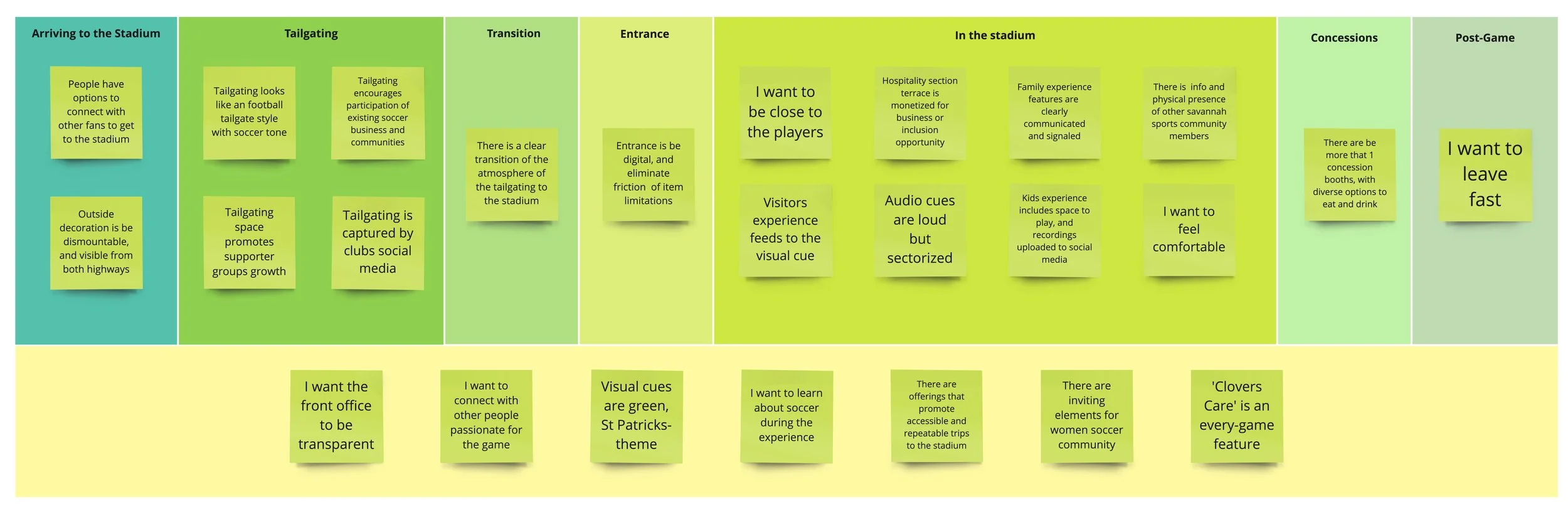
From research data and insights, some aspects of the experience are expected to feel different to different fan groups. This groups are flexible, and have commonalities. The goal of profiling is to design caring for the extreme cases of this groups, no no-one is left out.

Hardcore supporters want to create a loyal cheering atmosphere at the stands, with chants and props such as flags and drums. They want to engage with kids, making their presence and attitude family friendly. They might engage in an inviting, friendly way with other fan profiles, such as kids and casuals.
The most overrepresented profile during interviews. As a complex group, some members will have similar behavior to other archetypes.
The group experience will be as good as that of the member that had the worst time: A bored or tired kid might spoil the whole family experience, or the absence of experience elements for those in the group not heavily attached to the sport might cause a sour experience for all.
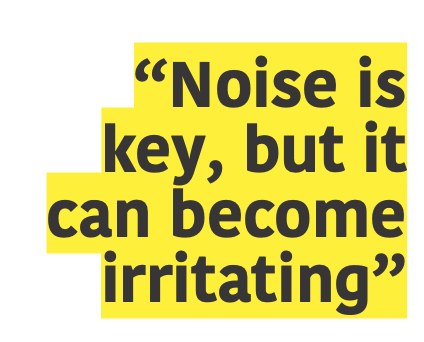
Families also want to feel immersed in the atmosphere of the event, but feel like the loudness of the heaviest supporters should be a little bit away from them, and alcohol drinking should be sectorized.
This group will need to have a great time to return to a clovers game, besides what happens in the pitch.
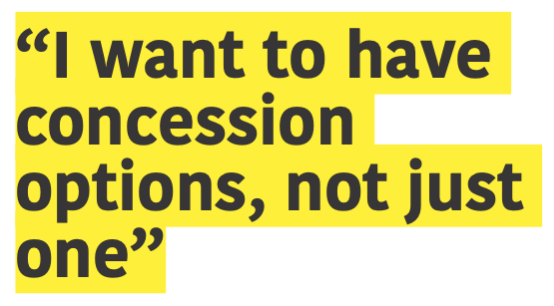
They might have higher expectations about toilets, and concessions above all. They want to be surprised by a neat organization, featuring concession and beer options to choose from, and feel attracted by different offerings while navigating the tailgating area and the stadium.

The Fans’ Ideal Experience Journey Map



This type of fans are those that watch soccer and related content all week. They are excited about the Clovers leveling up their game, but may be skeptical about how compelling the matches can be. They should be connected with other members like them, through deep analysis of the team, highlights and tactical build-up to the next game.
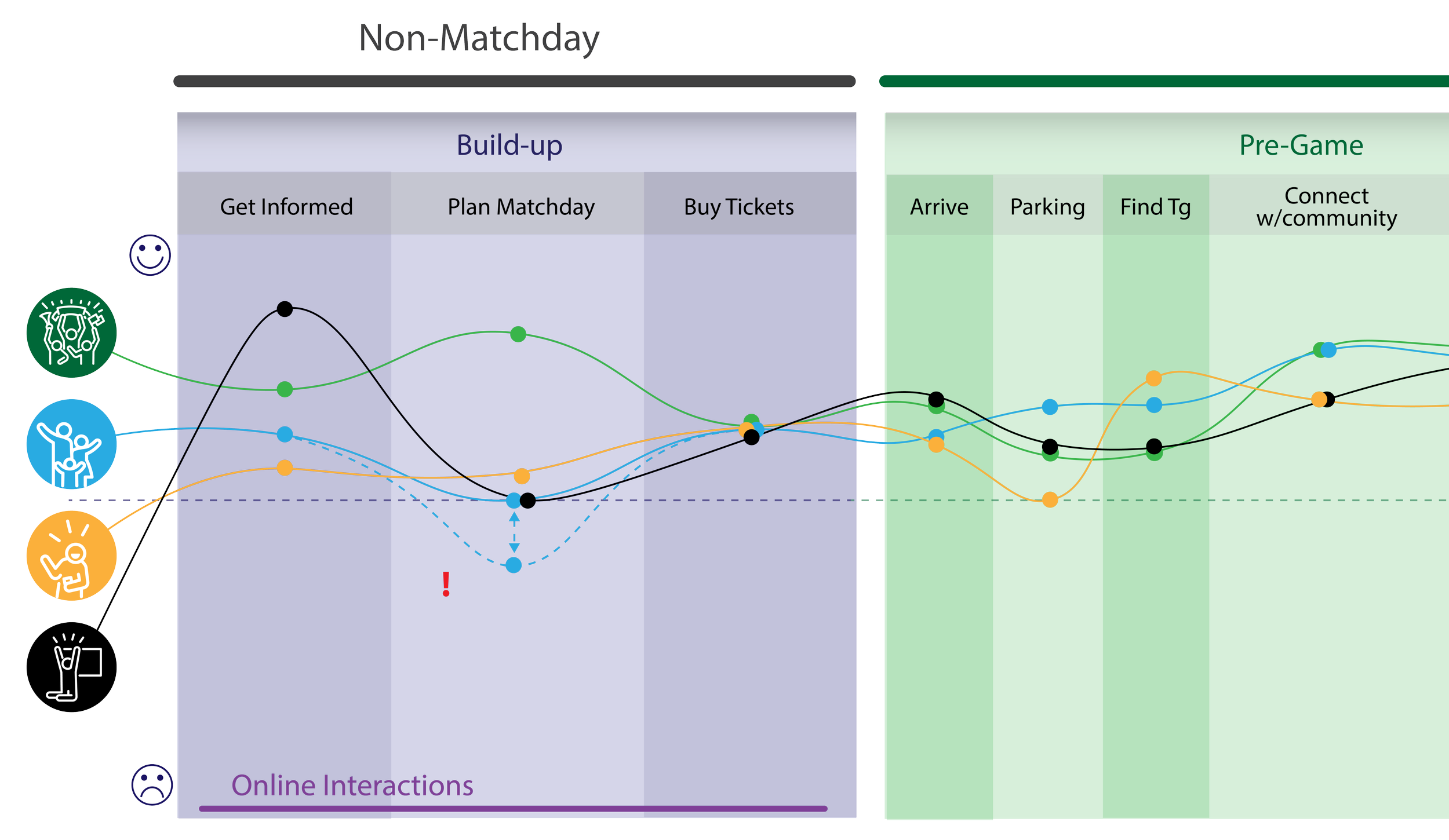
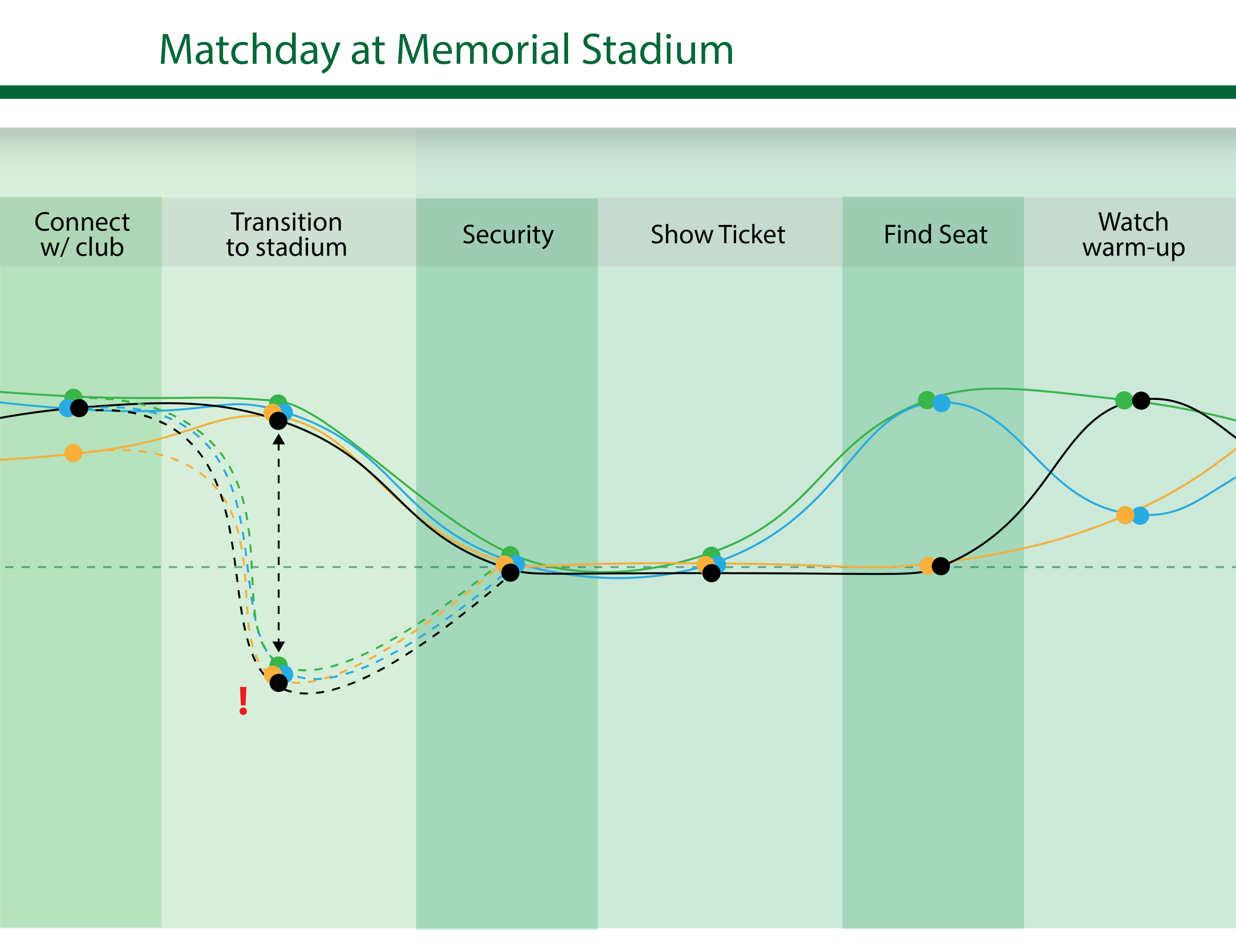
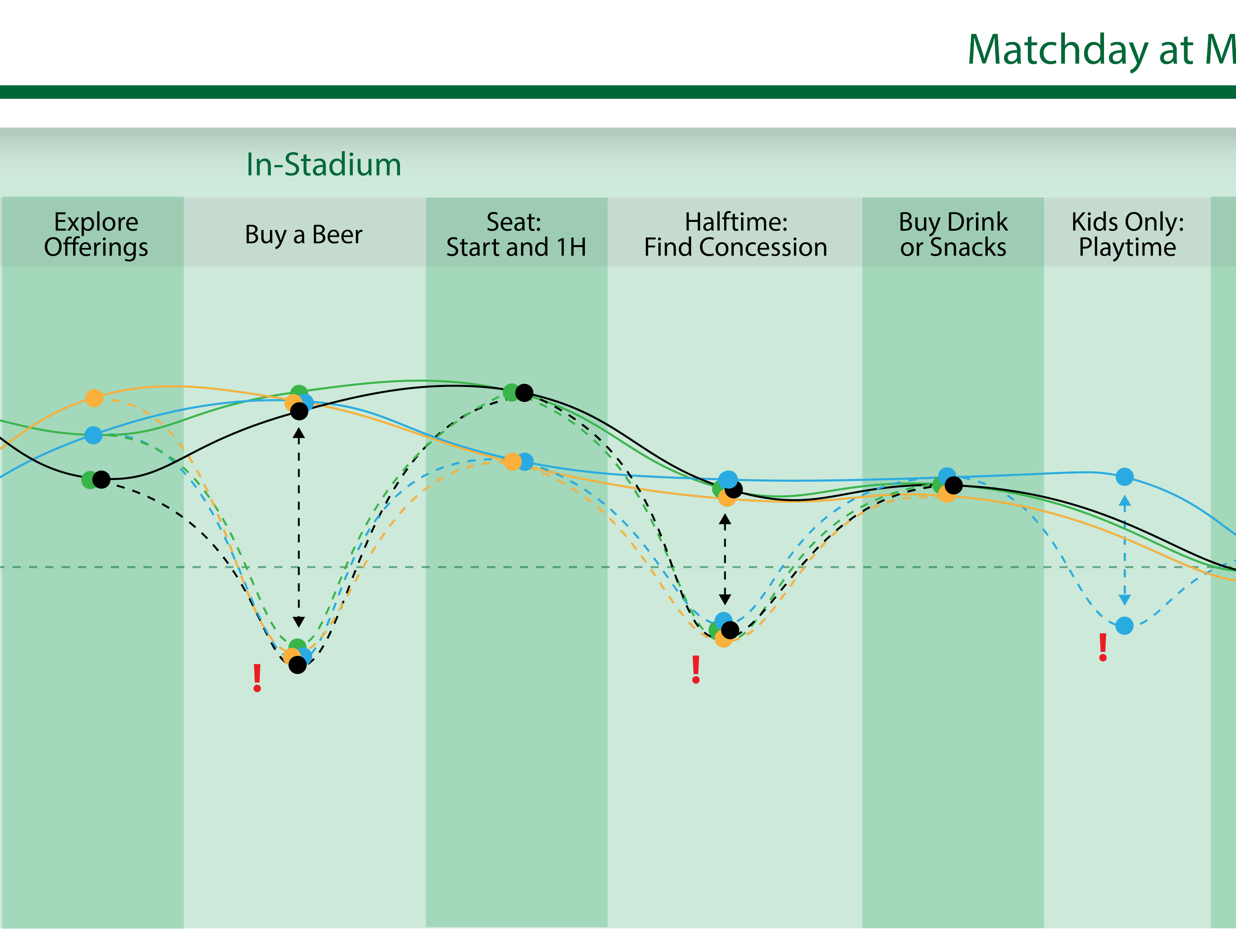
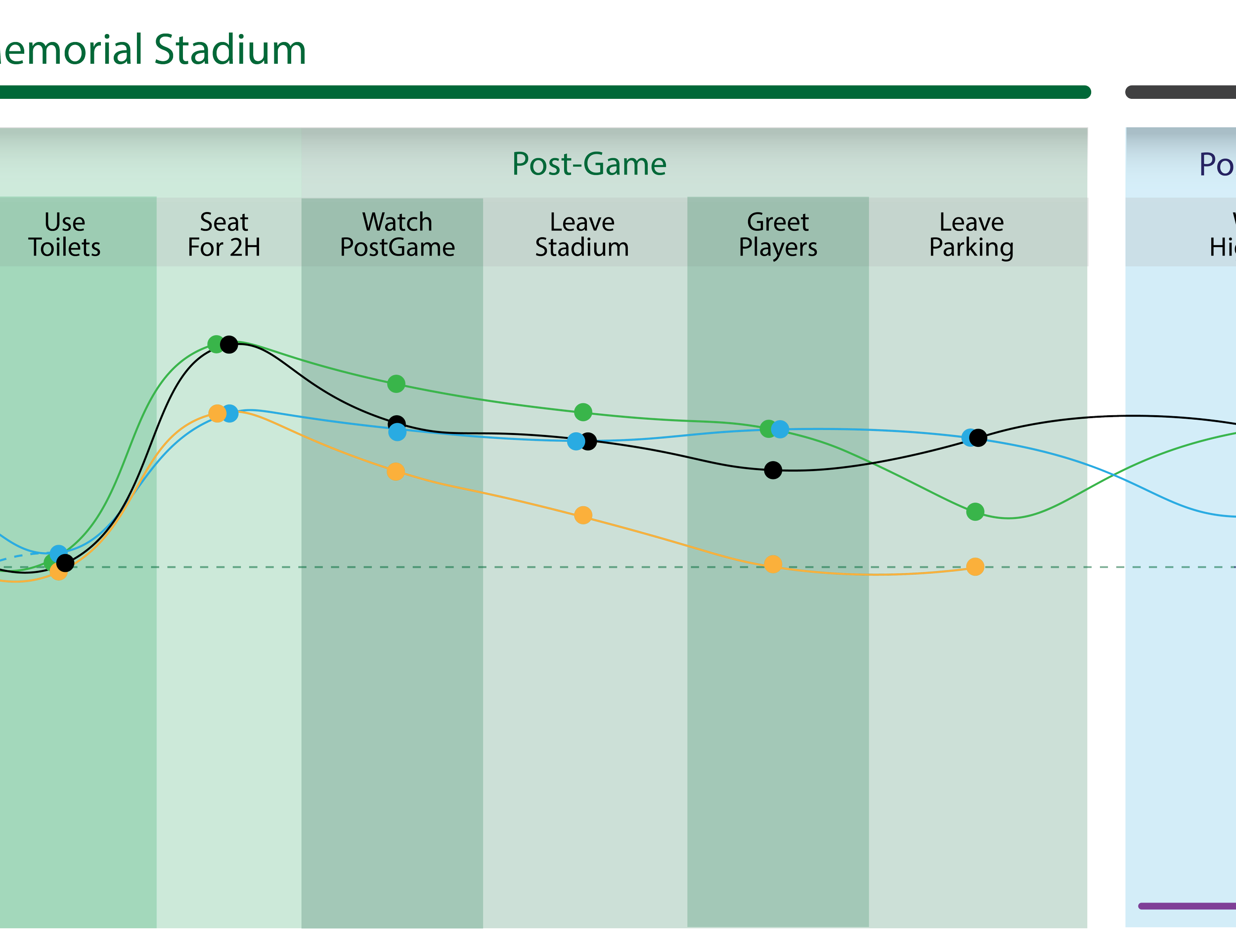
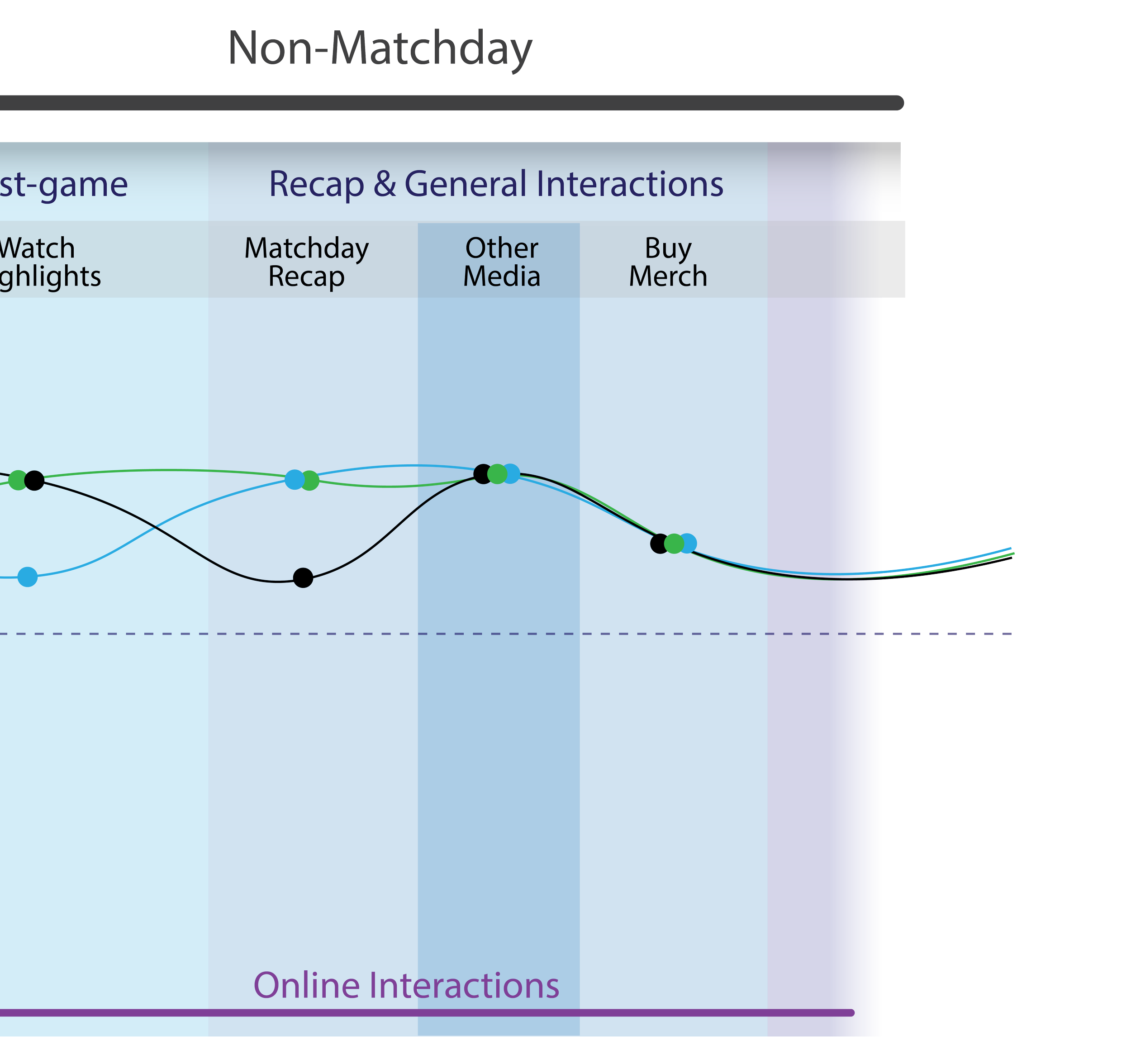
This journey maps the ideal experience of the four detected fan groups. As an ideal experience, no touchpoint is expected to produce negative experiences, but some specific moments should be taken special care due to their potential to be the origin of friction marked with a (!).
The Journey begins with the build up to the match on social media and other online channels, then encompasses the whole matchday experience, ending with the online touchpoints after a game, before starting again.
While this group members might be part of a larger family group attending to the games or Hardcore Clovers Fans, they are expecting to see compelling soccer matches. They expect the most serious experience possible, and connect with the nerdy part of the game.

Touchpoint Description and Design Opportunities
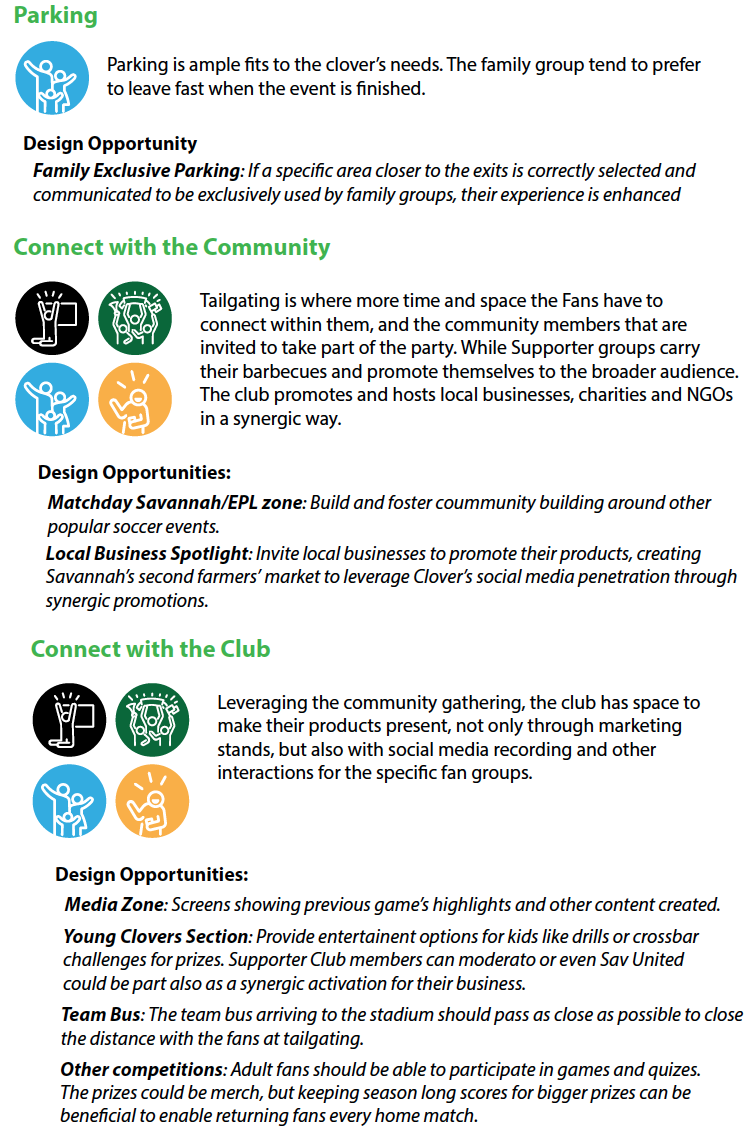
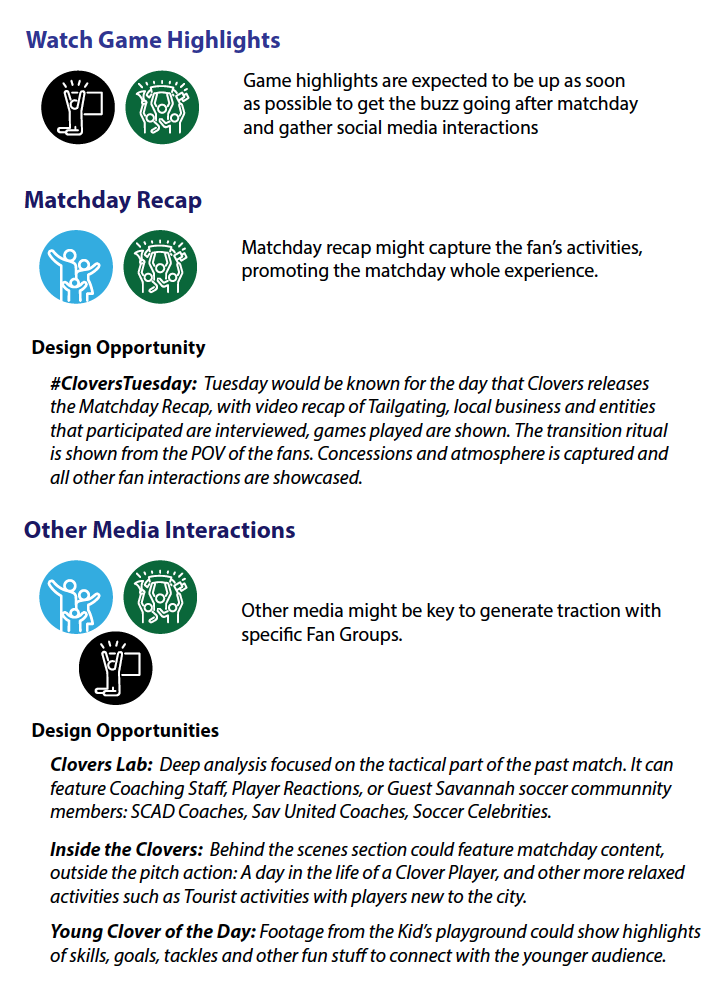
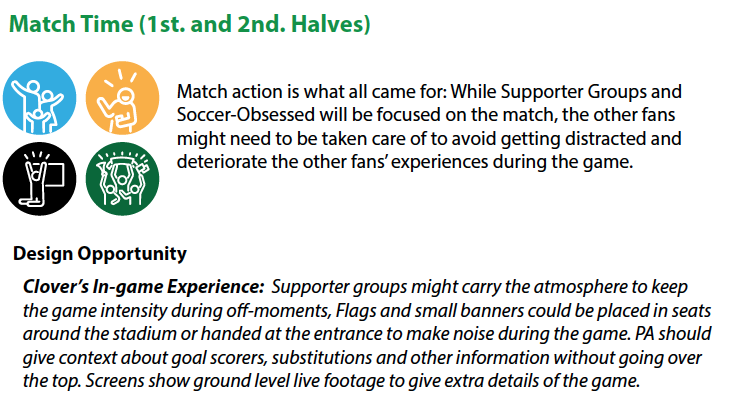
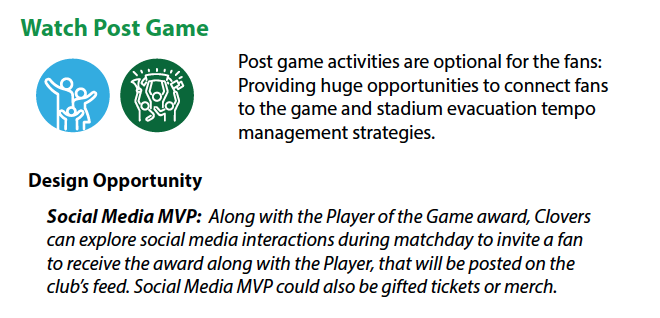
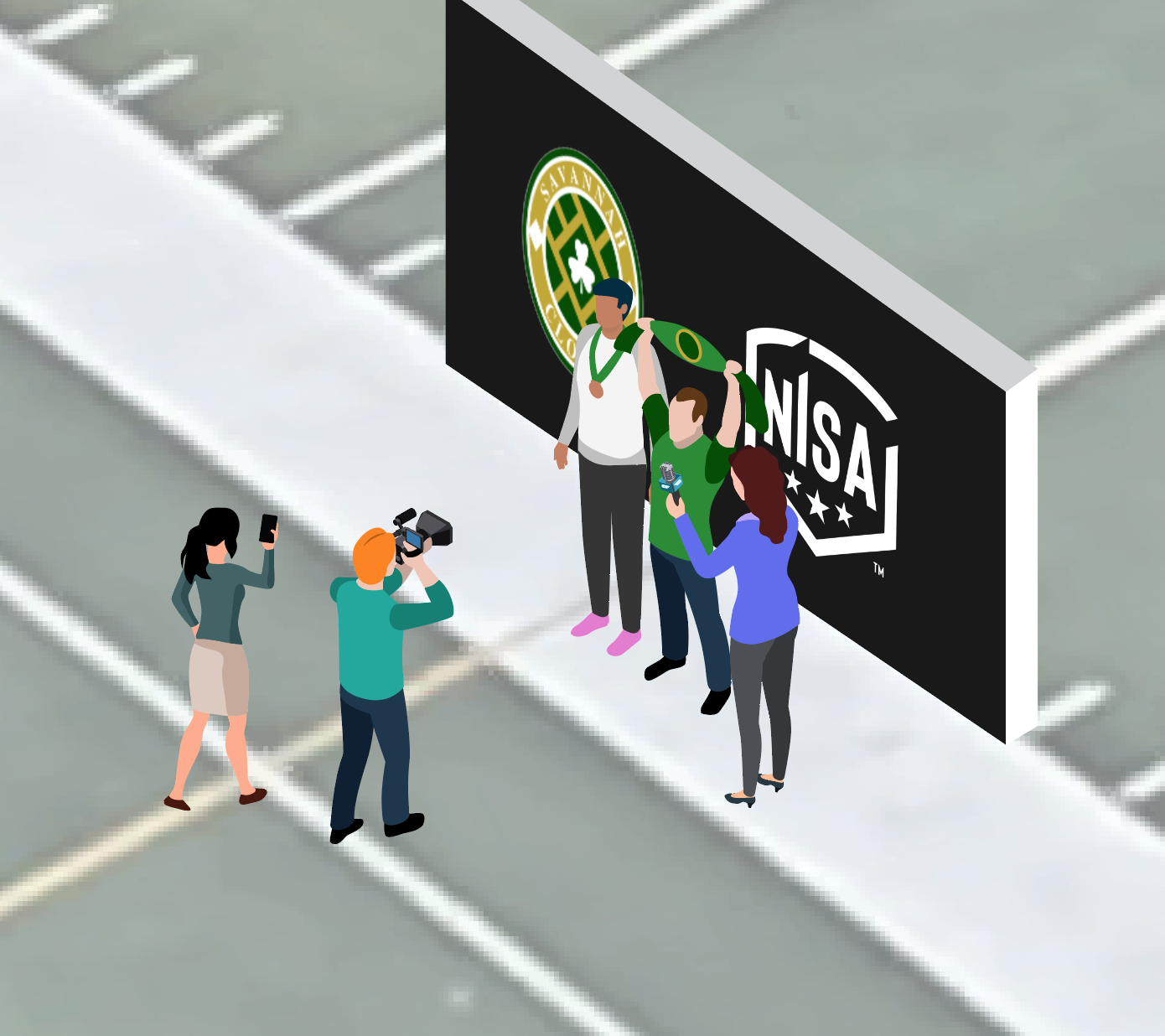
In the booklet presented to the club, a brief explanation of every touchpoint of the journey map was introduced, indicating which of the fan archetypes is affected the most, and proposing design opportunities.
The idea of this content was to provide the organization with initial ideas for them to iterate and test, given the context of the moment of the experience and the types of fans to cater to.

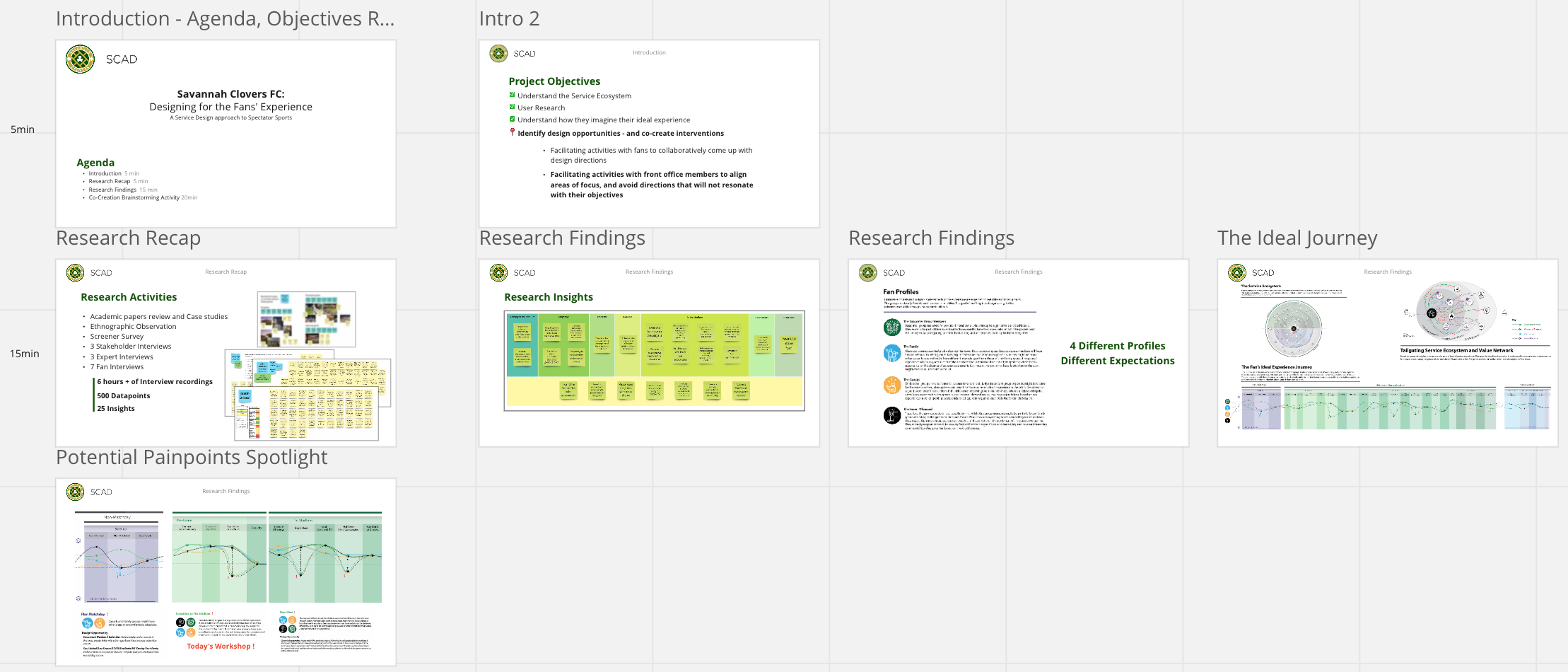
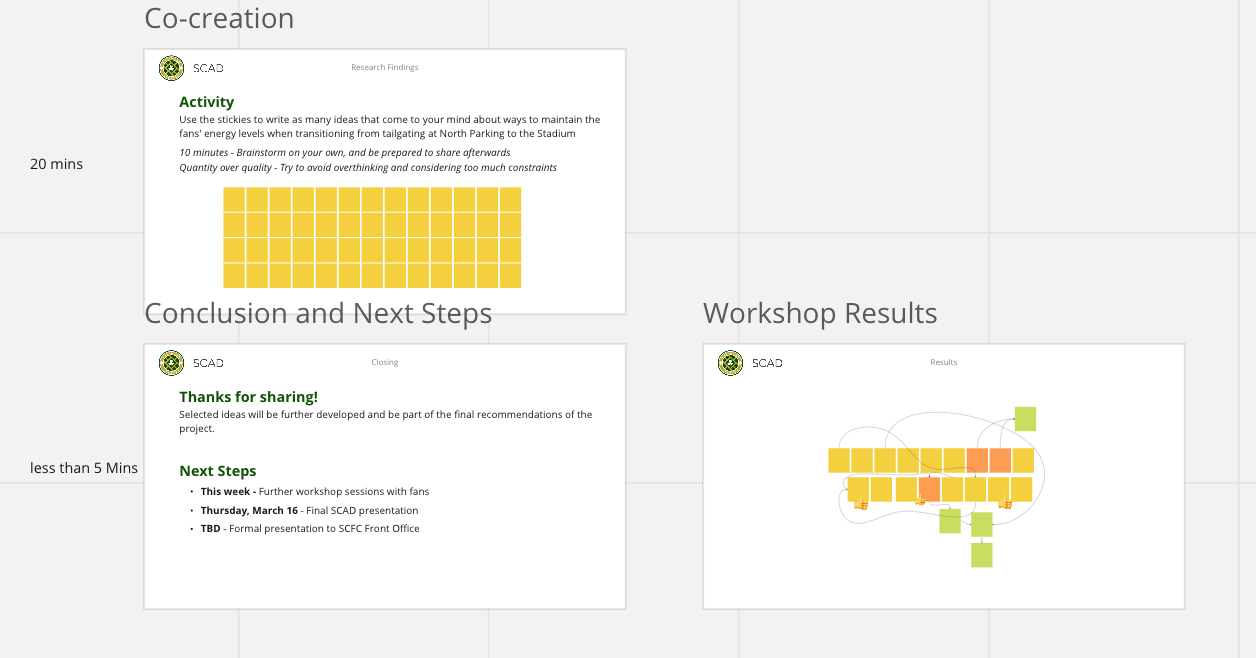
Co-creation Workshop for Transition to The Stadium Moment
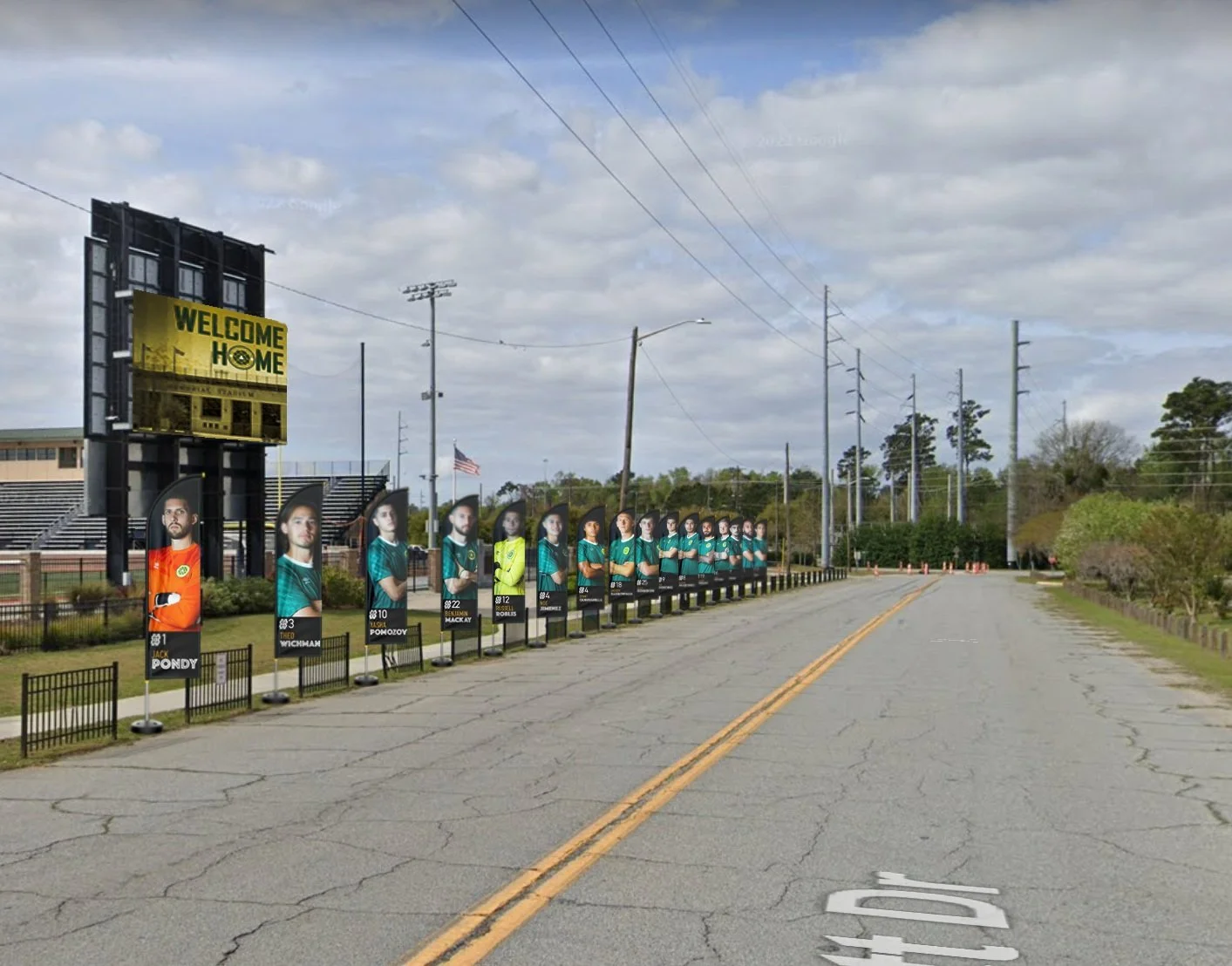
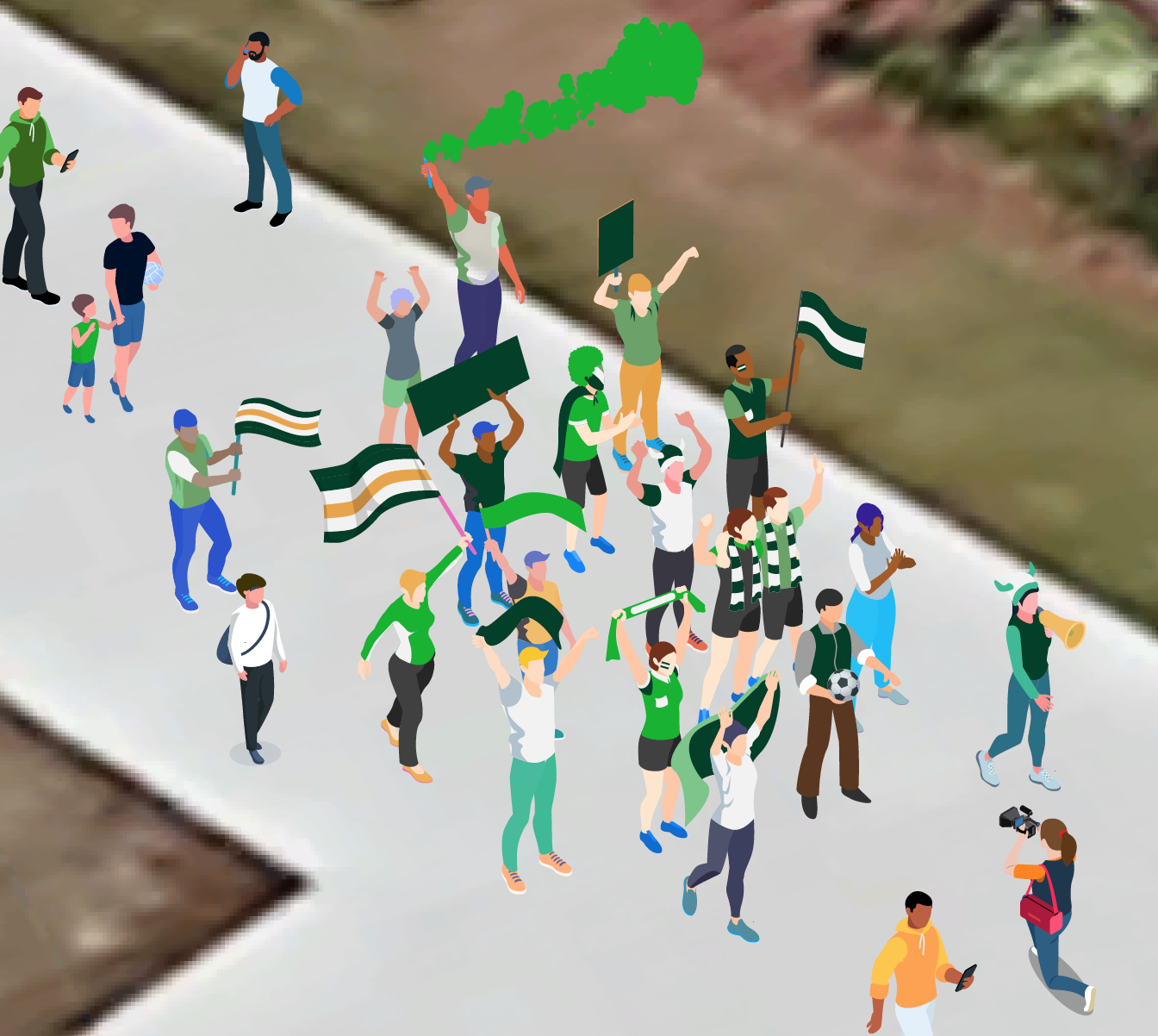
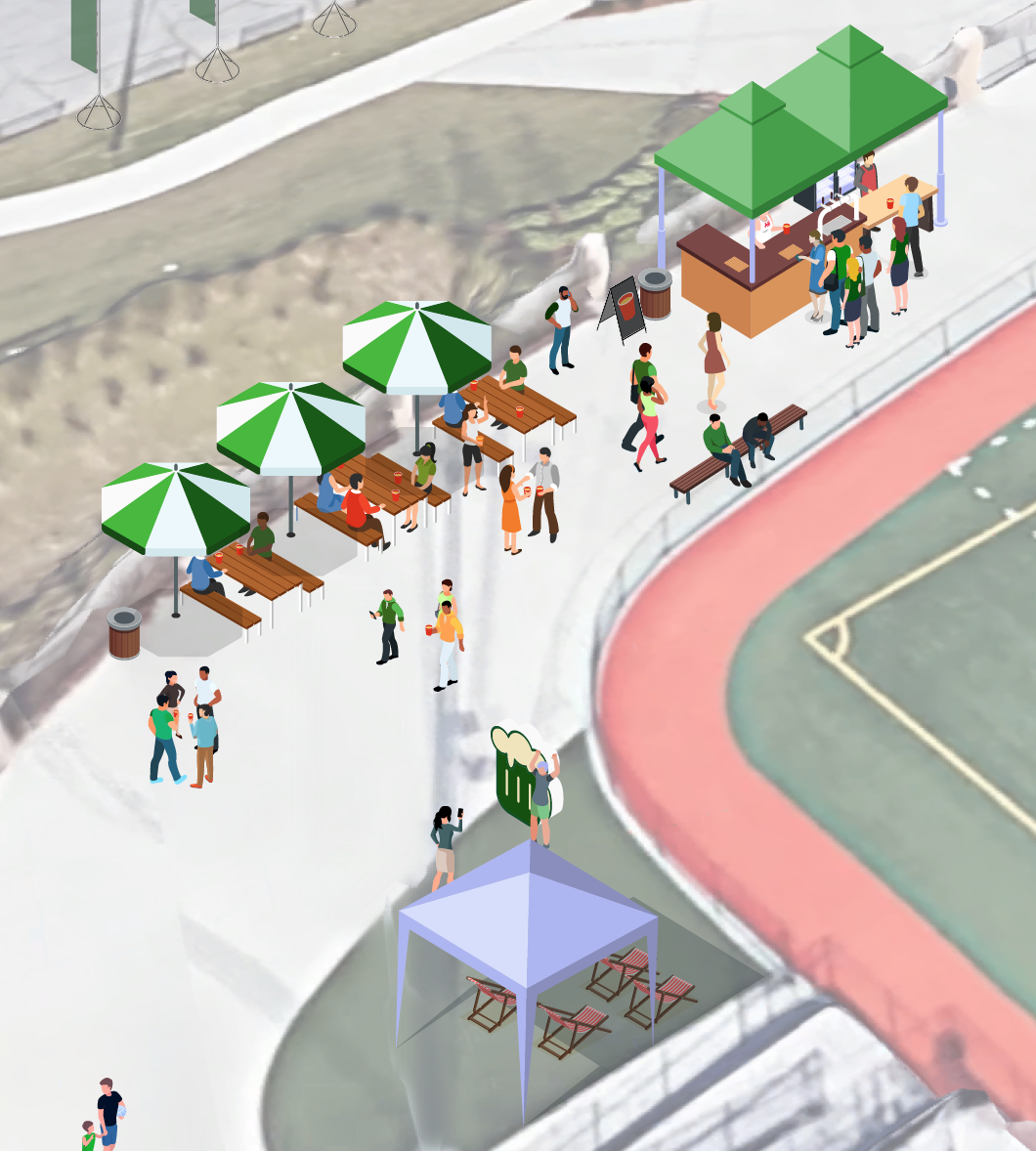
The transition to the stadium was a complex challenge to tackle, and ideation was conducted co-creating with fans.
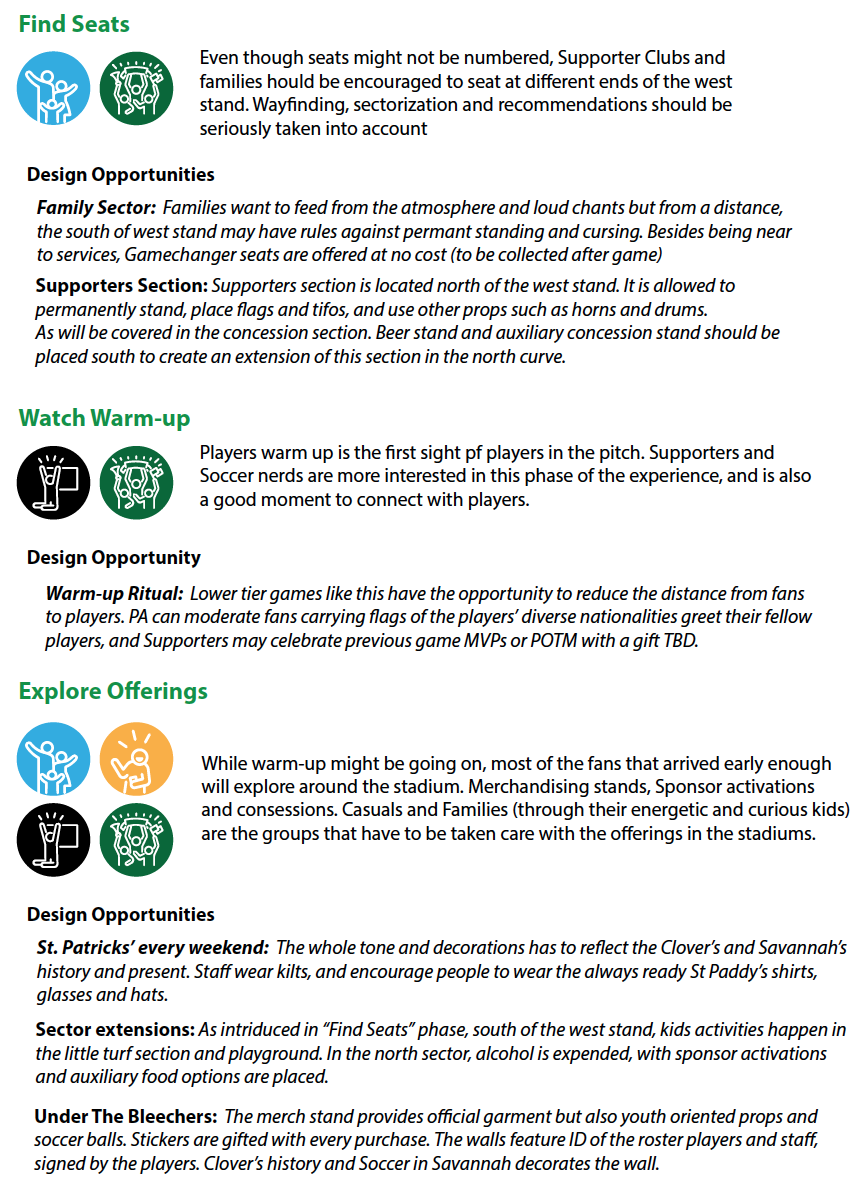
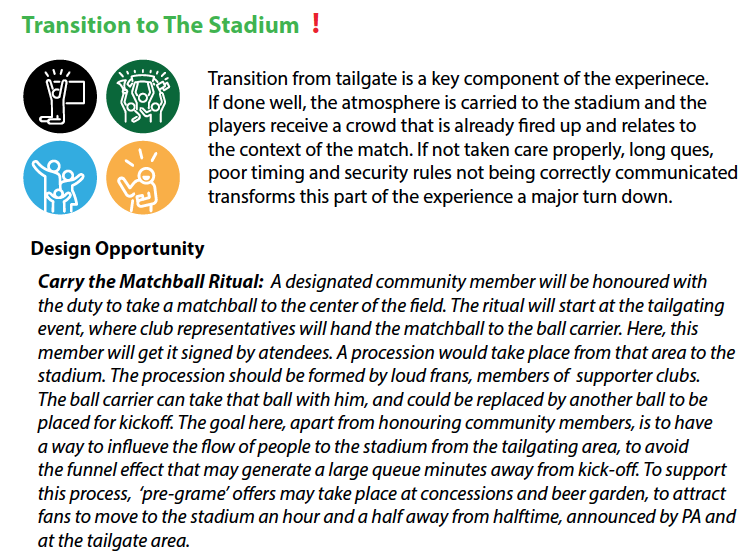
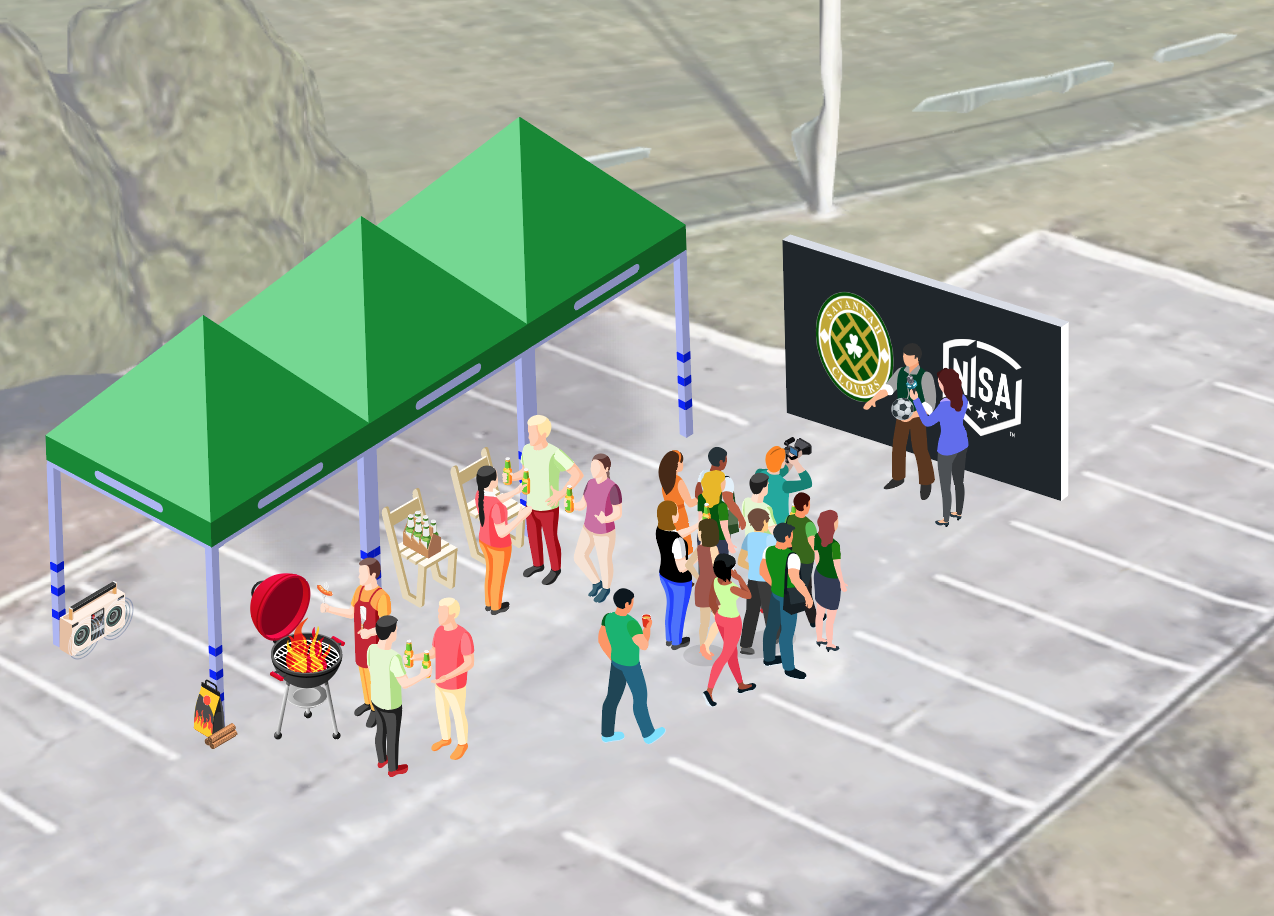
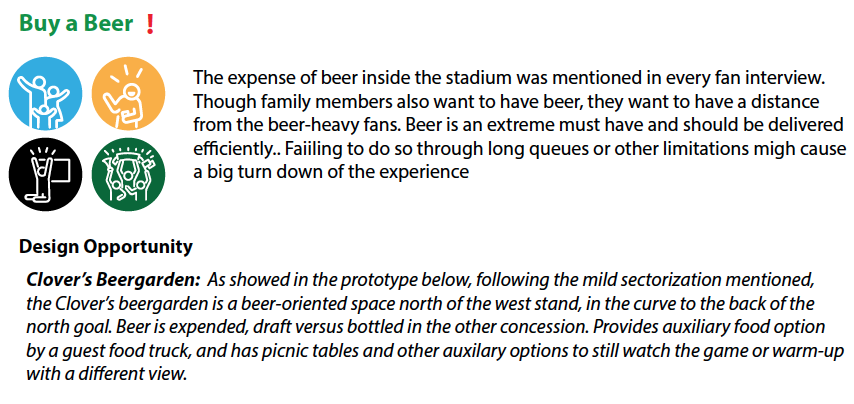
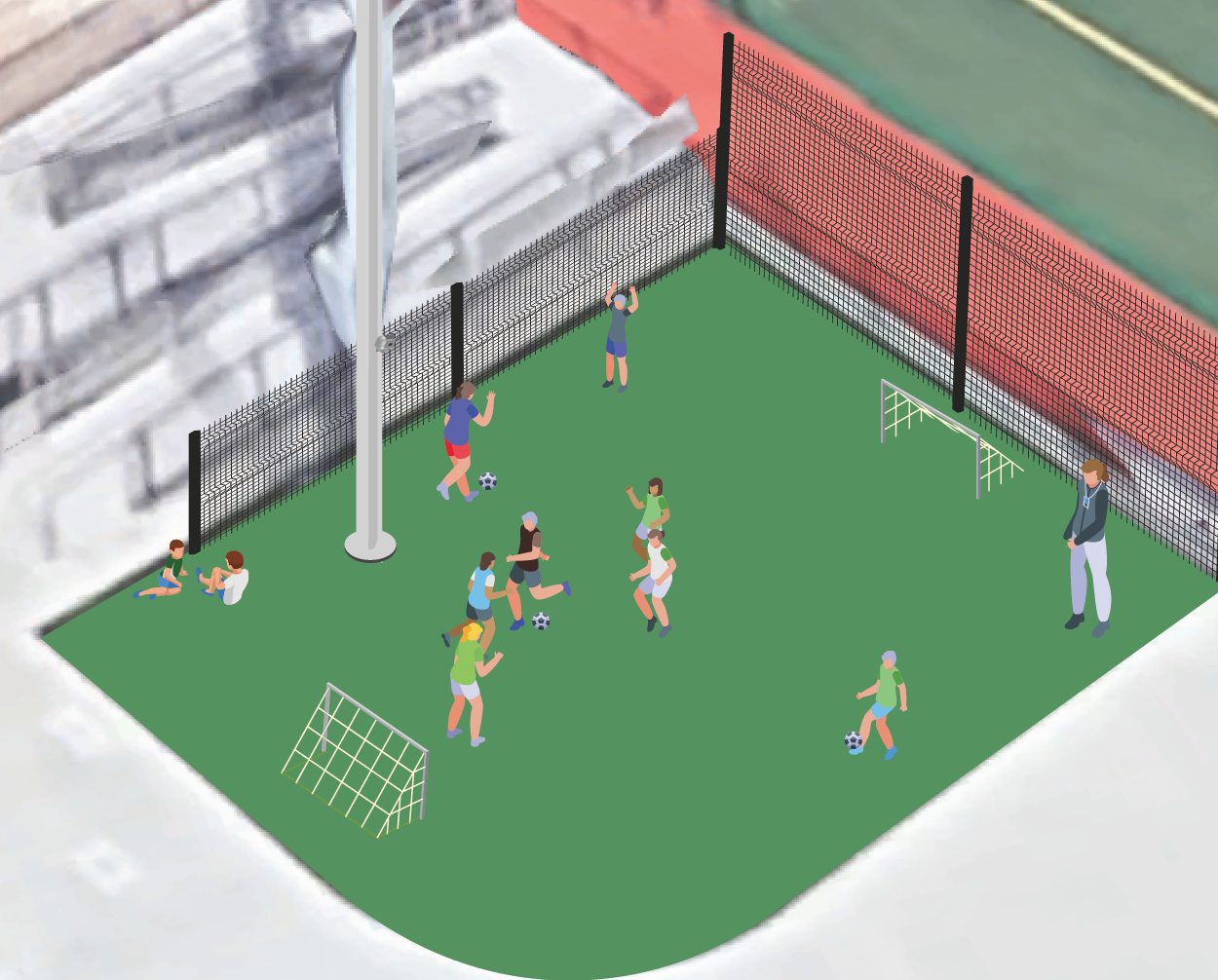
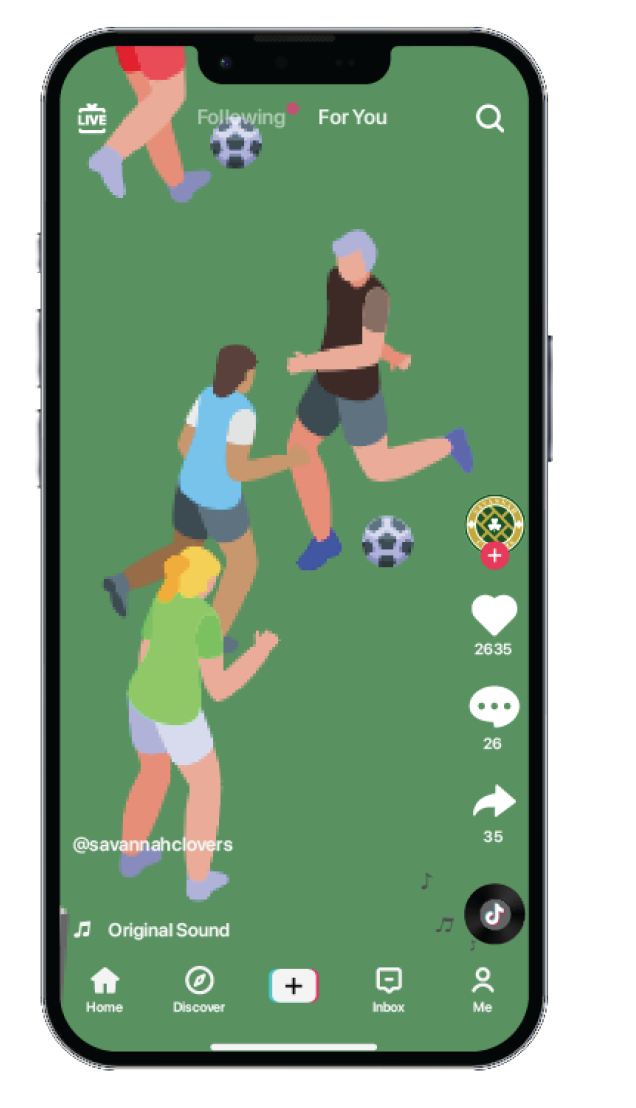

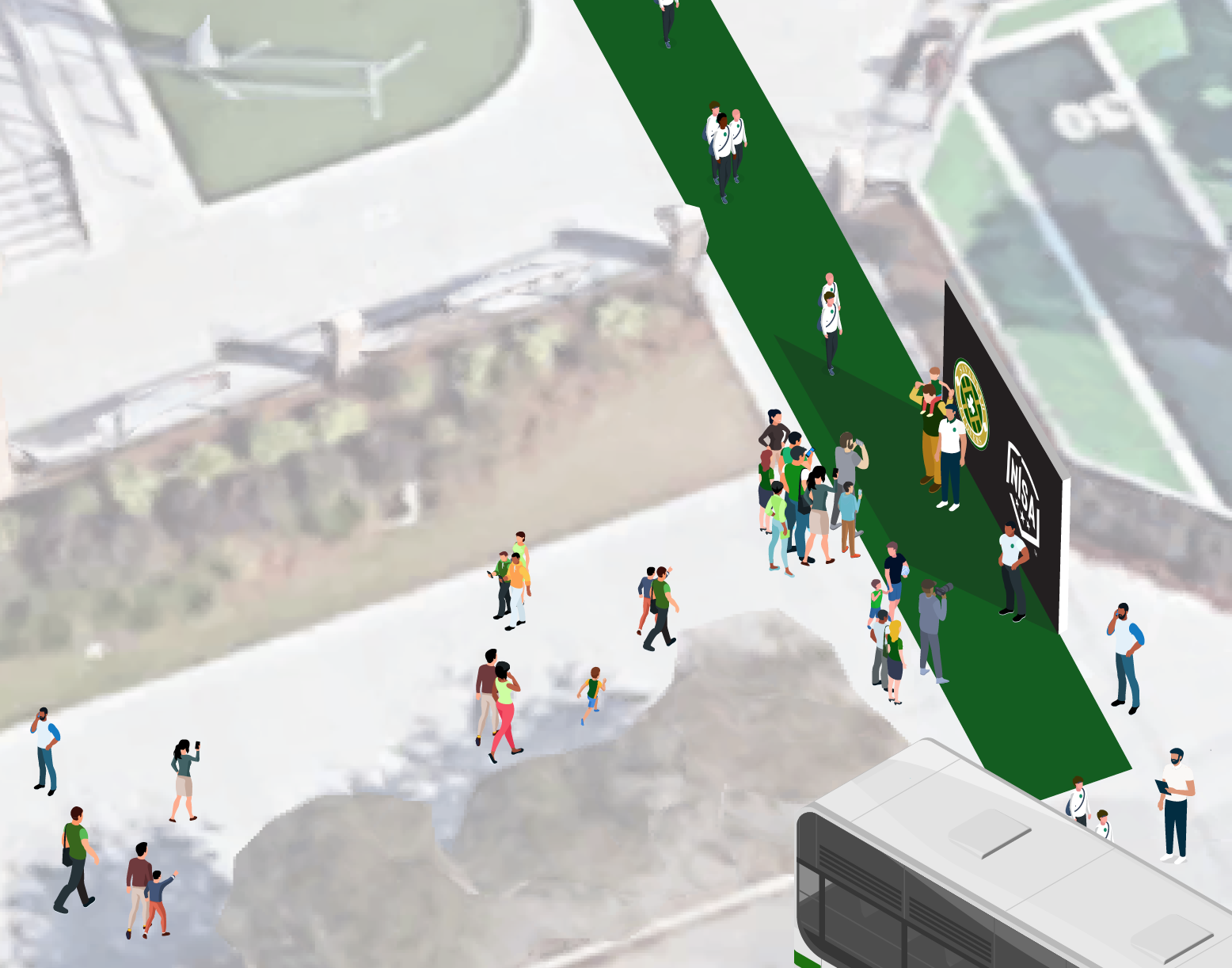
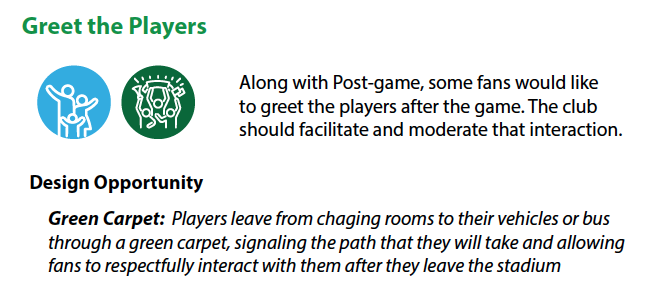
Ecosystem mapping is useful to visualize how many actors interact with a fan. In this case, the map is organized to be read clockwise, showing the interactions during the phases of a matchday, and during the week, from the match recaps to the build-up to the next game.
This was presented as a tool for the organization to reflect on how many actors are in place, which of them could be modified in their distance to the customer, eliminate or add to their offerings. In this case some of them were pointed out to show what could be done during tailgating.
Next Steps

Service Ecosystem and Value Networks
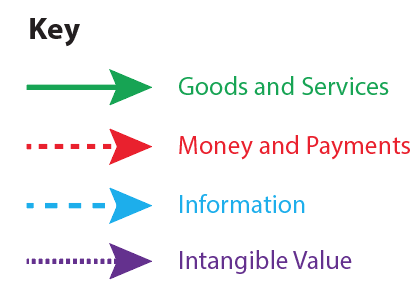
Value Networks are used to explore the value propositions offered to a user (the fans). In this map, the actors added to the tailgating phase of the experience are placed to show how everyone might be positively impacted by their participation on the Clover’s tailgate party, and explore synergies between actors.
This was presented to the Club to use as a template to assess which offerings or actors they want to engage in their tailgating party. To ideate and iterate on how to approach new sponsors or collaborators and make them work in synergy with the rest of the ecosystem.
The Clovers’ staff should be prepared to measure, observe, and inquire the satisfaction levels of the attendees, and iterate on the fans’ profiles mentioned. A clear next step would be to tap deeper into the kids/youth group, that in the scope of this project are enclosed on a larger group that is their families. They might have their own behavior, preferences and expectations. Furthermore, may uncover different profiles inside this group.
Take this design opportunities as starting points to start meeting the fans’ expectations, and build iterations with fixes and slight changes to see how they perform.
Ultimately, another big step forward to a complete service design approach to this context would be to include the staff’s, players’ and contractors’ experiences and adopt solutions to improve their experiences too.