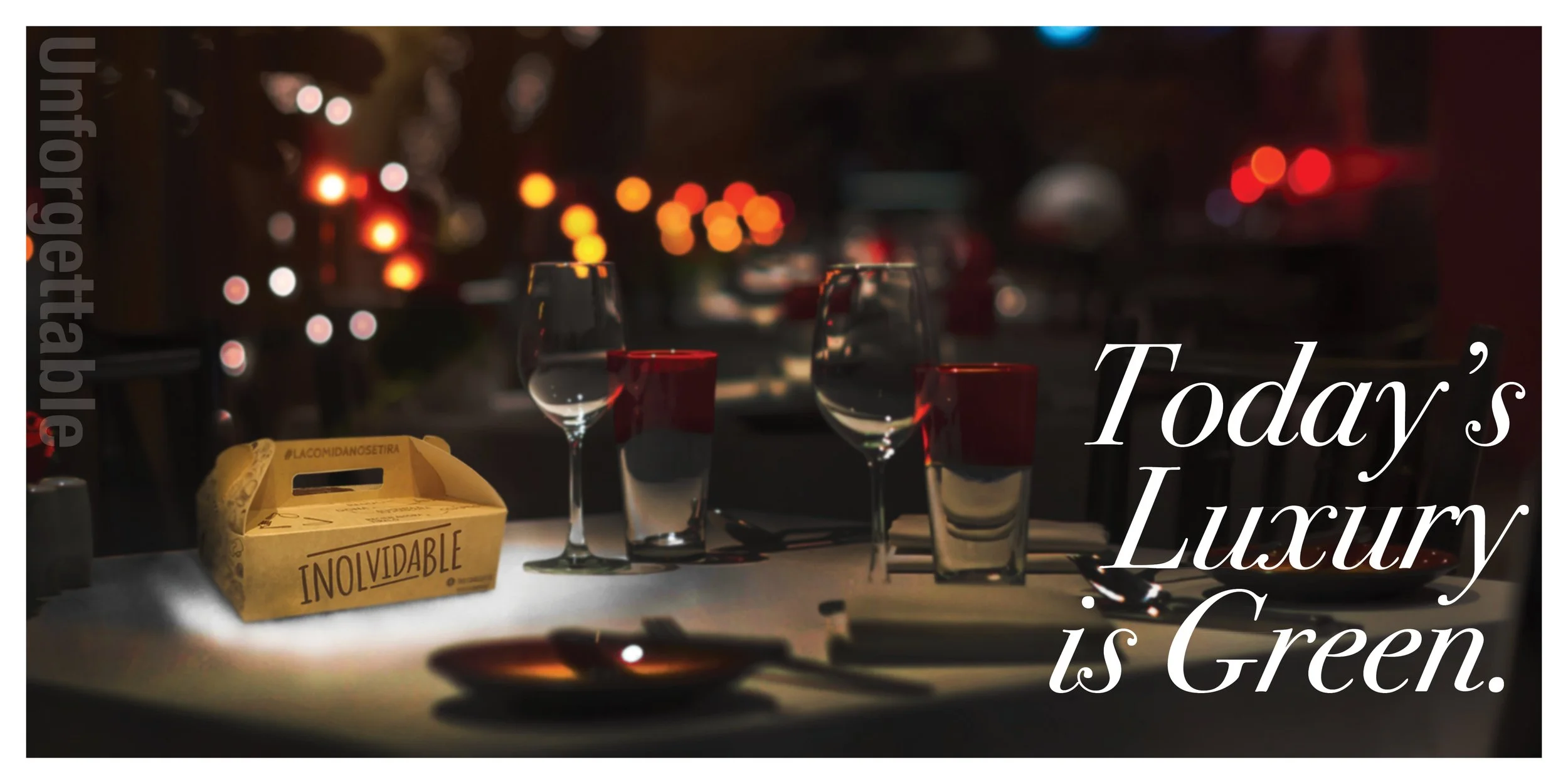
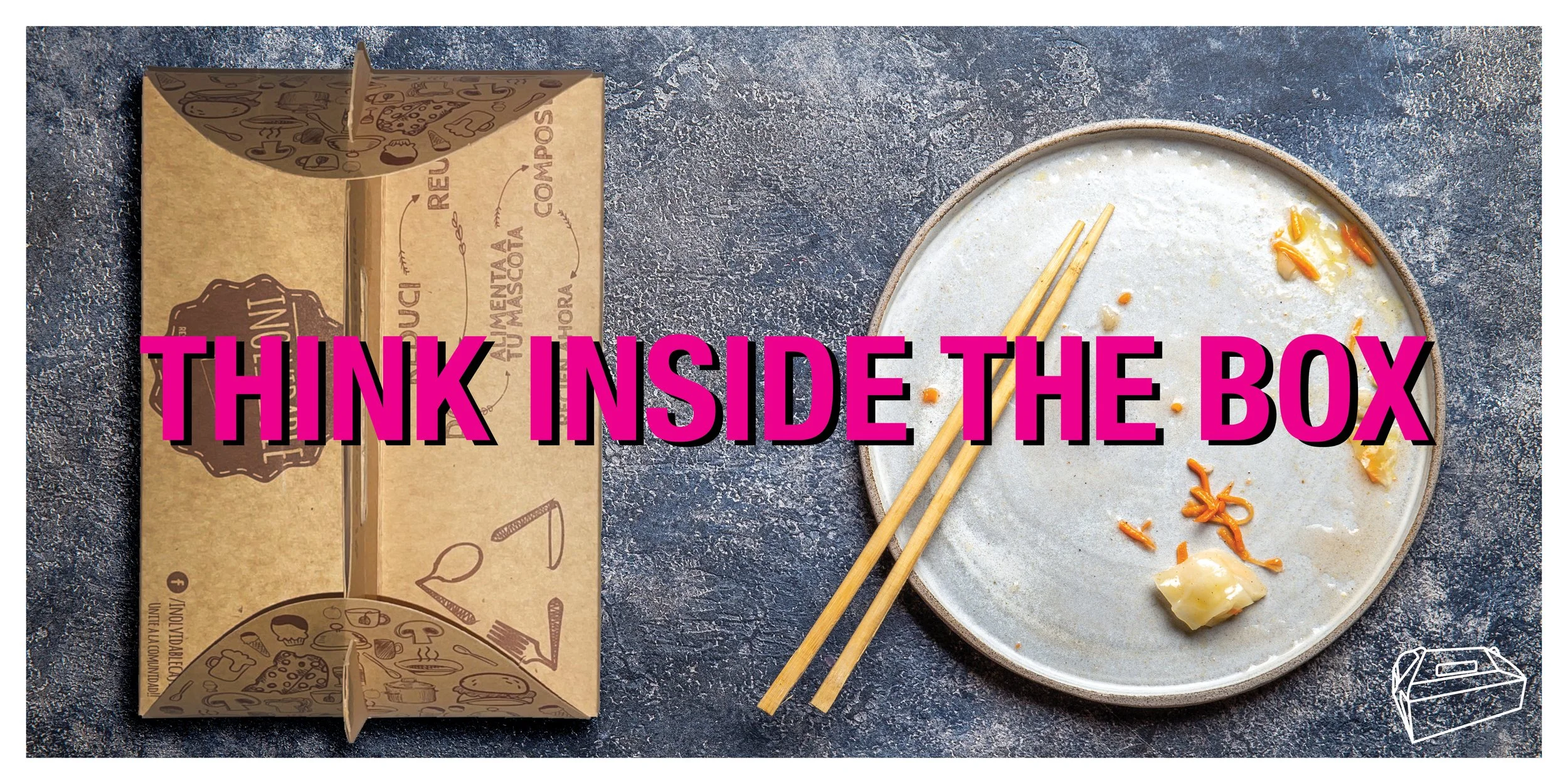
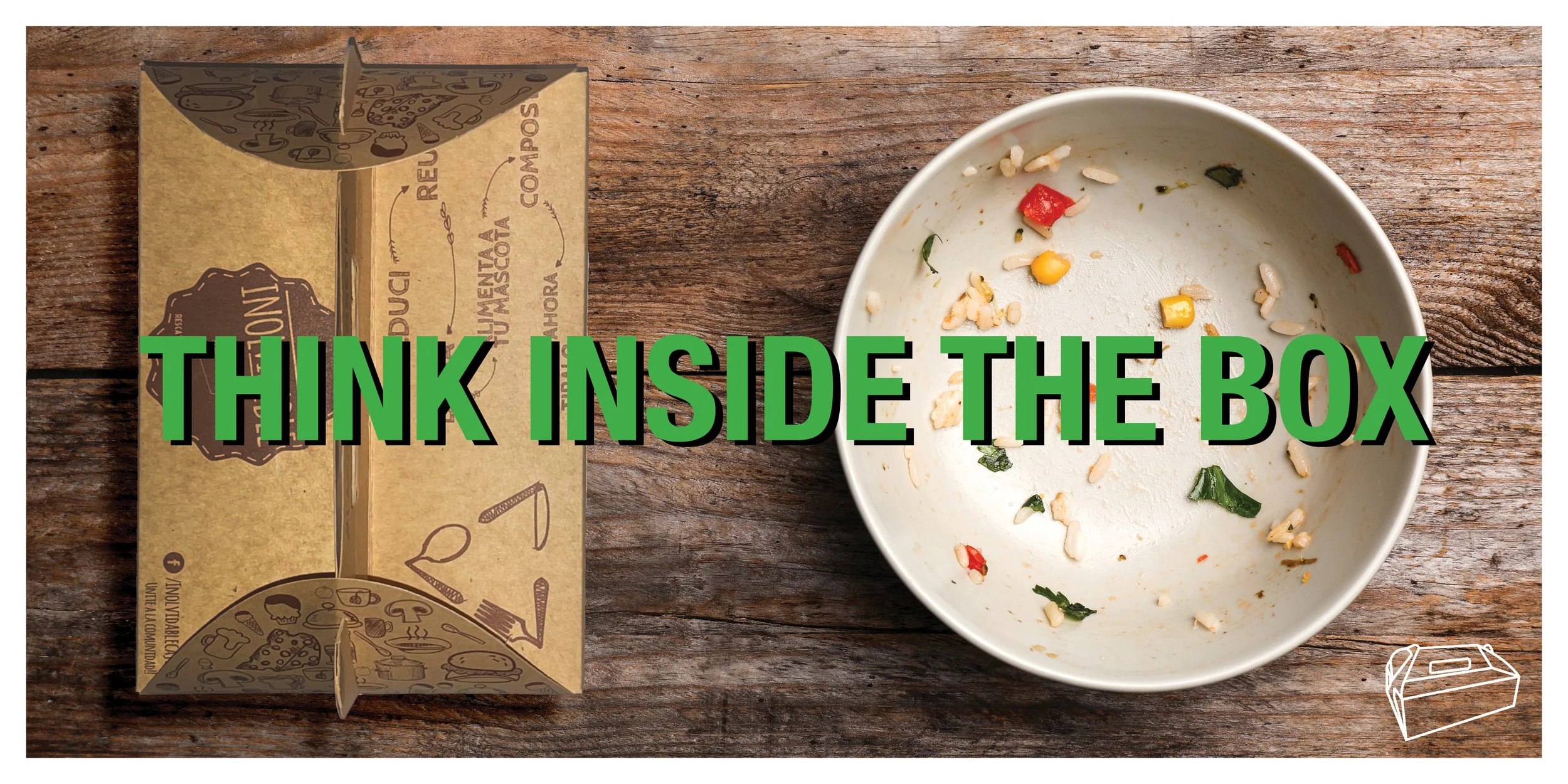
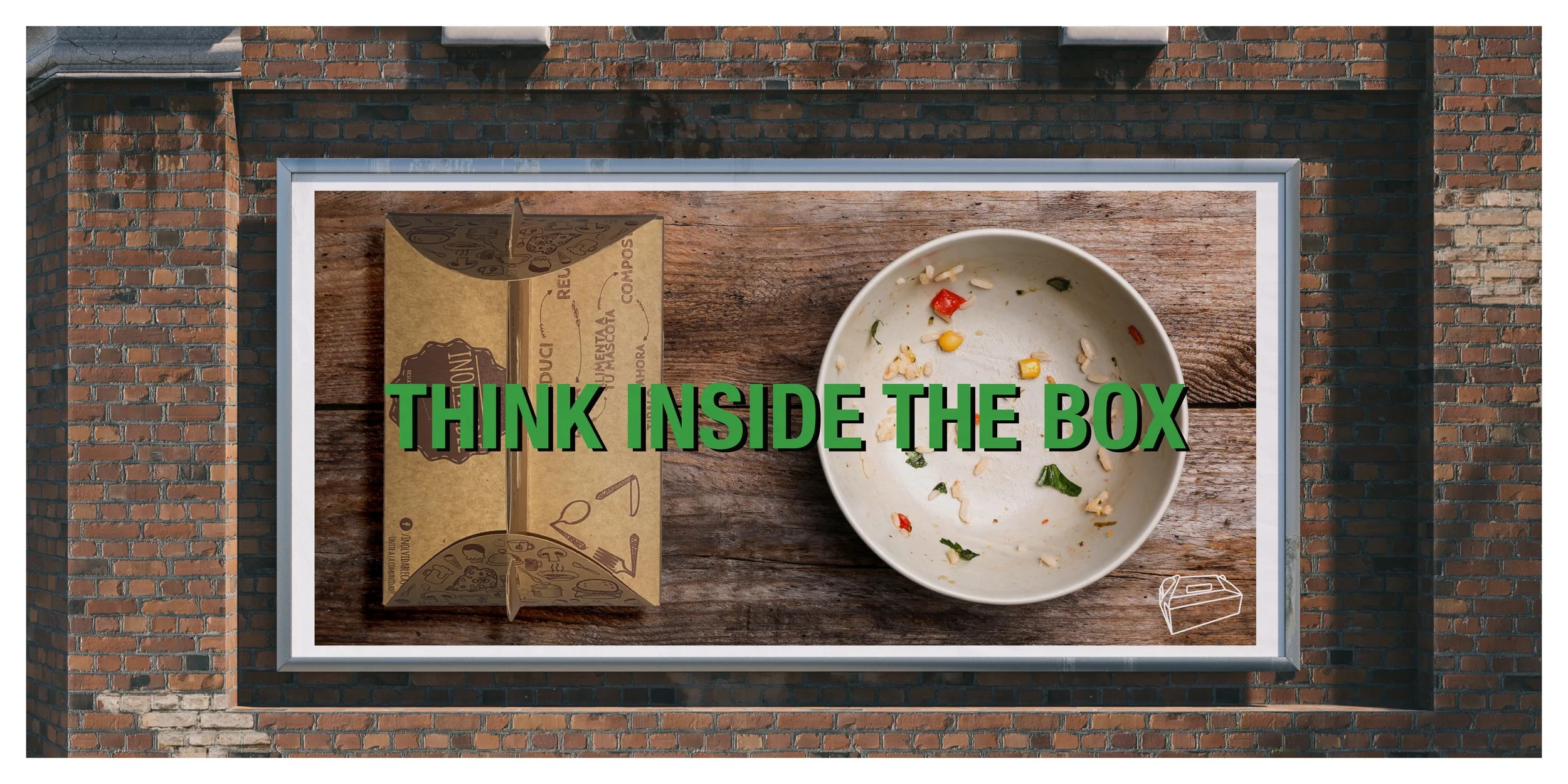
Inolvidable. Think Inside The Box.
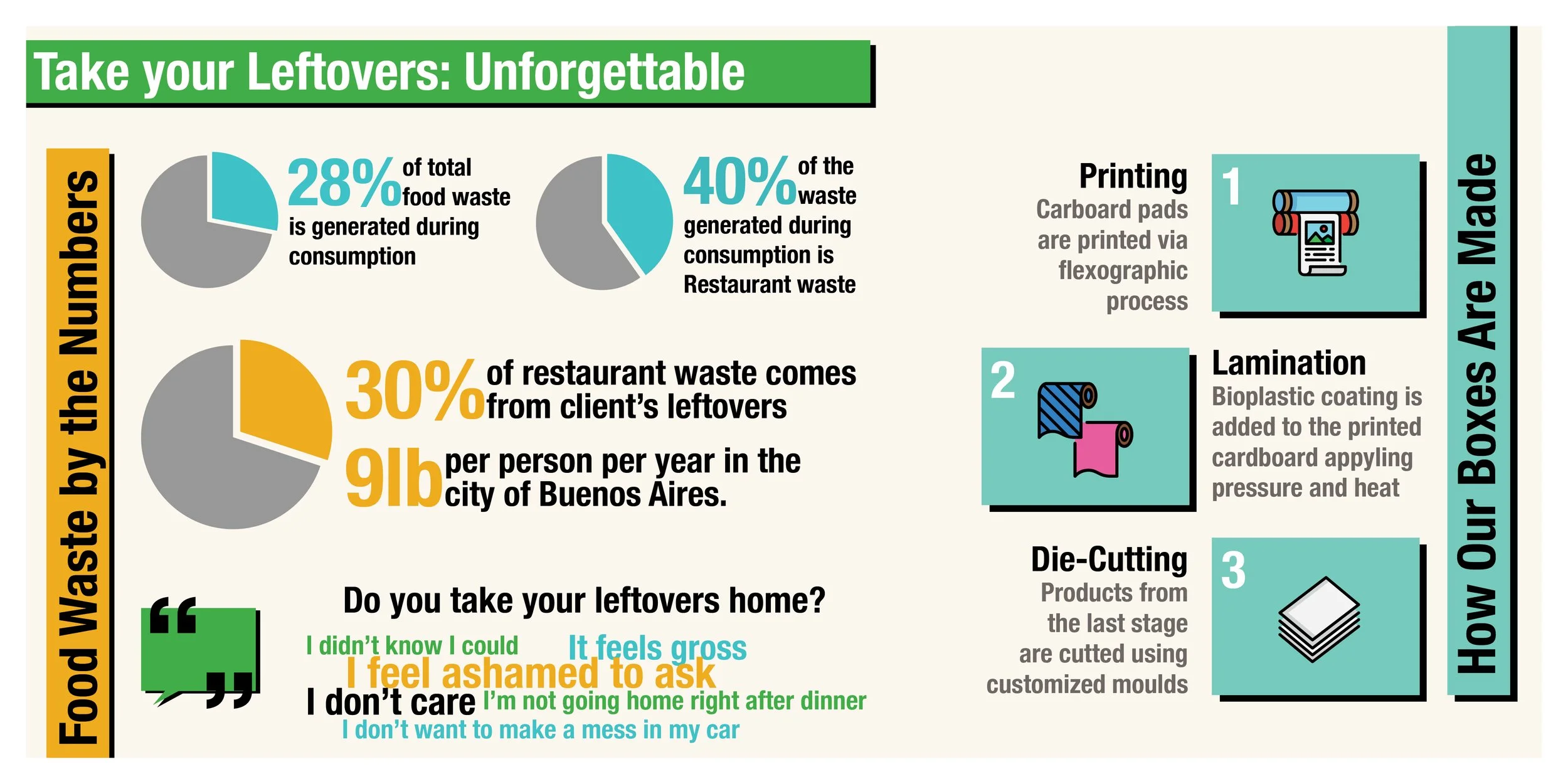
This project aimed to tackle food waste in the city of Buenos Aires. Initial research included learning about the different stages in the food supply chain and how it waste is generated. All the literature review made us understand how much tons of edible food is wasted.
As the stepping stone of a concept initially thought to be for the long term, this project wanted to raise awareness to the broad public, as our own research showed that people were not familiar with this area of waste management, with the spotlight in other type of waste already being tackled. With the help of a systemic, human-centered approach, we designed doggybags to facilitate taking leftovers from restaurants with a product-service that created value for both restaurants’ clients, owners and other stakeholders.
Overview
Research
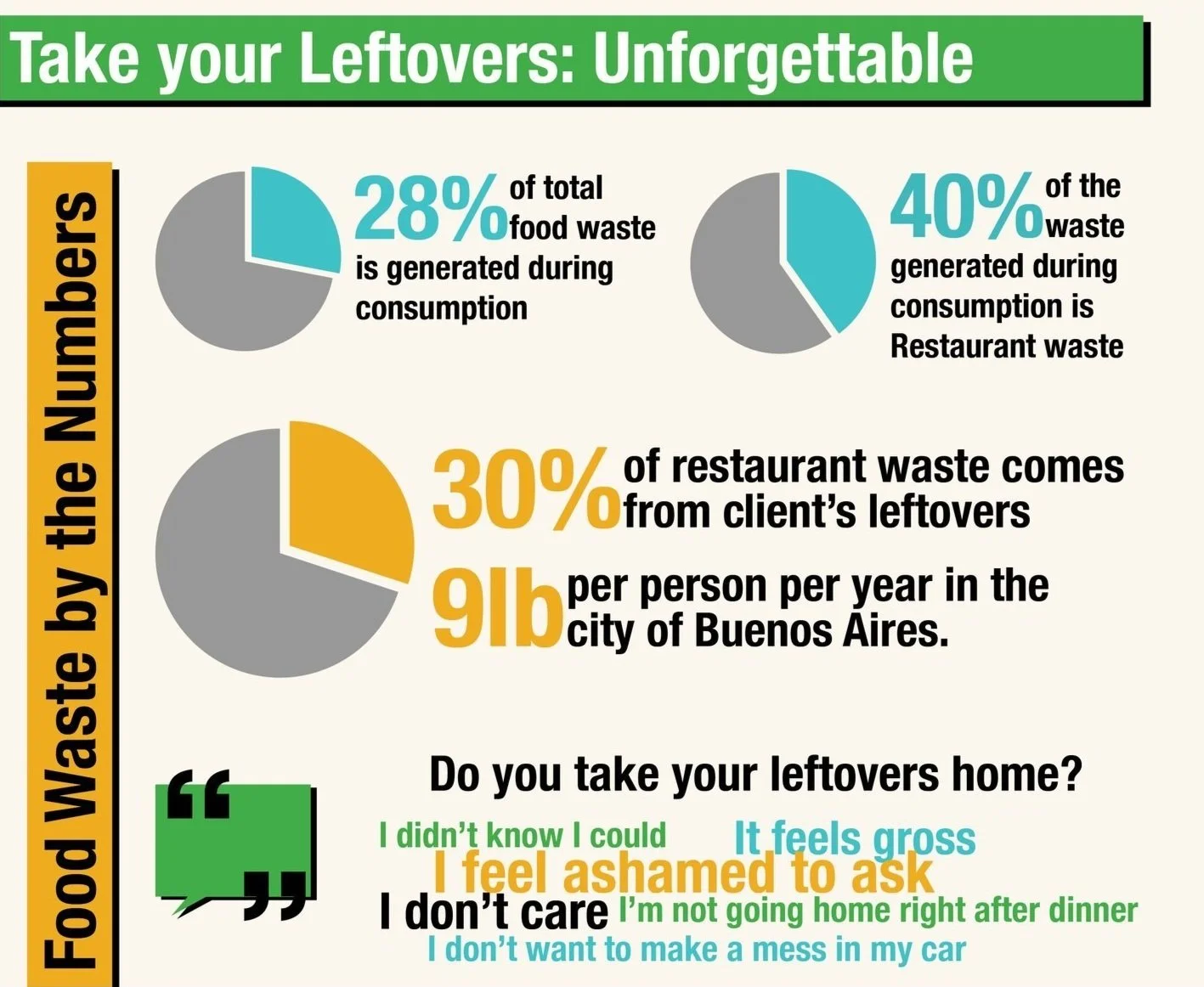
Research started with the development of a comprehensive literature review, first from a global food waste perspective along the whole supply chain, and then going through the local data available for the city of Buenos Aires. From both expert disseminators on the subject, and Food and Agriculture Organization of the United Nations there was a clear message on the direction of raising awareness on this matter, due to the current wave of sustainability and waste management being focused on other equally concerning subtopics.
Although when being exposed to the broader subject of food waste, the amount of tons that are wasted during production, transport and retail are at least astonishing, and although focusing on retail stage waste, more specifically on restaurants may not recover the bigger percentage of waste, it is a perfect opportunity to get people involved and raise awareness on the subject, especially given the context of a big city like buenos aires, recognized as a gastronomic capital of the region.
Primary research involved surveys and several interviews, both structured and unstructured observation sessions to understand the existing barriers today that were not enabling the behavior of taking out our leftover food from a restaurant.
Key Insights:
Taking away leftovers not only depends on customers’ attitude, but also relies heavily on the waiters offering to pack them to go when removing the finished meals.
People resist to take their leftovers due to the ineffectiveness of the usual packaging offered: Plastic, wrapped containers and other configurations that ended up spilling liquids and other inconveniences.
Local regulations do not allow to the restaurants to donate or collect this leftovers and are forced to throw them away as waste.
Most restaurant owners would be willing to adopt this new package if it matched the price of the actual plastic boxes. Other owners showed themselves as early adopters as this type of campaigns were more aligned to their brand value proposition.
Ideation and Iteration
Having internalized those insights, the direction selected after brainstorming and design session with external people who would bring fresh ideas was to design a food container for the specific situation of taking away the leftovers from the restaurants. Out of different design direction for the whole system to work, we decided to frame the whole operation as a B corporation, so work aligned with sustainability goals.
In terms of product design, we had to conciliate the needs of clients and restaurants’ owners. We made a first iteration of a simple design to test dimensions and get feedback. From this iteration we got the following feedback:
Easy storage for restaurants’ owner
Dimensions: We need to be able to fit large items. A slice of pizza should fit without trouble.
Waterproof layer on the used of the box. Liquids, sauces or heat could compromise the container’s structure.
The proposed “handle” dimensions should be different for a more comfortable handling when the container is full.
-
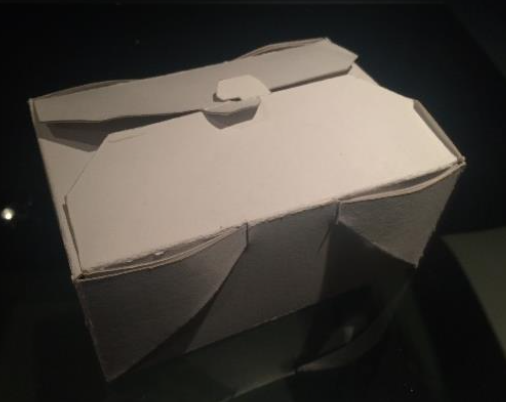
First product approximation
-
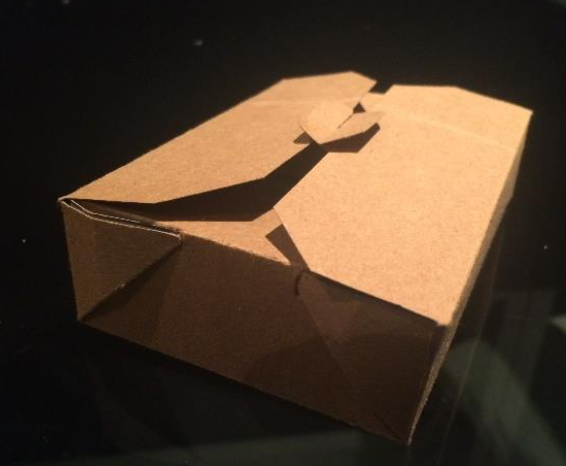
Early prototype with lighter cardboard material option, color more suitable for ‘sustainable’ brand communication (defined by focus group opinion versus previous image).
-
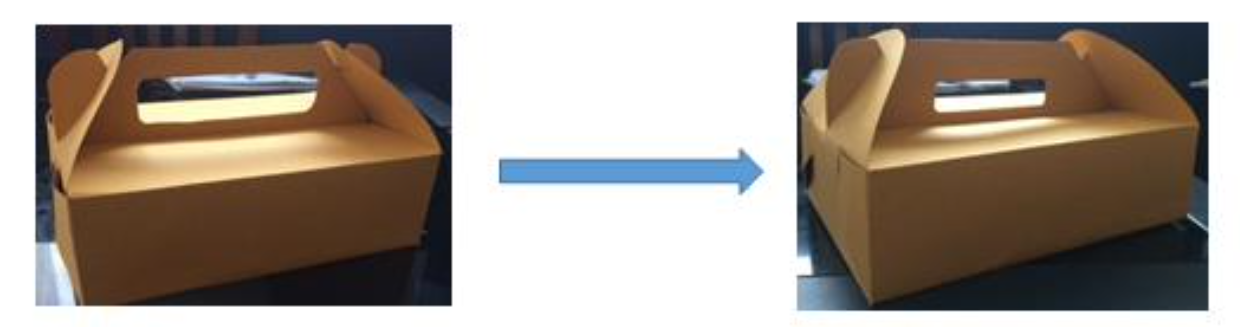
Handle application, and dimension iteration for better grip when full
Final Product and Concept Presentation
After the iteration process described above, the product was defined and communicated with its features and benefits:
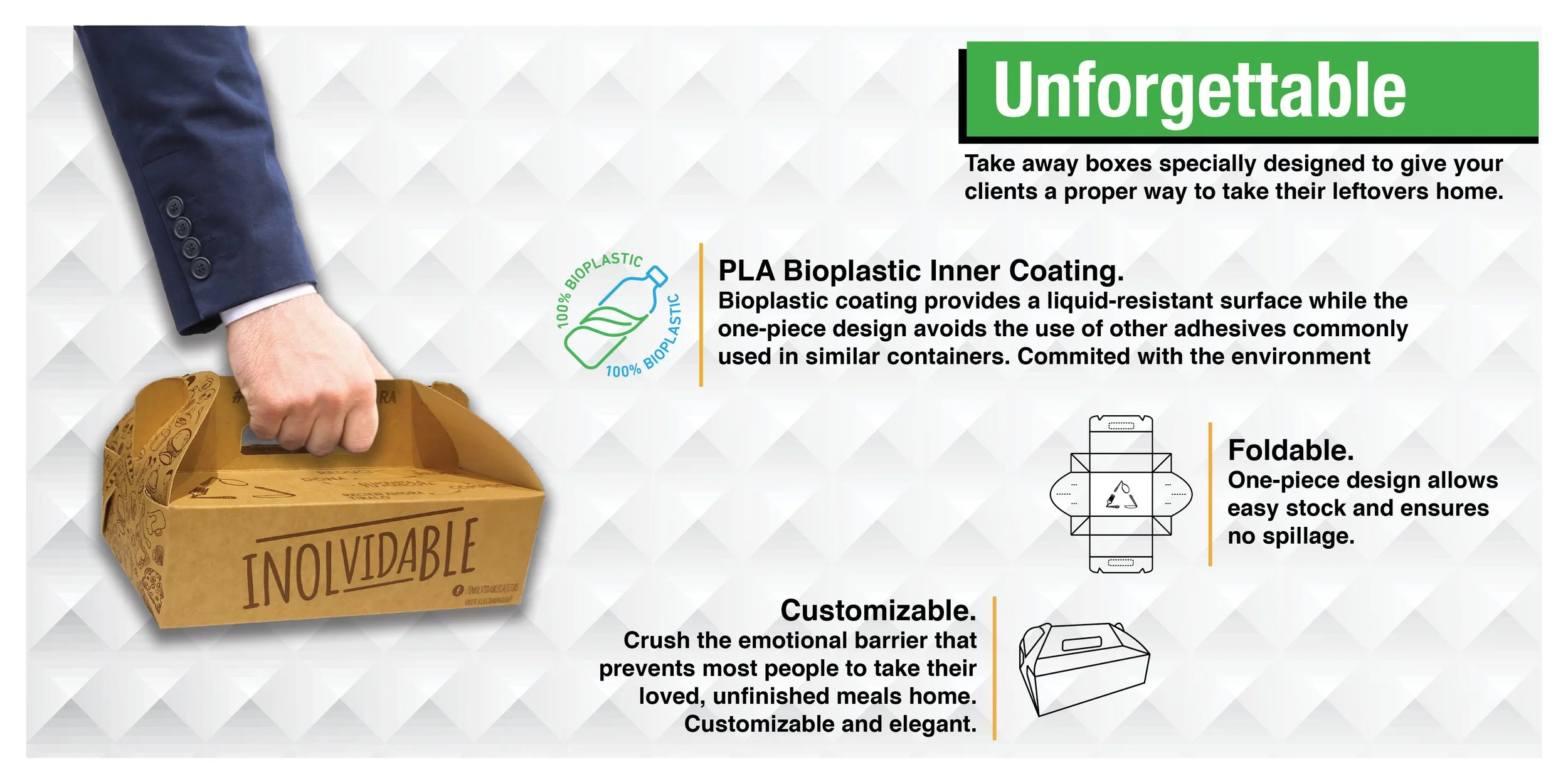
Project Communication and Infographics