Savannah Visitor Center Service Design Project

Overview
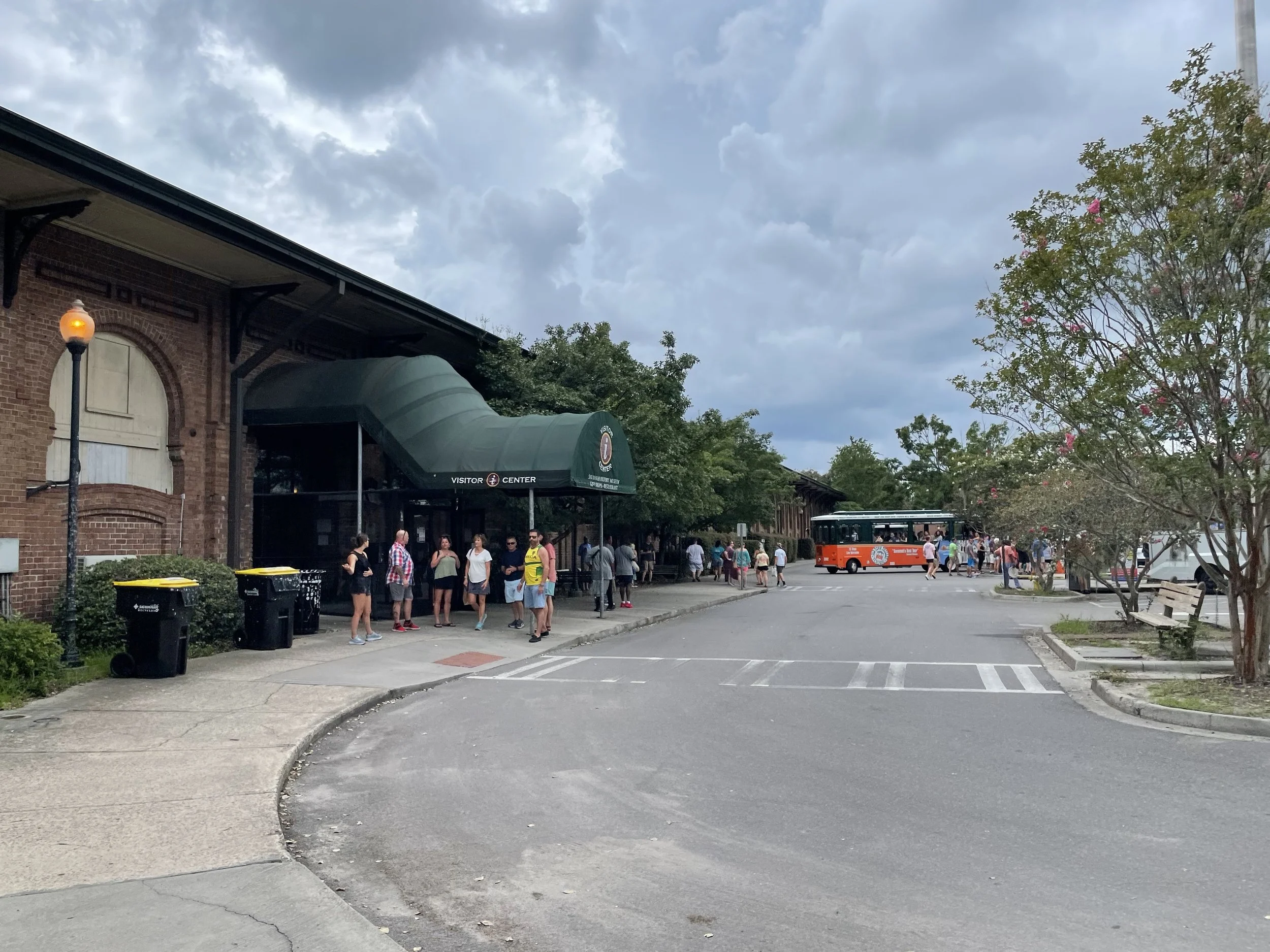
Savannah Visitor Center is the main information center for tourists arriving and exploring Savannah. Many signs with directions to this place can be found in the principal highway entrances to the city and around Savannah’s Historic District.
Even though the main entrance is located on Martin Luther King Jr. Boulevard, most of the tourists arrive to the building through the side entrance, due to the parking and popular trolley tours stops located in that side of the property, generating many painpoints in their experience engaging with the Visitor Center.
This project explored how tourists interacted with the space through primary research, to ideate and test prototypes during a one-week sprint .
Research Plan

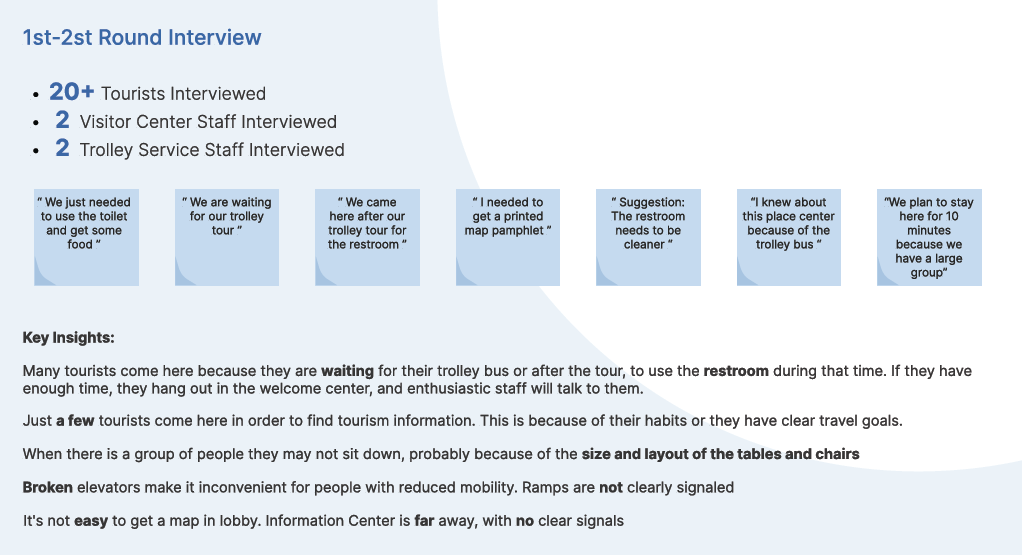
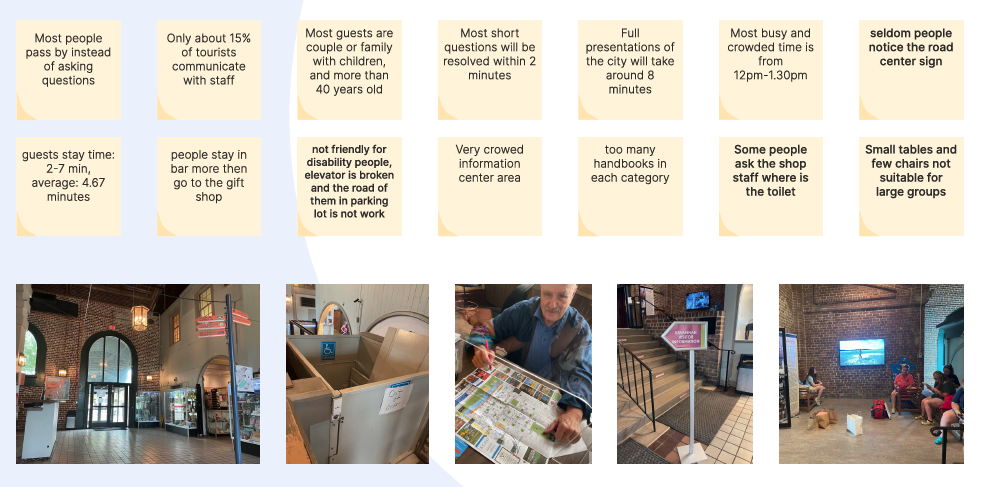
Observation and Insights
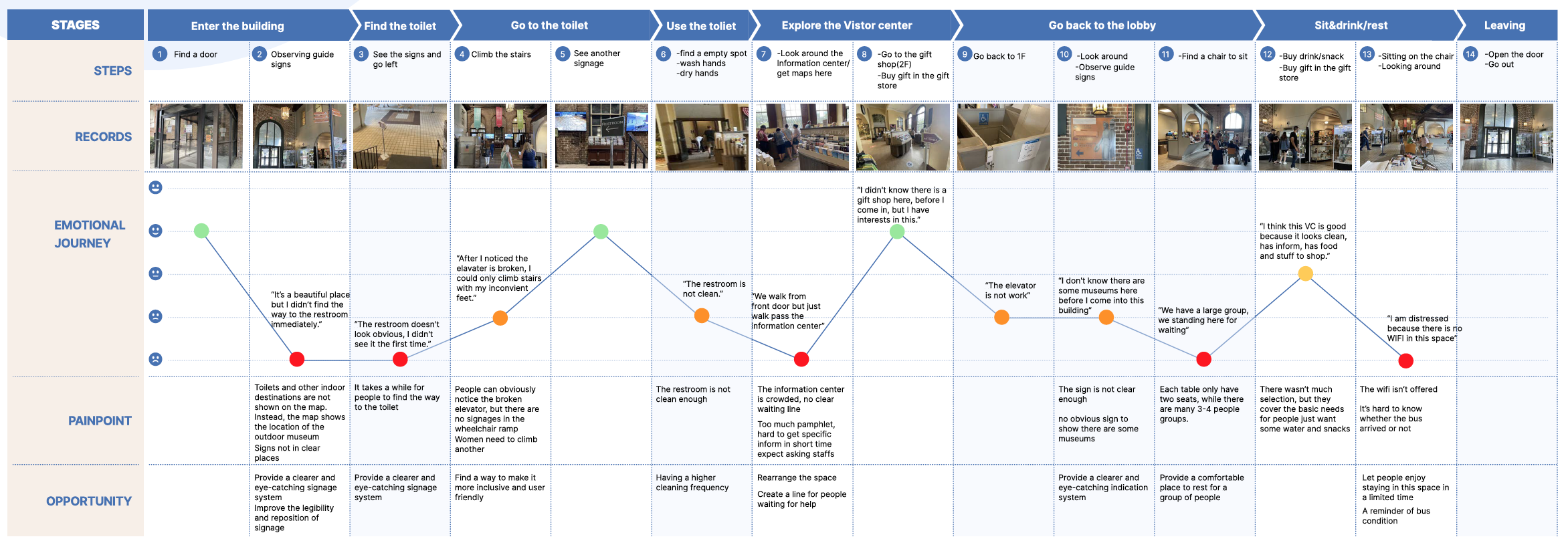
Journey Map
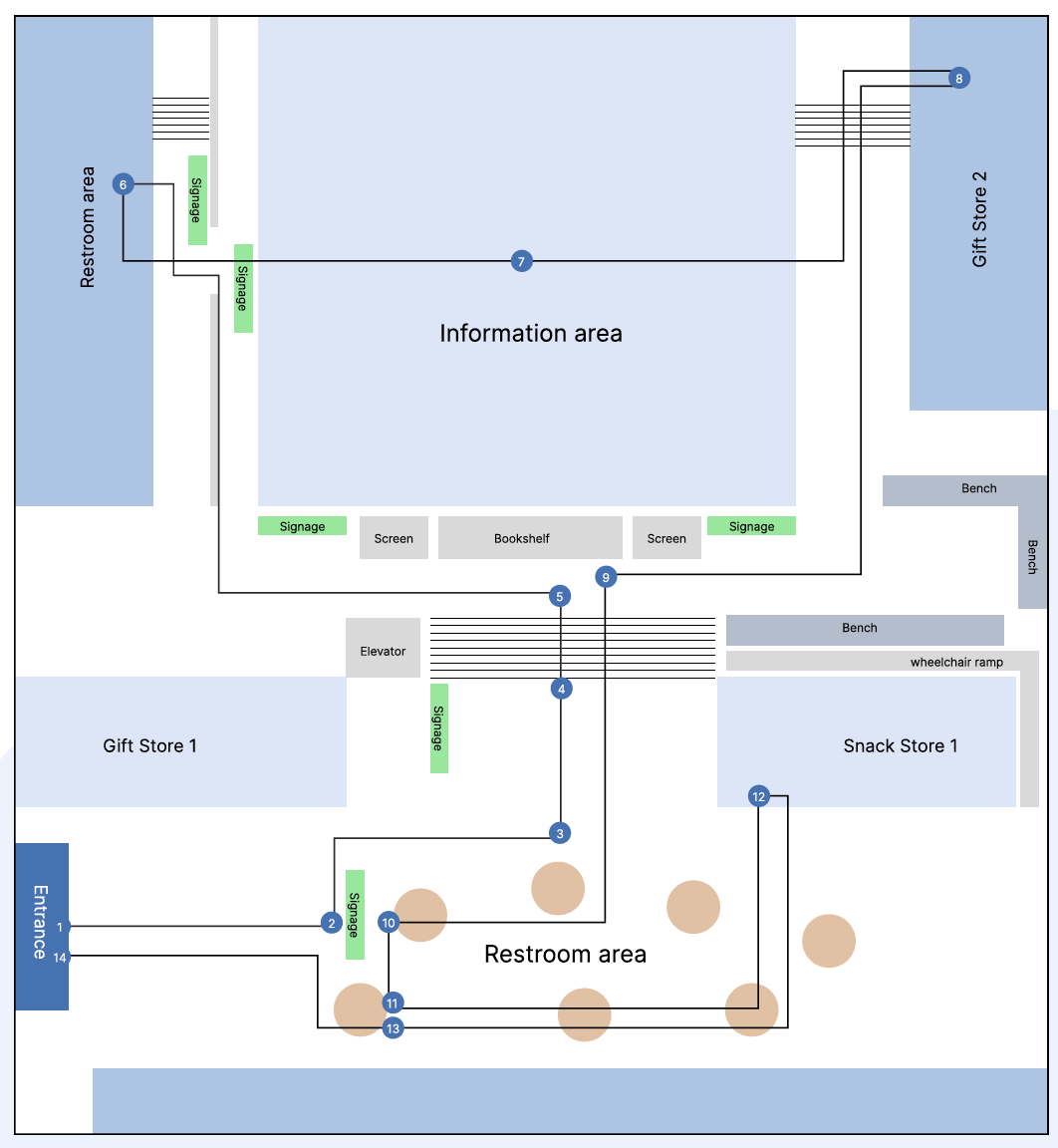
Spatial Distribution
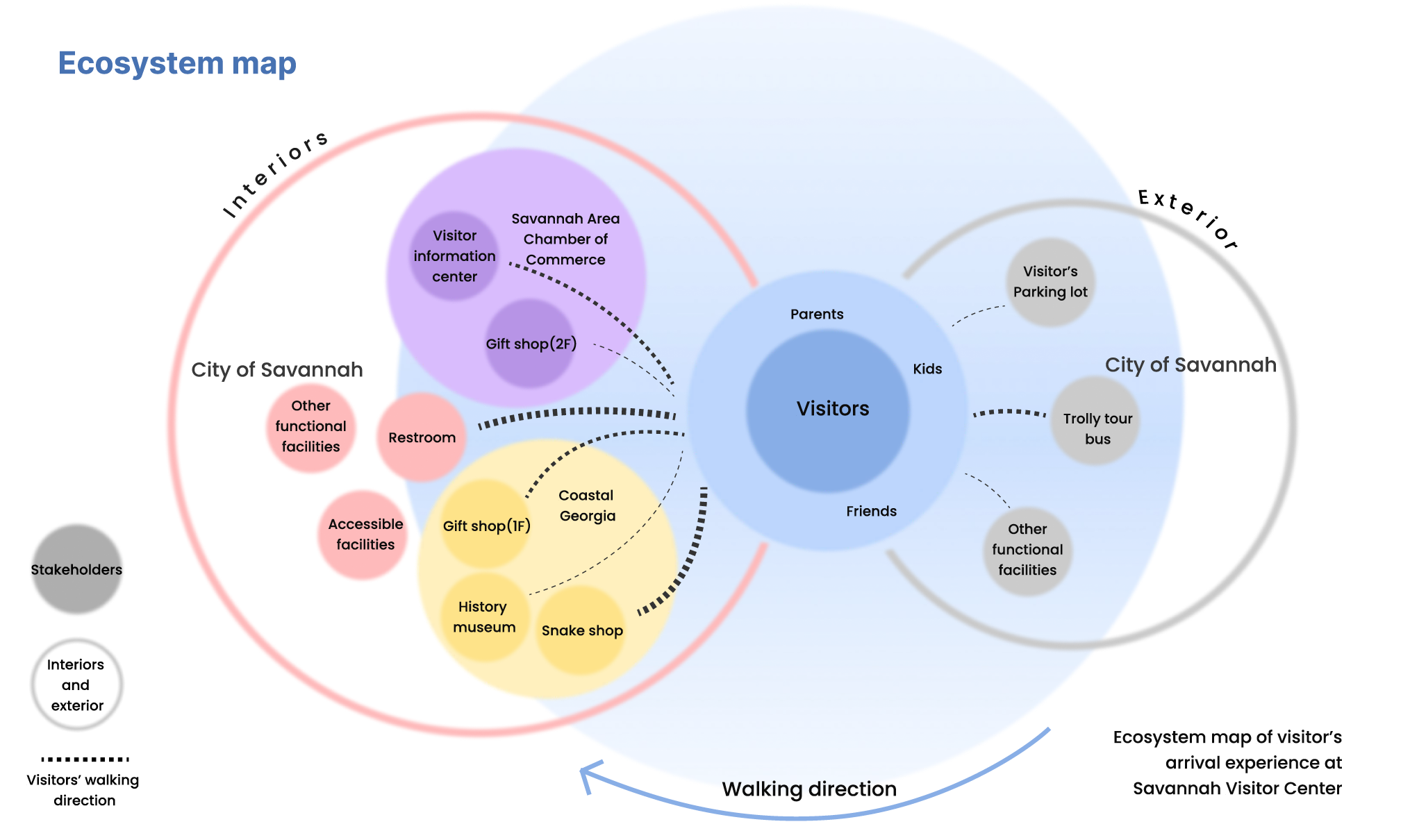
Service Ecosystem
Ideation


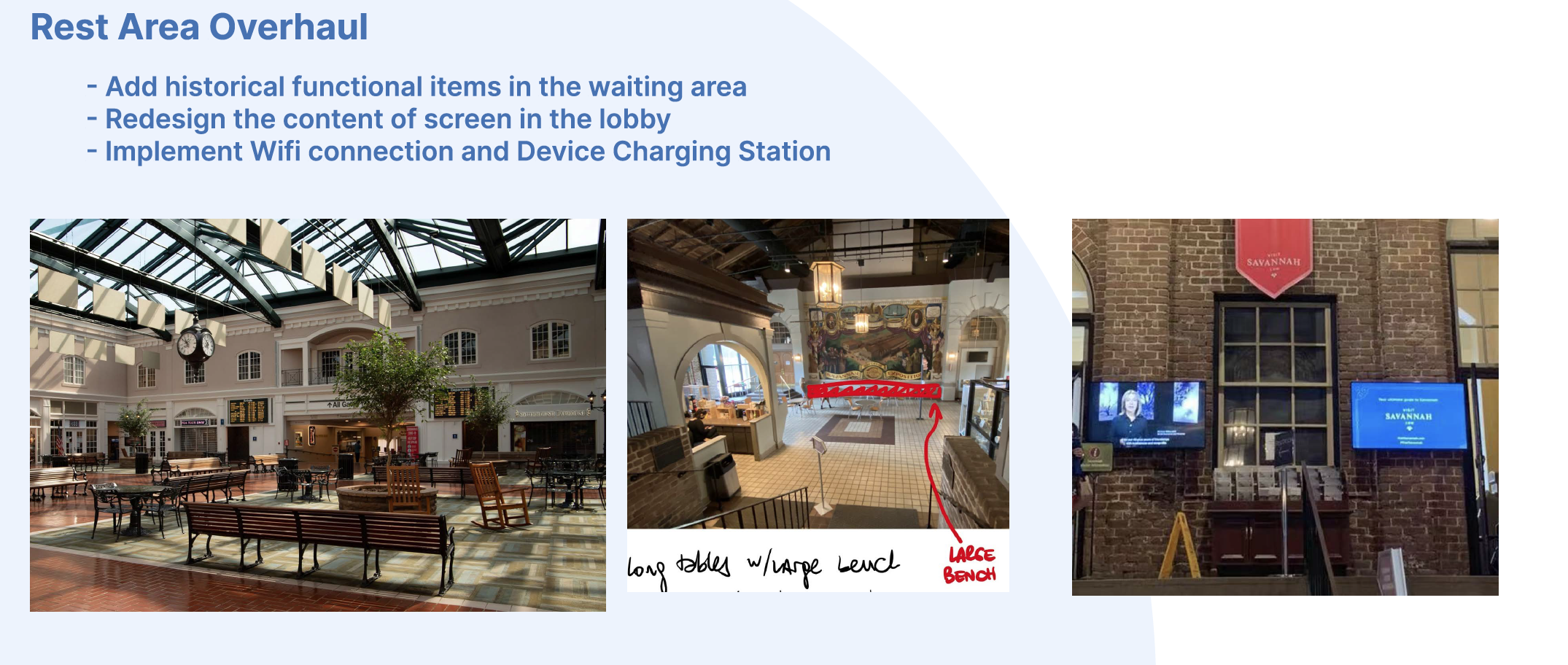
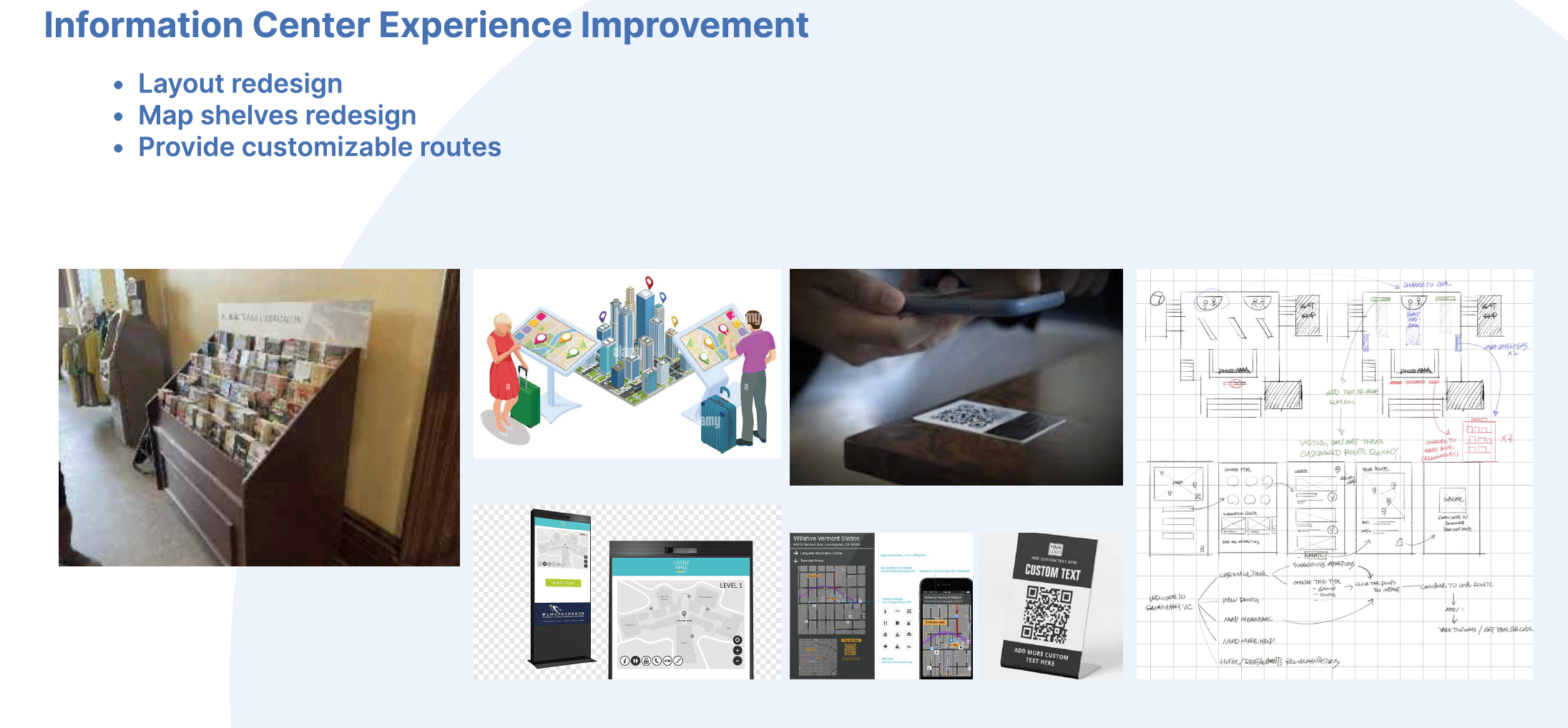
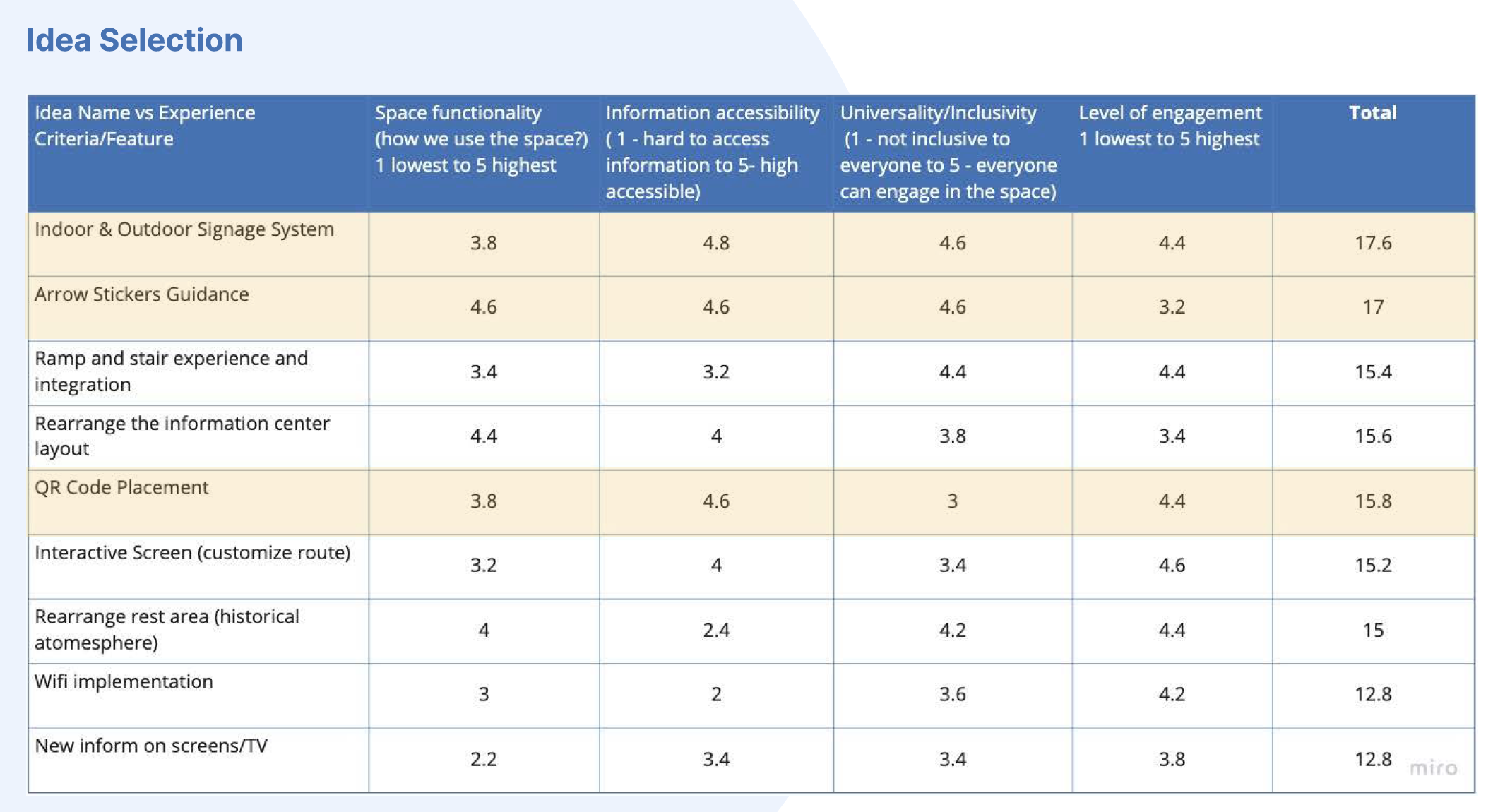
Based on the insights collected during research, ideation sessions were conducted to gather inspiration to improve the areas of the journey that presented painpoints: Wayfinding, Accessibility, Consistency of the language, style and experience, and Information Delivery.
The main ideas were contrasted by ratings on 4 main qualities that they should have: Use of space, Information Accesibility, Inclusivity and Level of Engagement.
The ideas selected were subjected to fast prototyping to user test, and refine the ideas for the final recommendations to be included in the pilot planning.
Prototyping and User Testing
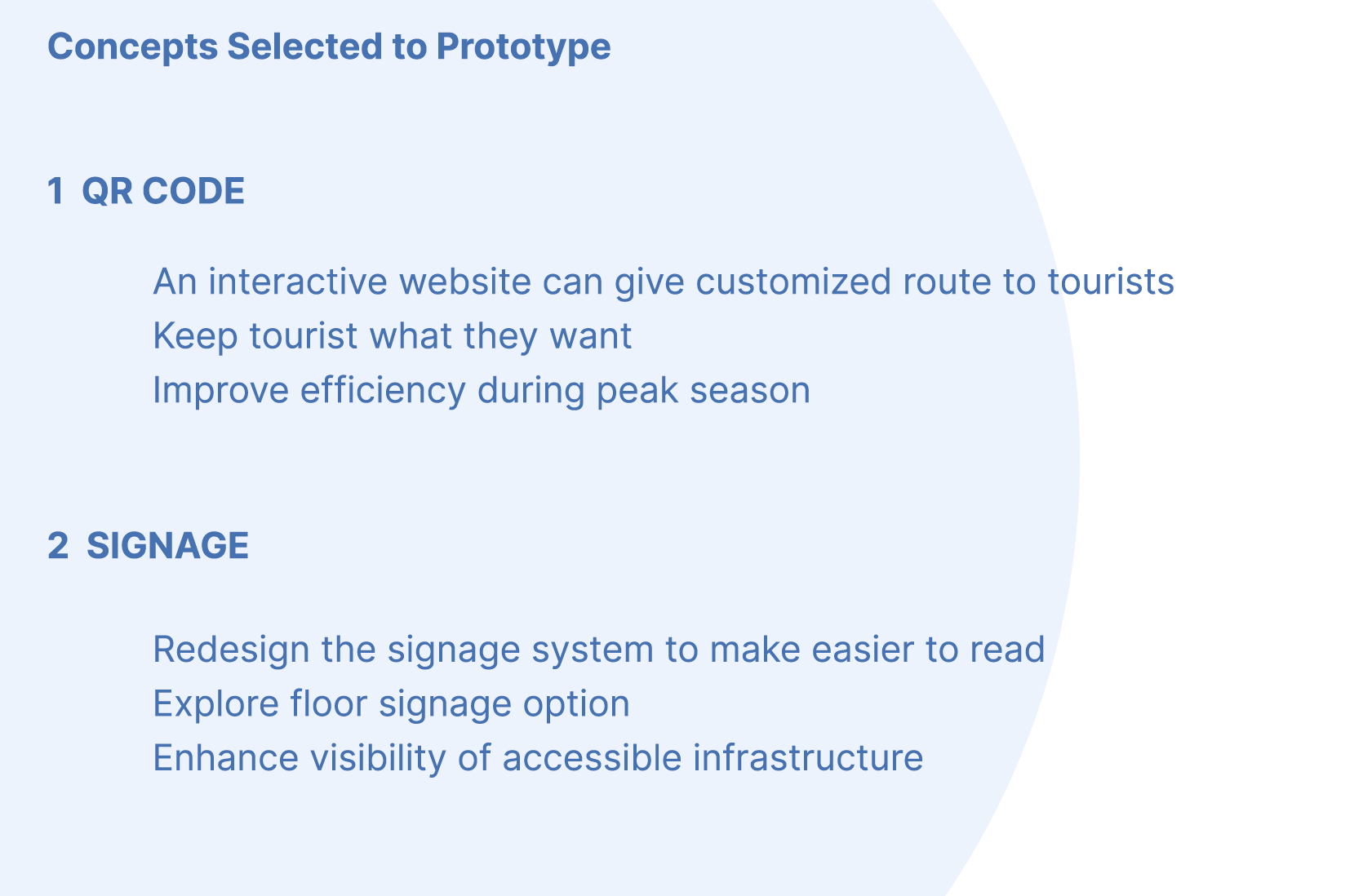
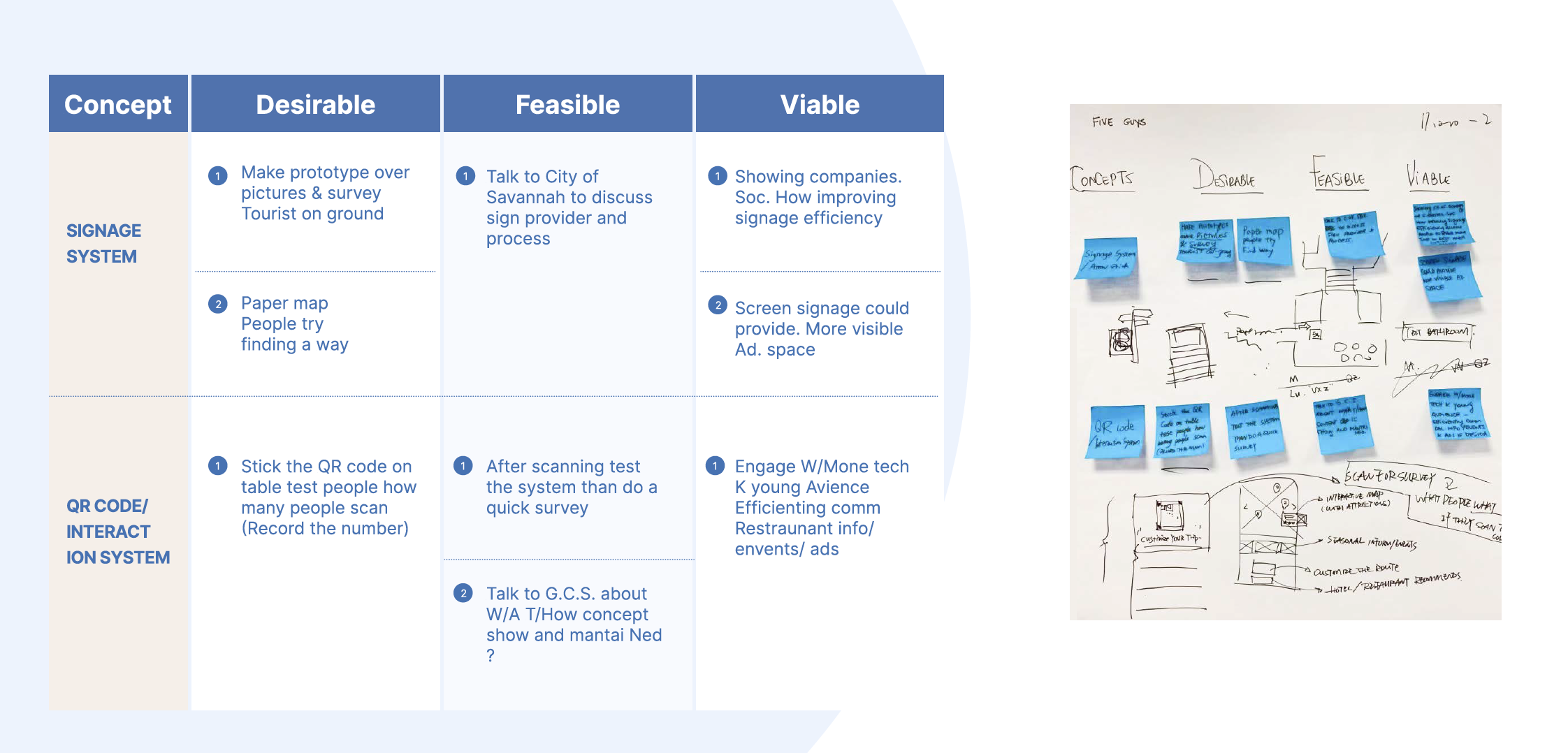
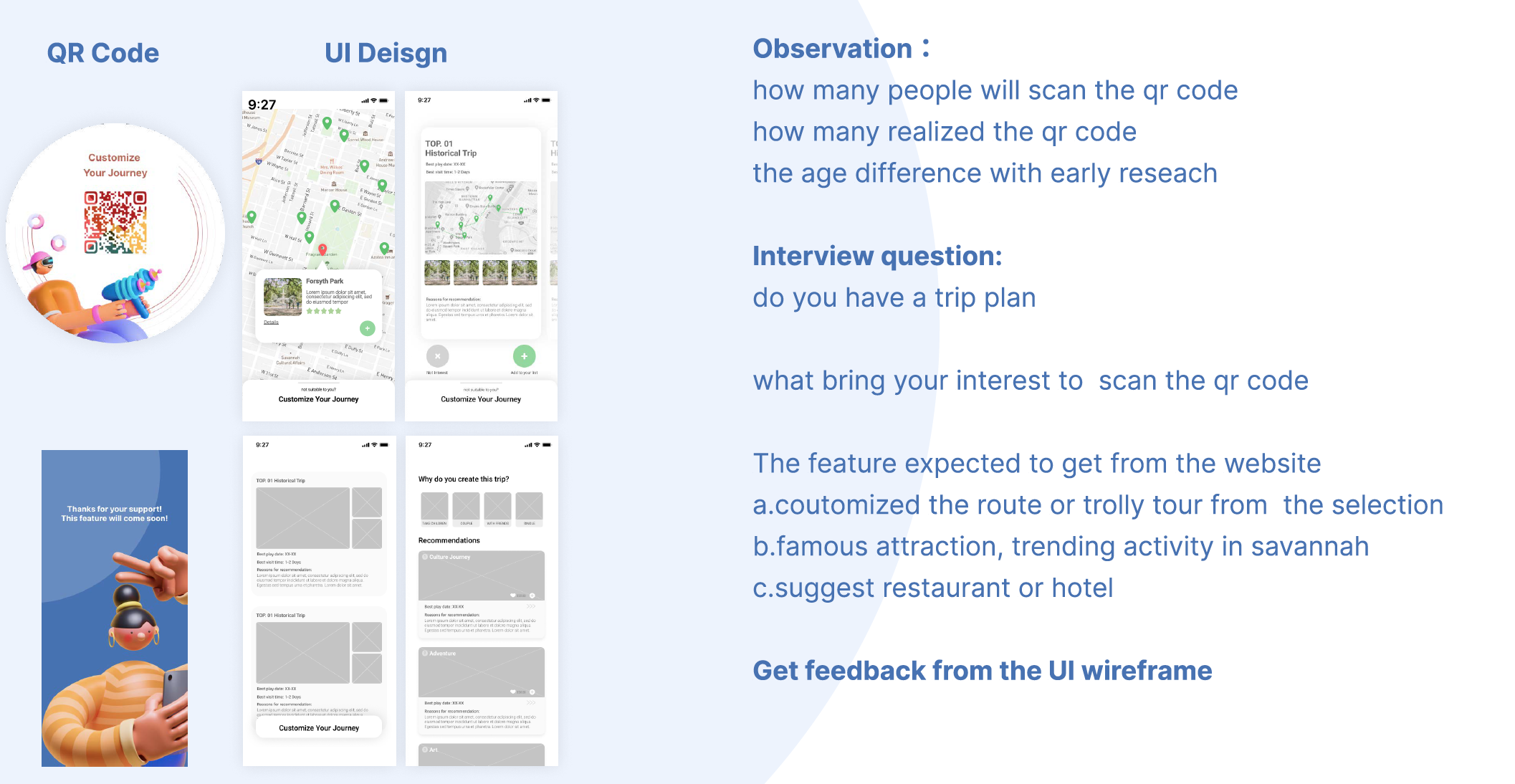
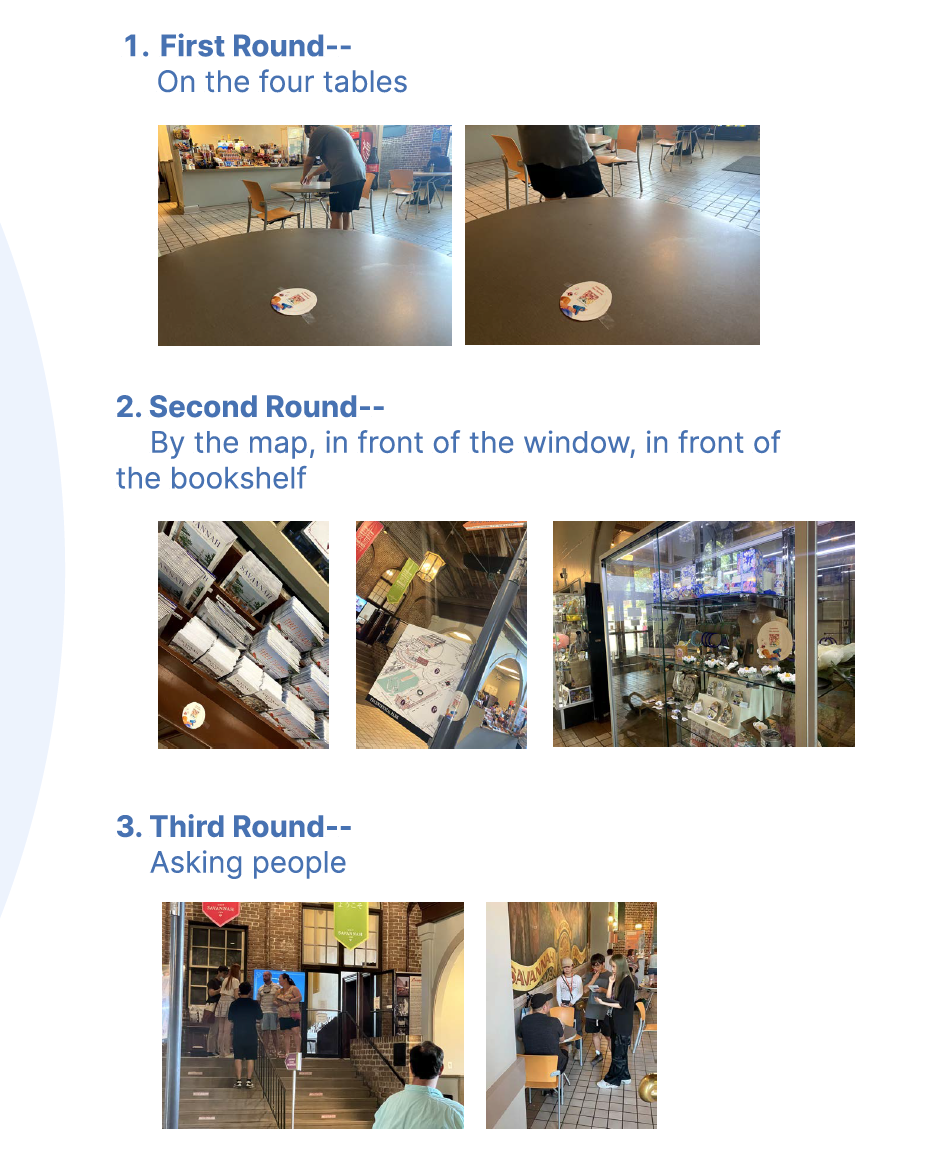
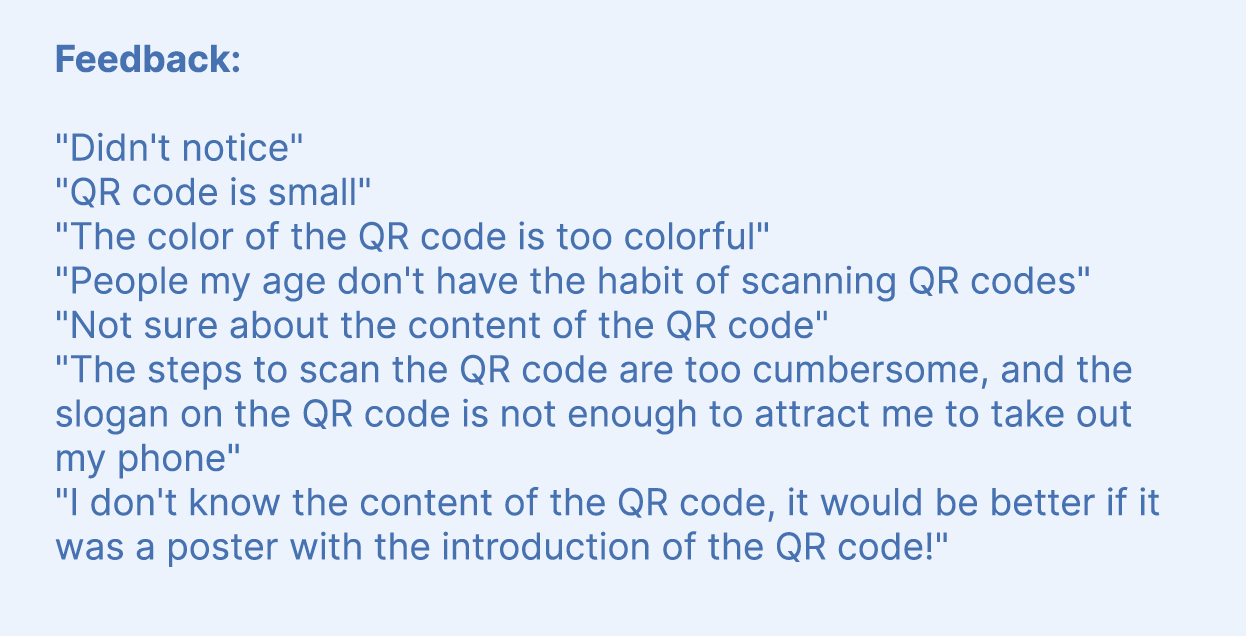
QR Code for Interactive Tourist Information
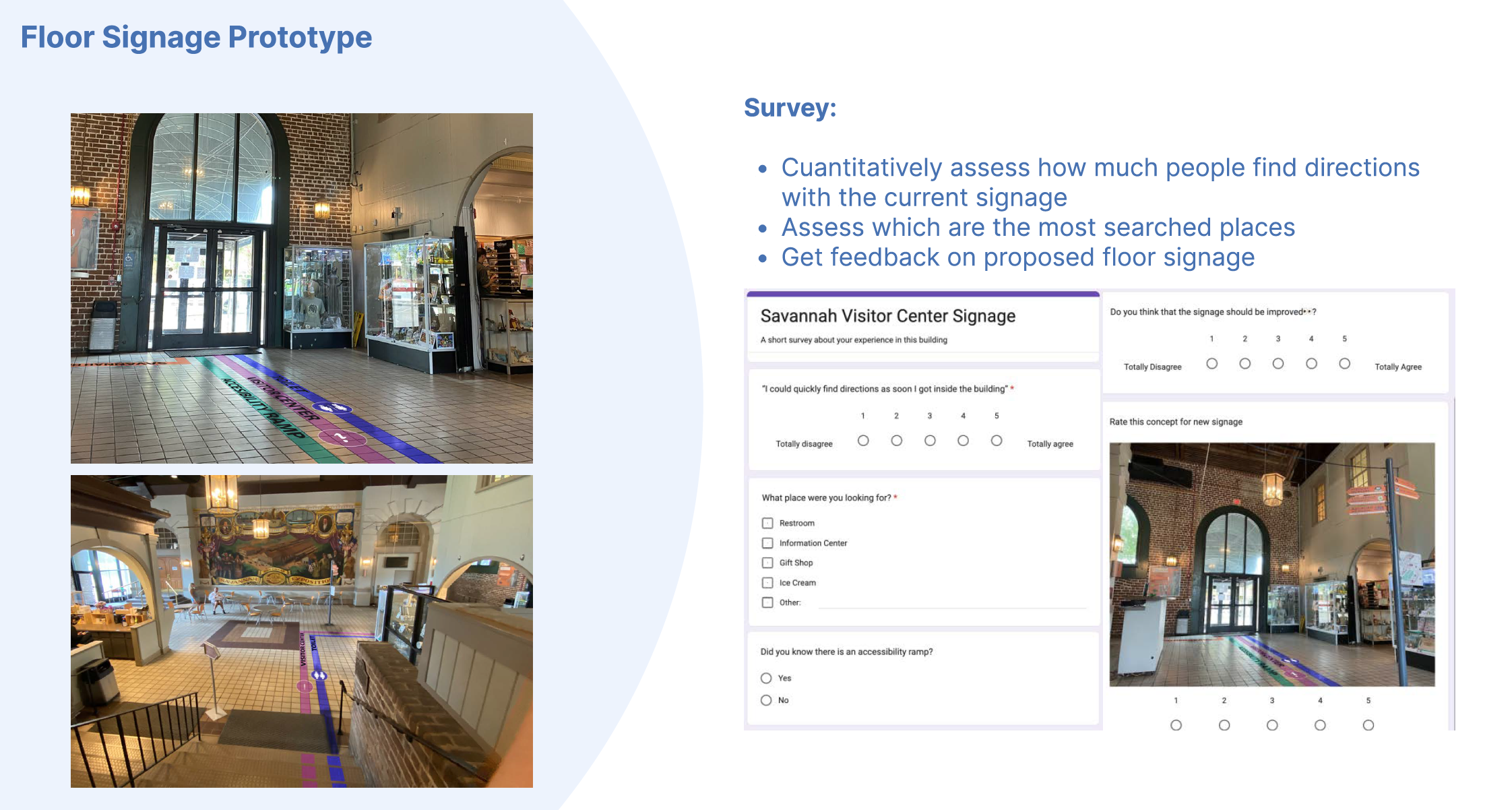
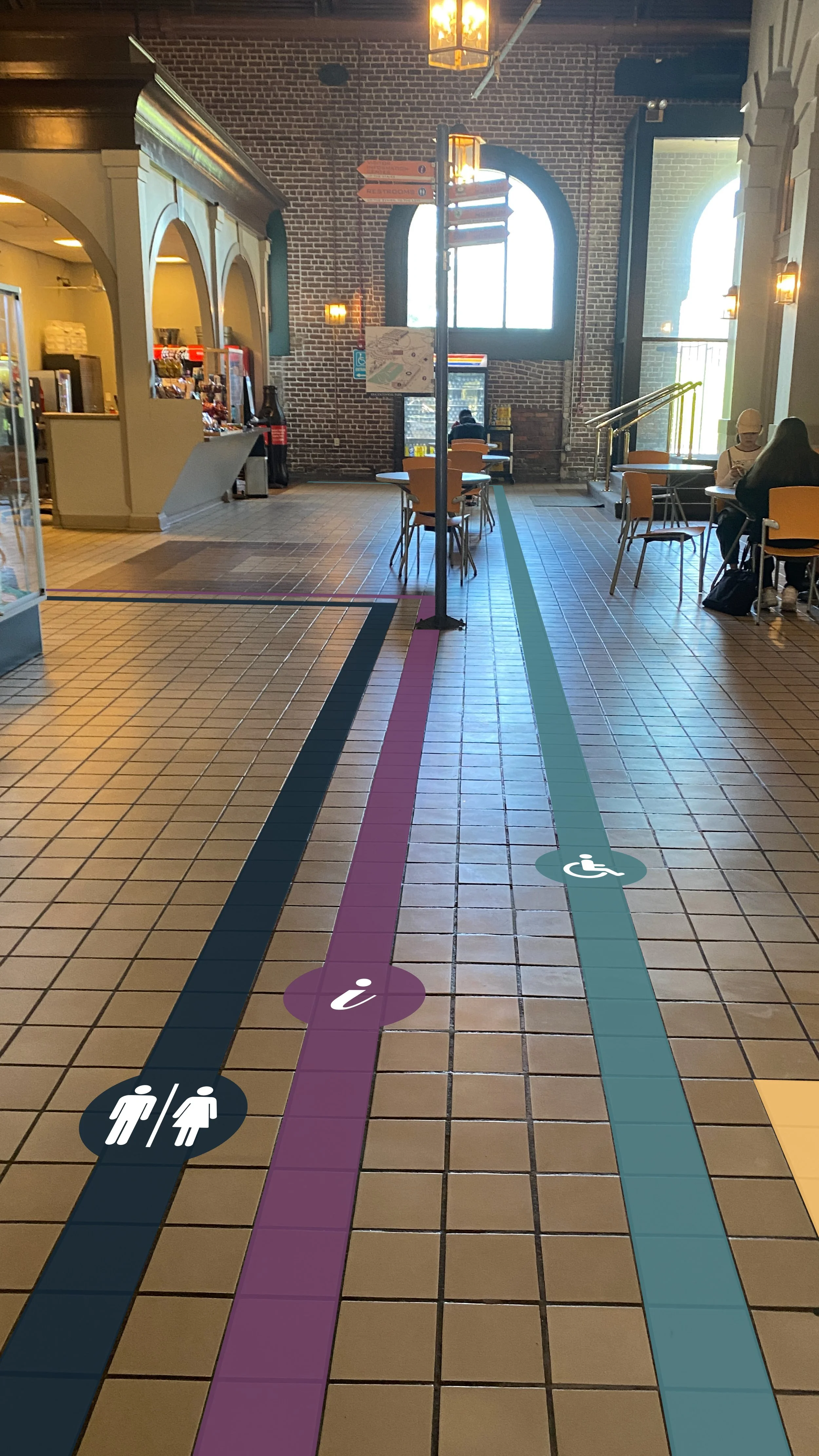
Signage Redesign
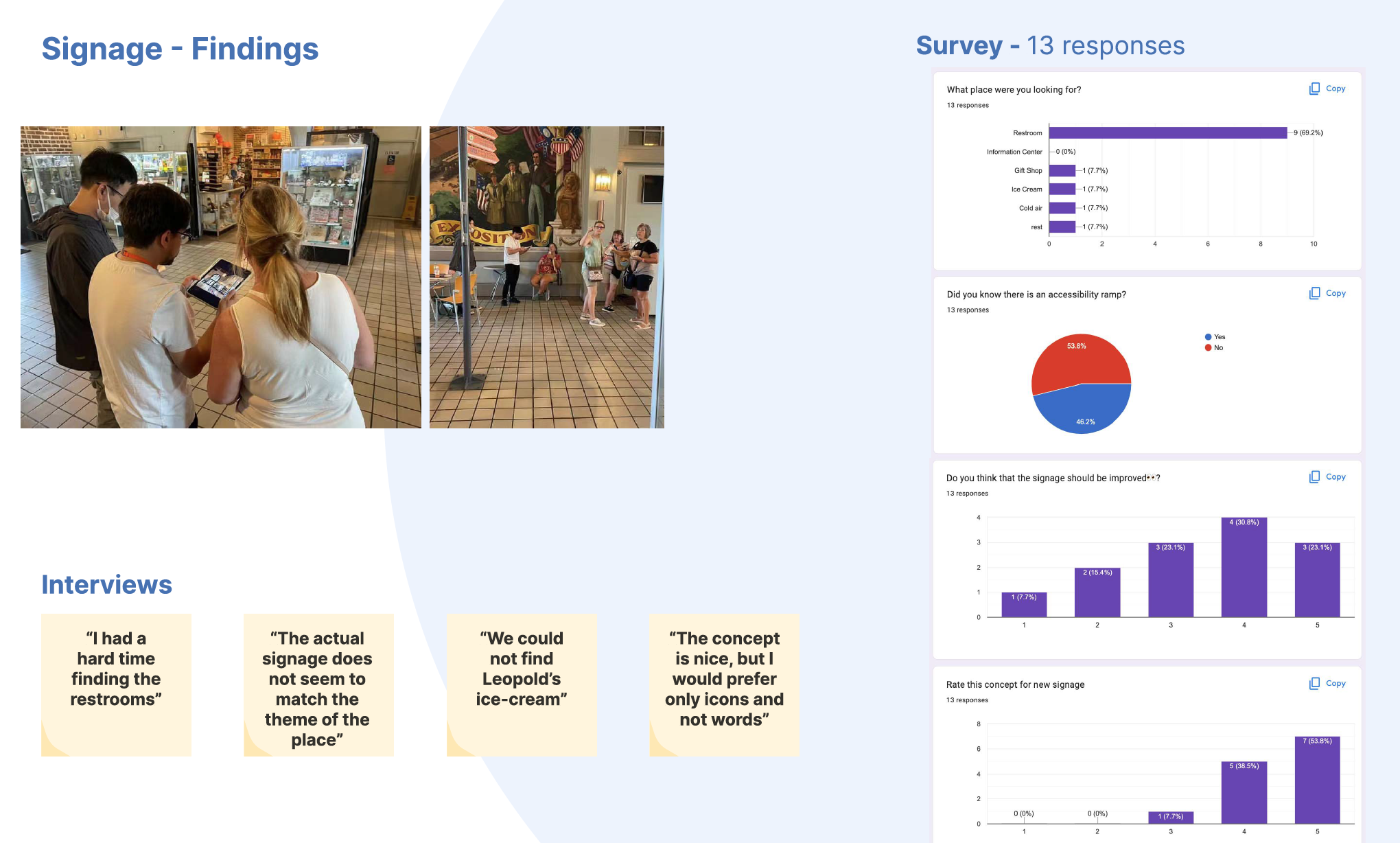
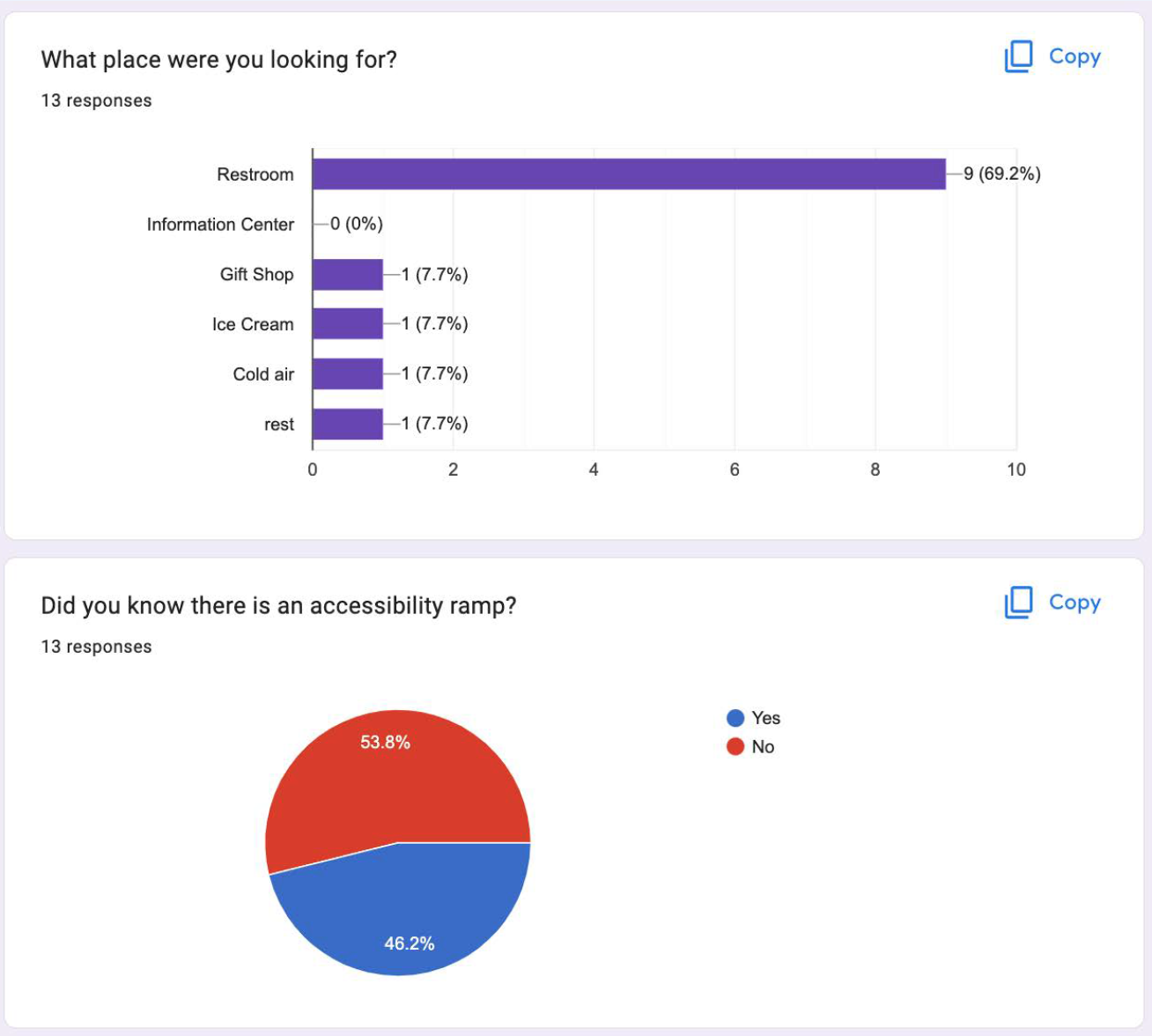
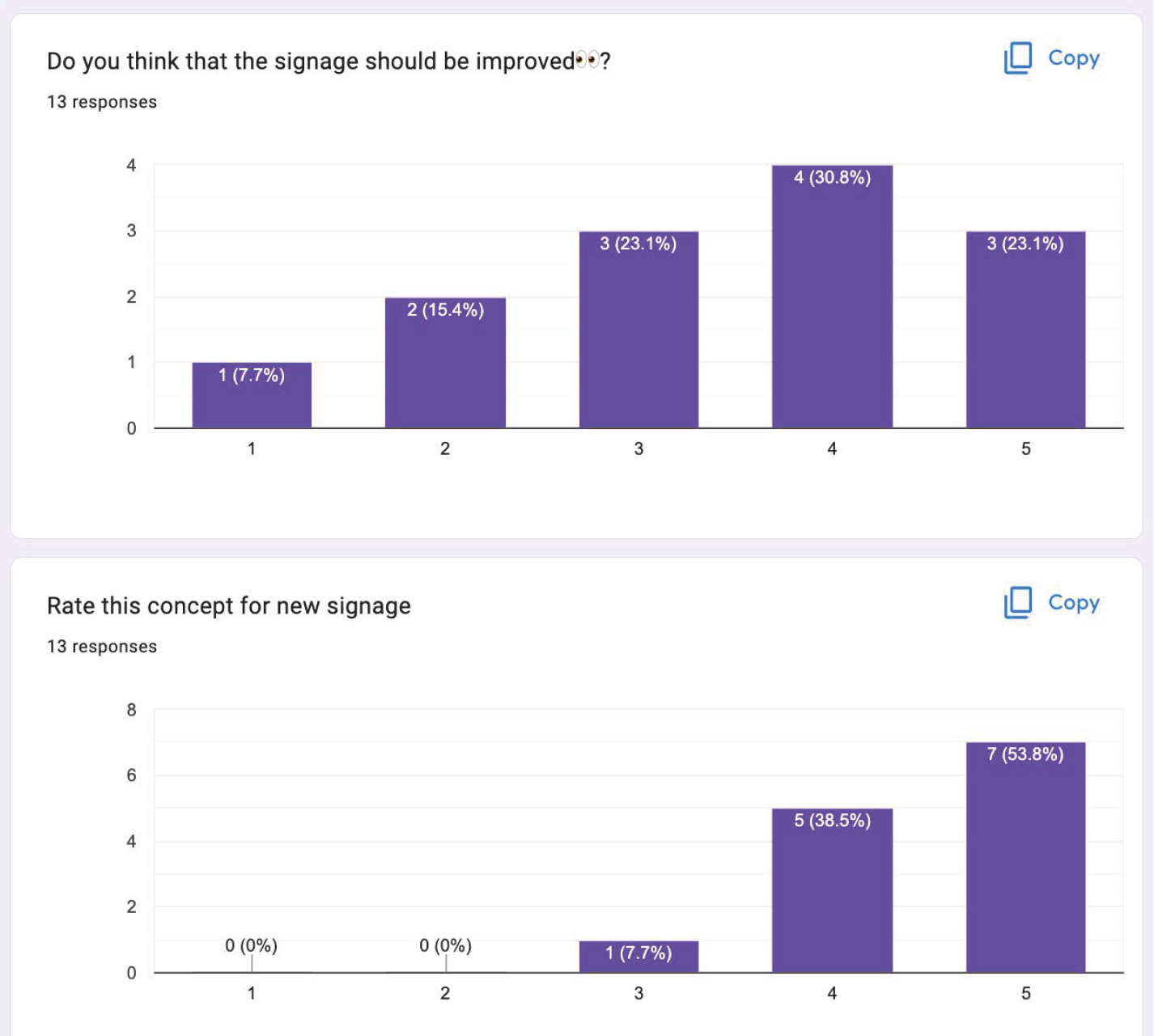
Final Designs
Given the Feedback on the QR code and Interactive Information user test, it was decided not to continue with that option. The signage redesign was worked into a second iteration, and this are the final results.

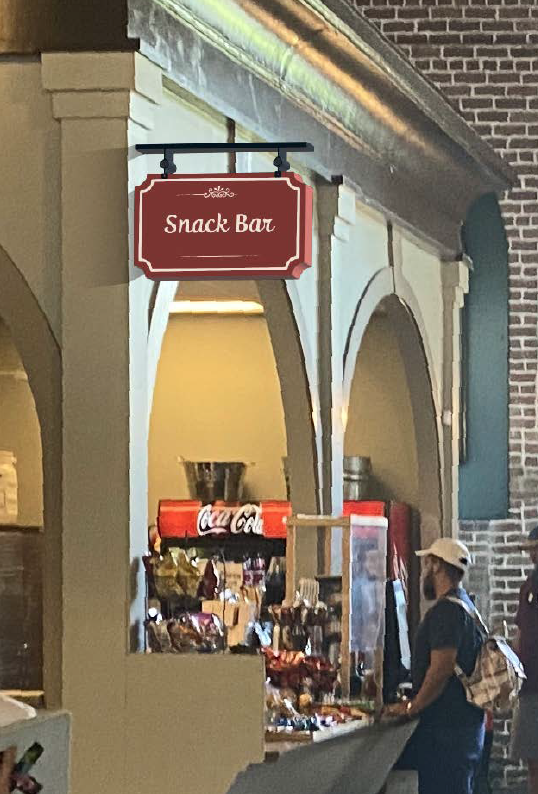
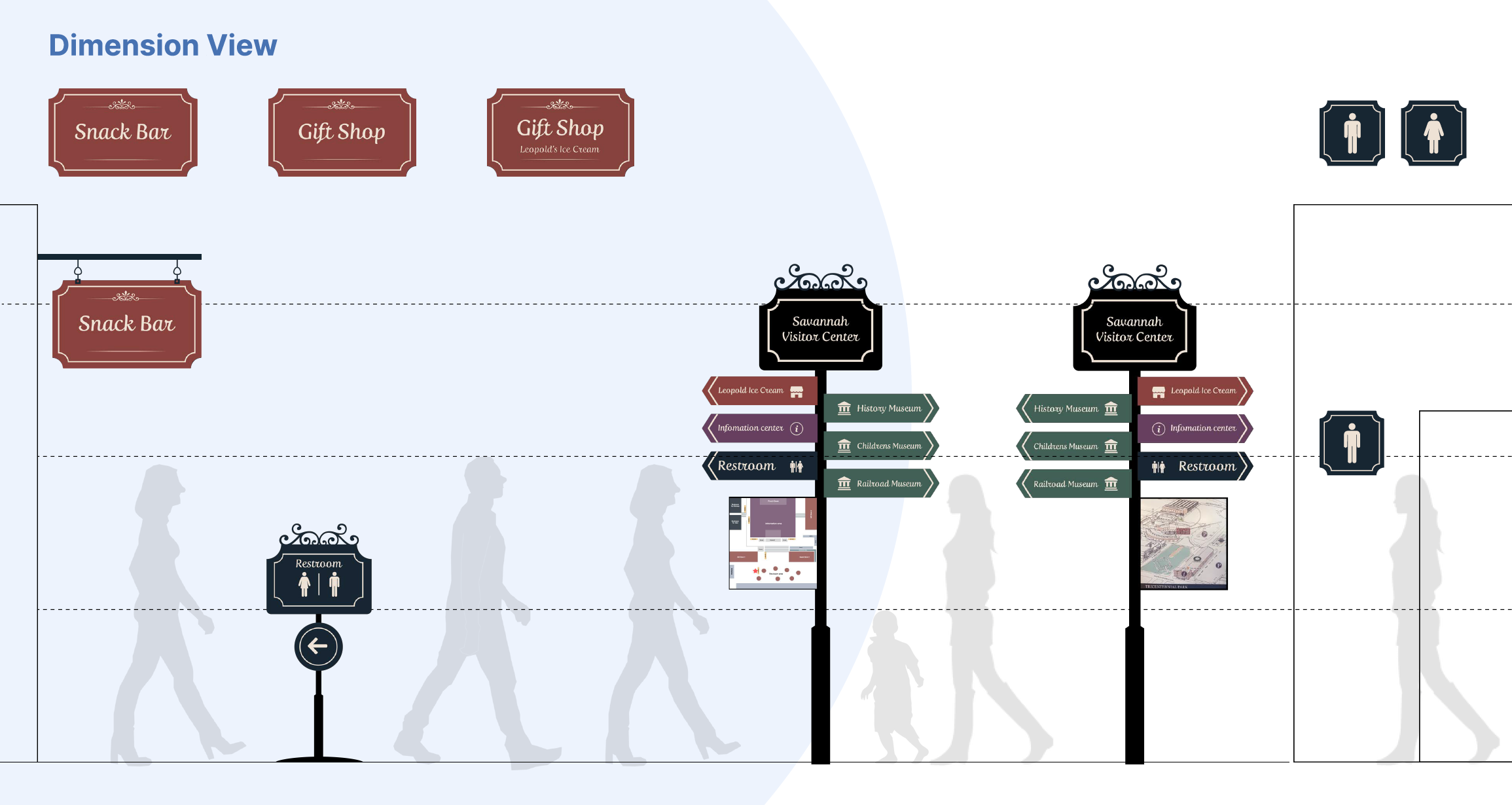
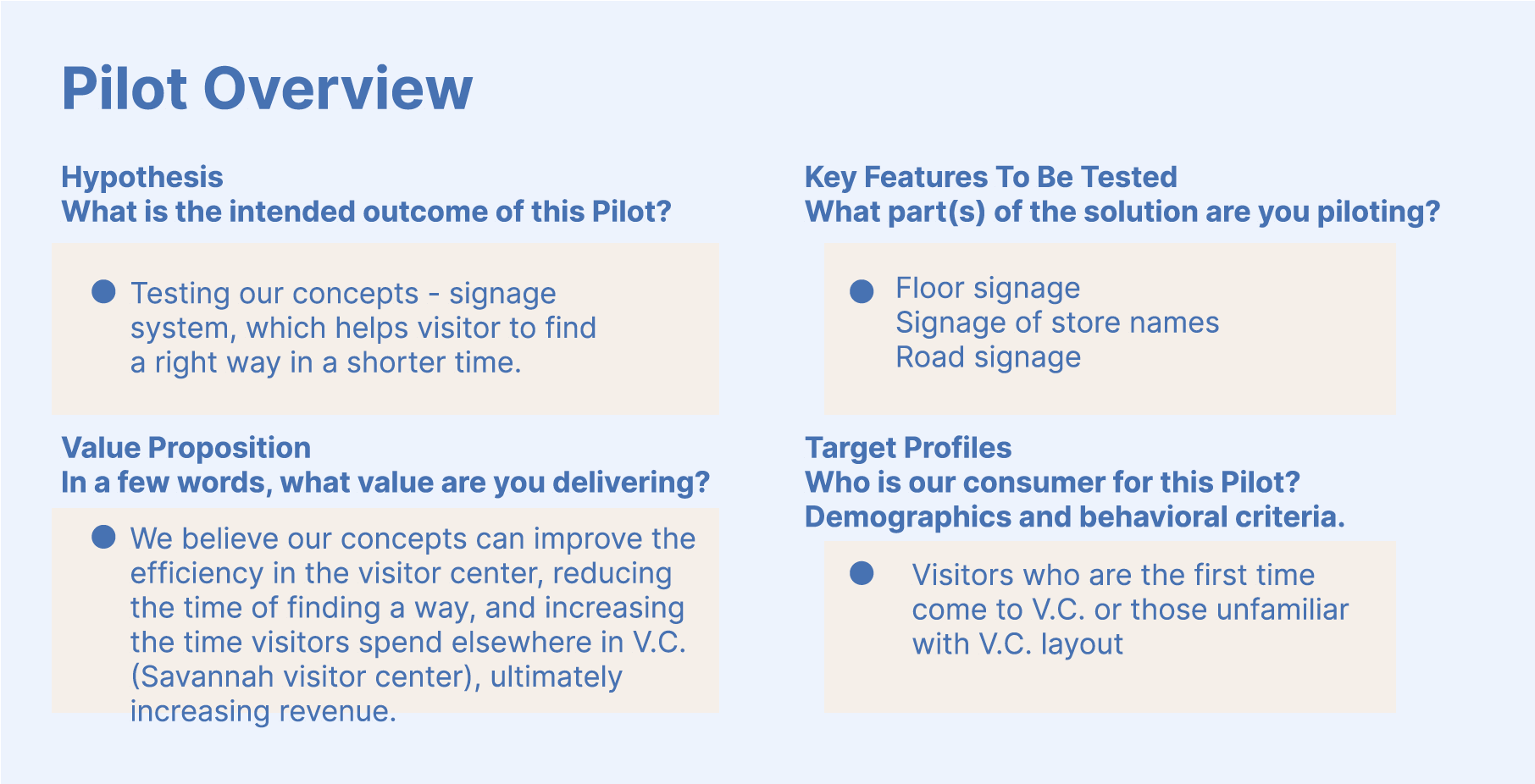
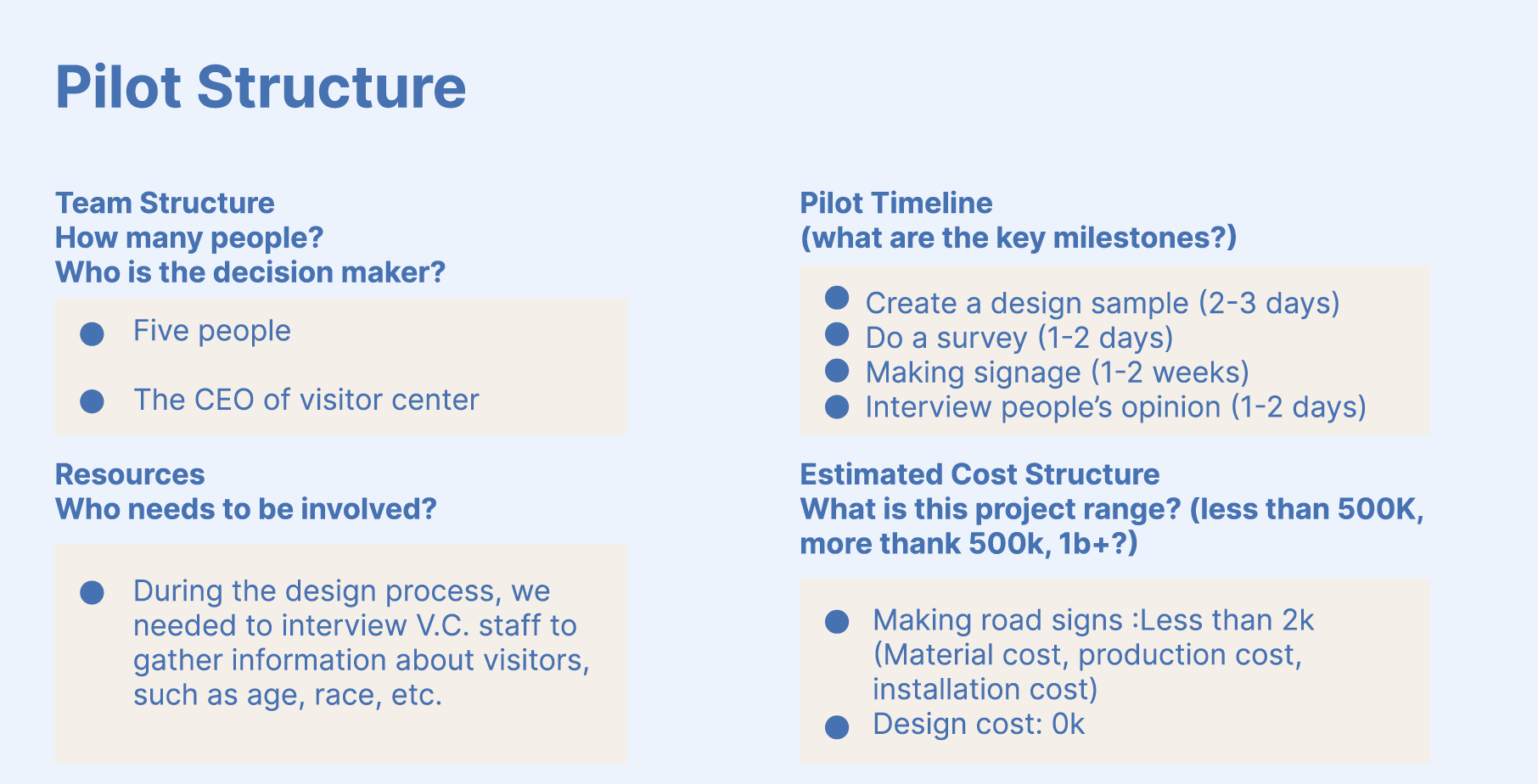
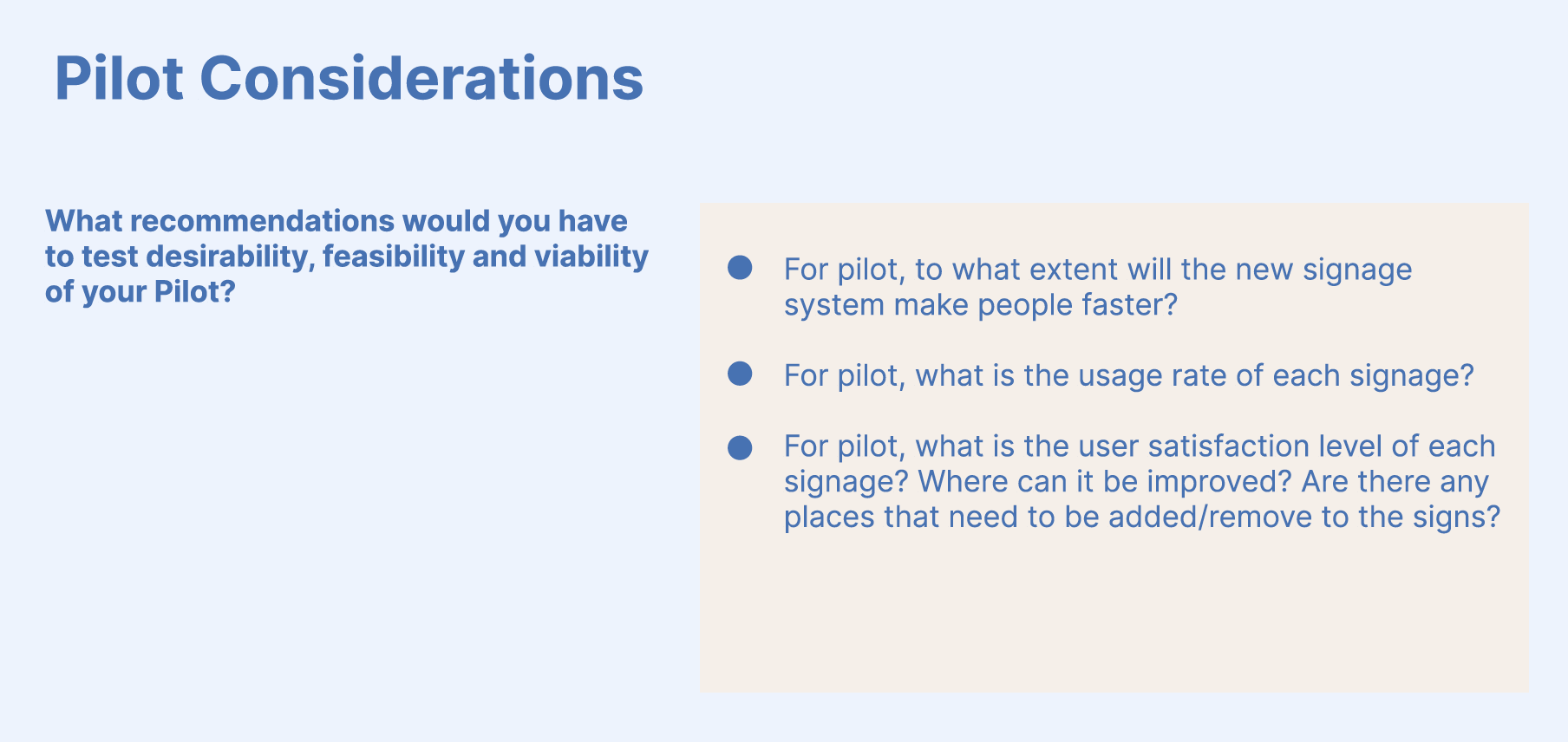
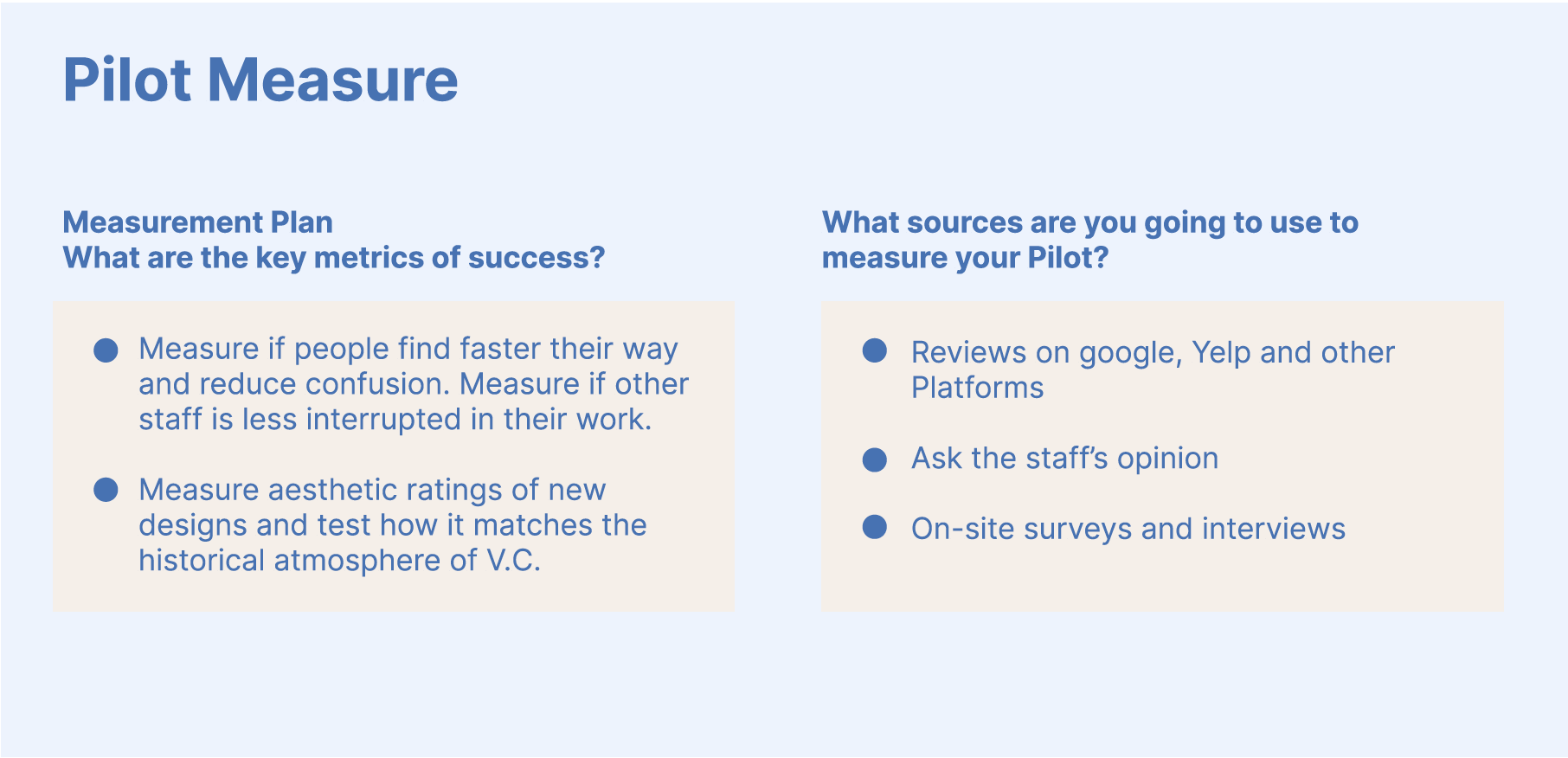
Pilot Plan
The final deliverable of this project was to plan a pilot deployment, with specific milestones and metrics to measure the new design performance, and how this new efficiency in how people navigate the space might relieve stress from staff and ultimately increase revenue from increased idle time in the building.