SAVstreet: Rethinking Furniture Purchase Experience for Students in Savannah
Overview
This project consisted in exploring current trends to design innovative solutions to current problems, applying Business Strategy tools to identify spaces of opportunity, achieving desirability, viability and feasibility.
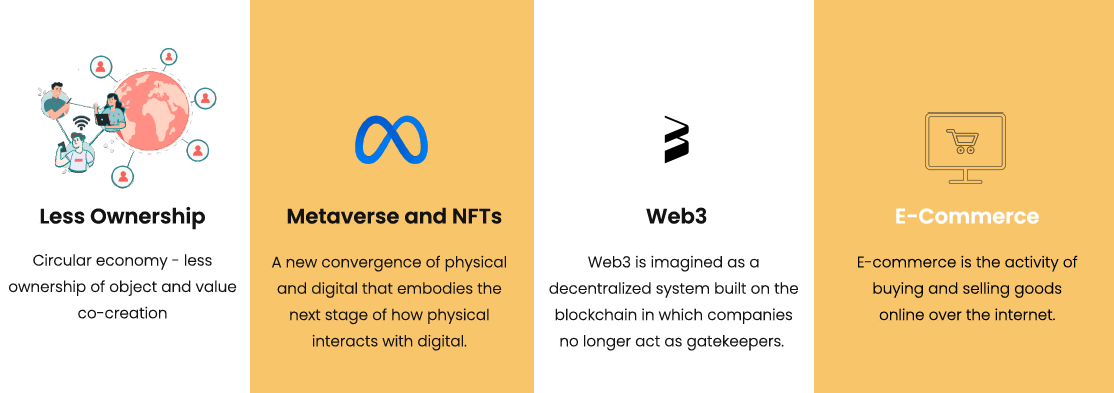
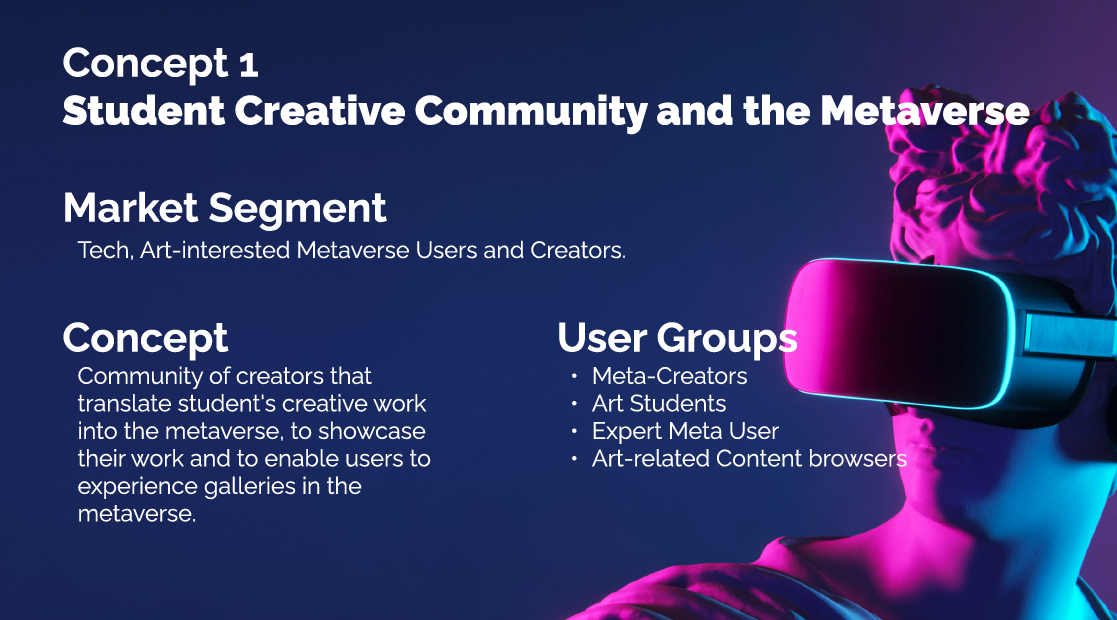
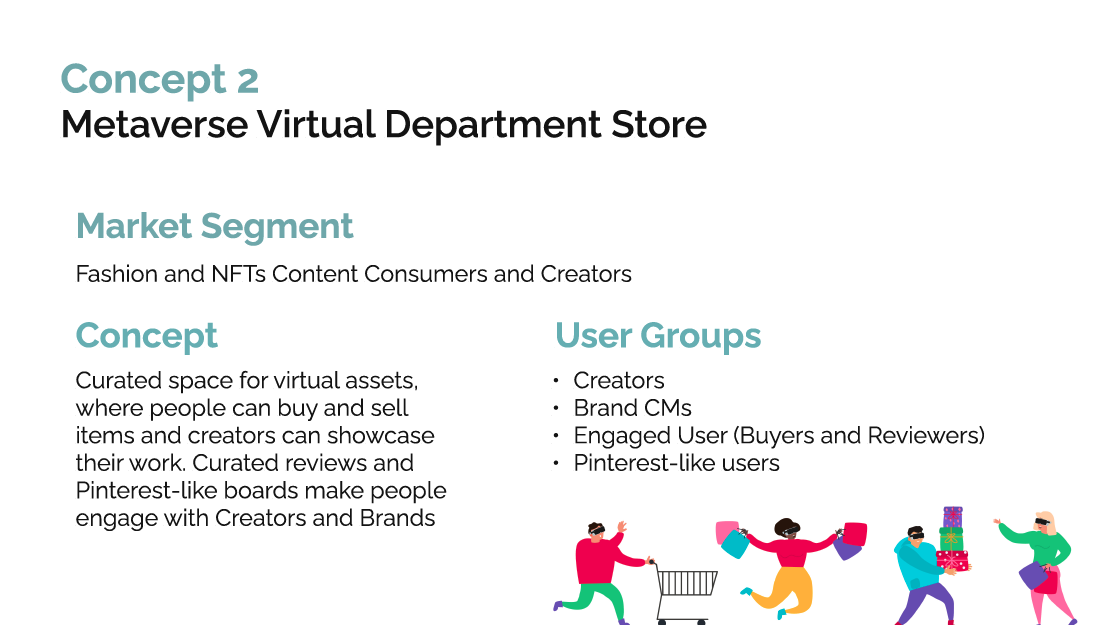
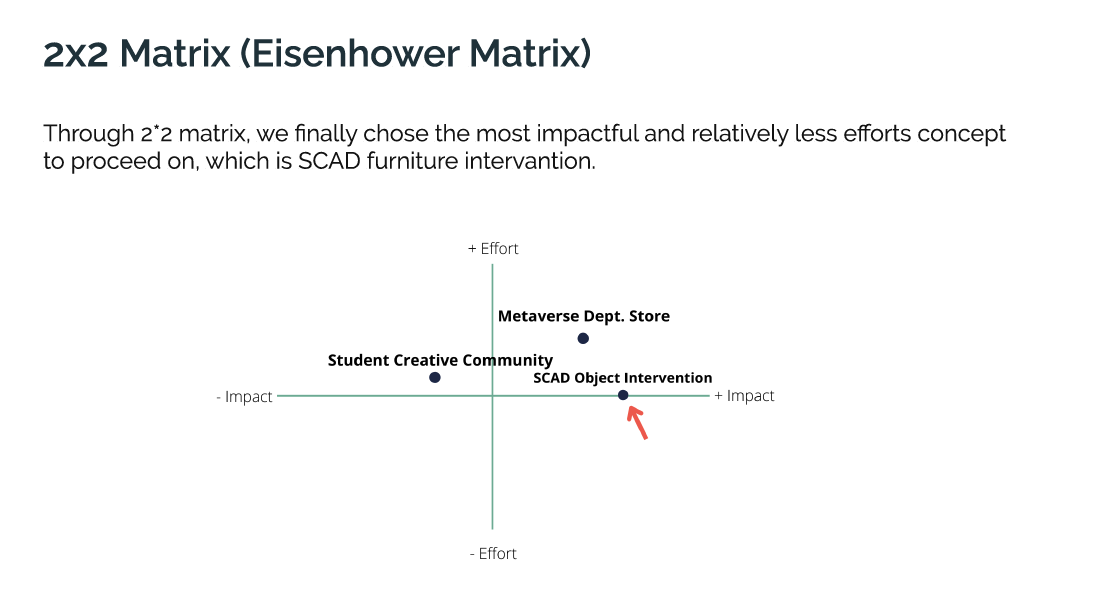
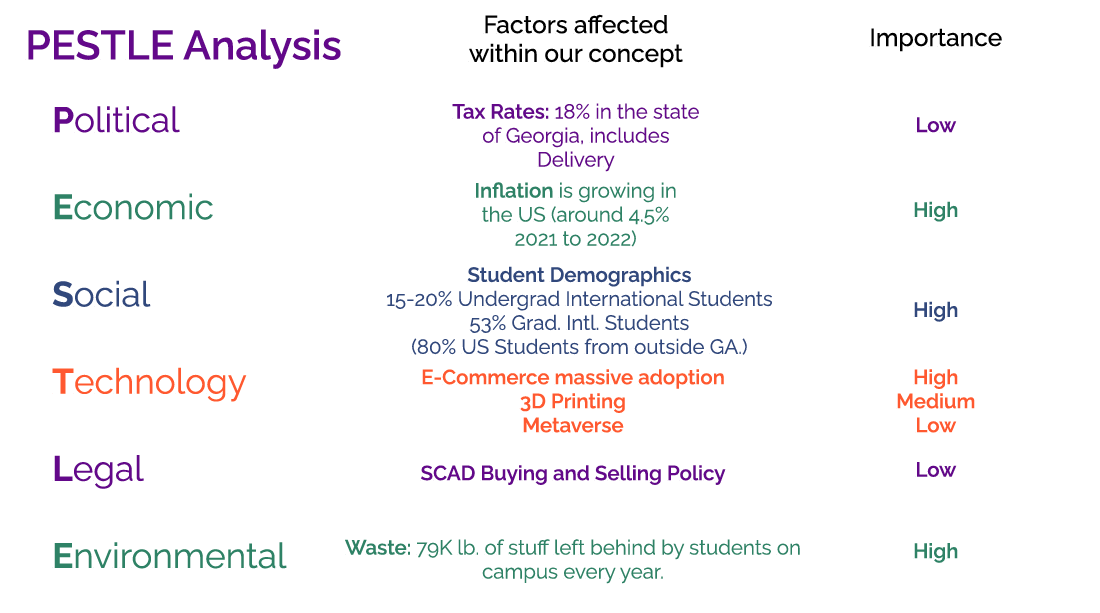
After analyzing some of the strong trends in 2022, Circular Economy and Co-creation was selected as an anchor to reimagine furniture acquisition in Savannah, where there is a big amount of students coming in and out of the city, mainly relying on buying new, cheap and convenient options on Furniture.
Trend Analysis and Concept Development

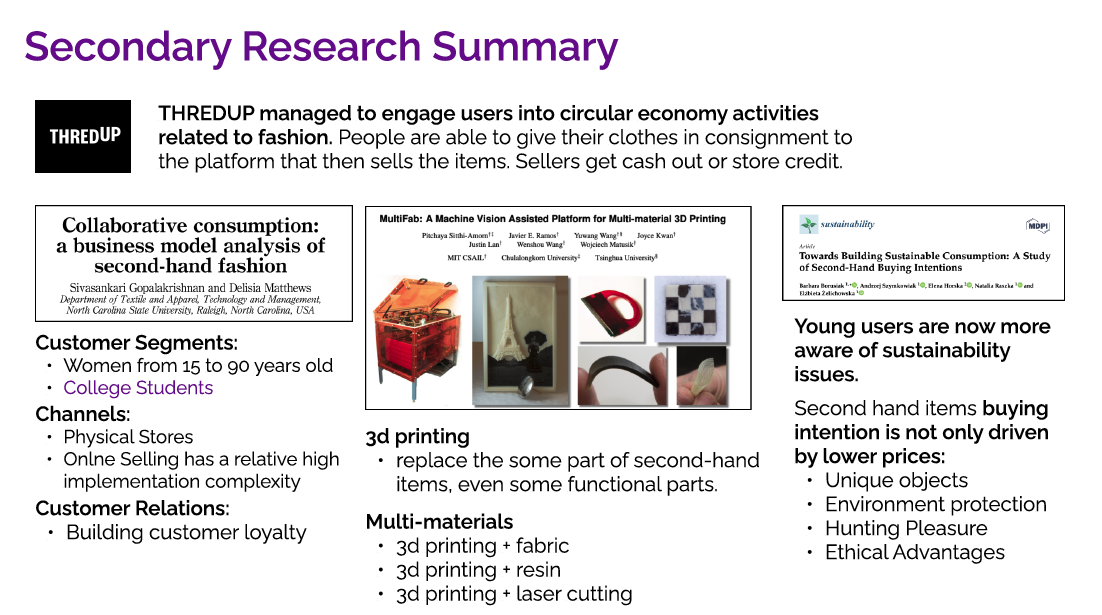
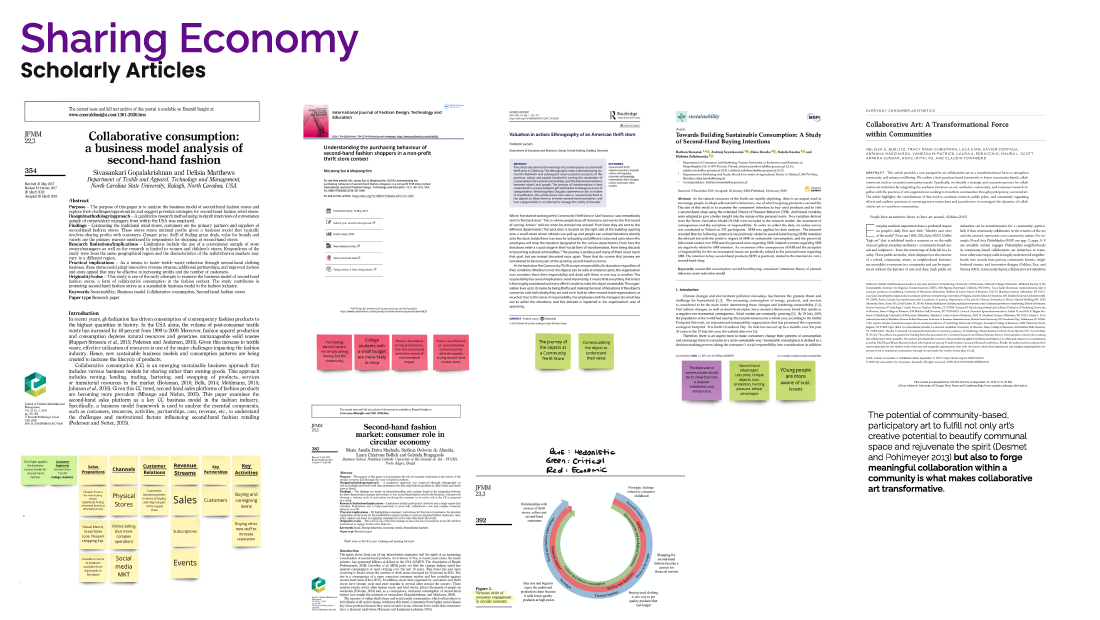
Secondary Research
Primary Research and Data Affinitization
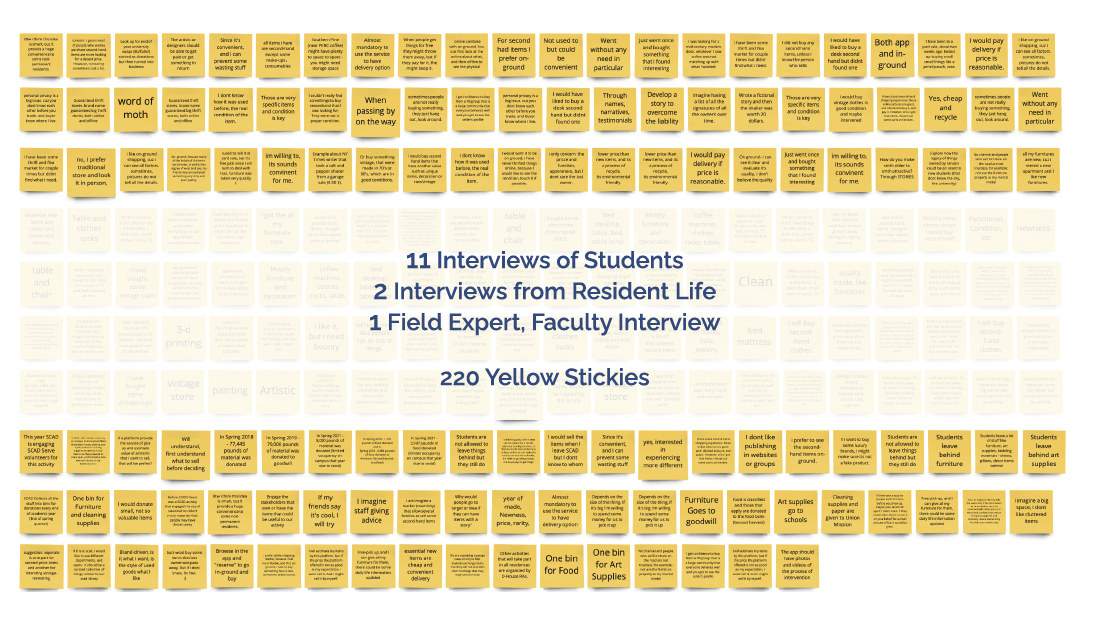
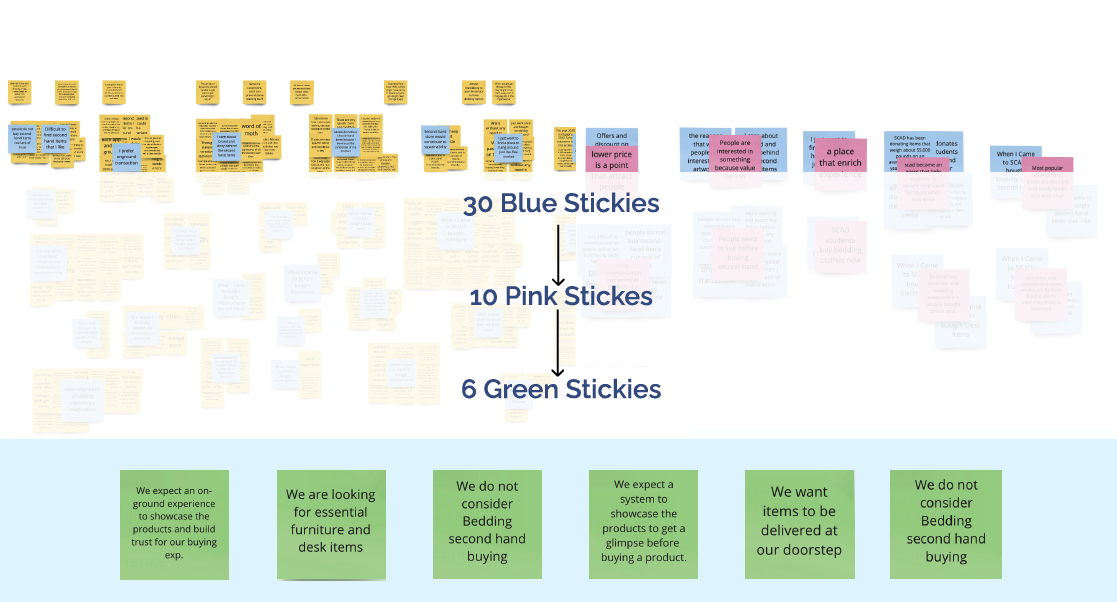
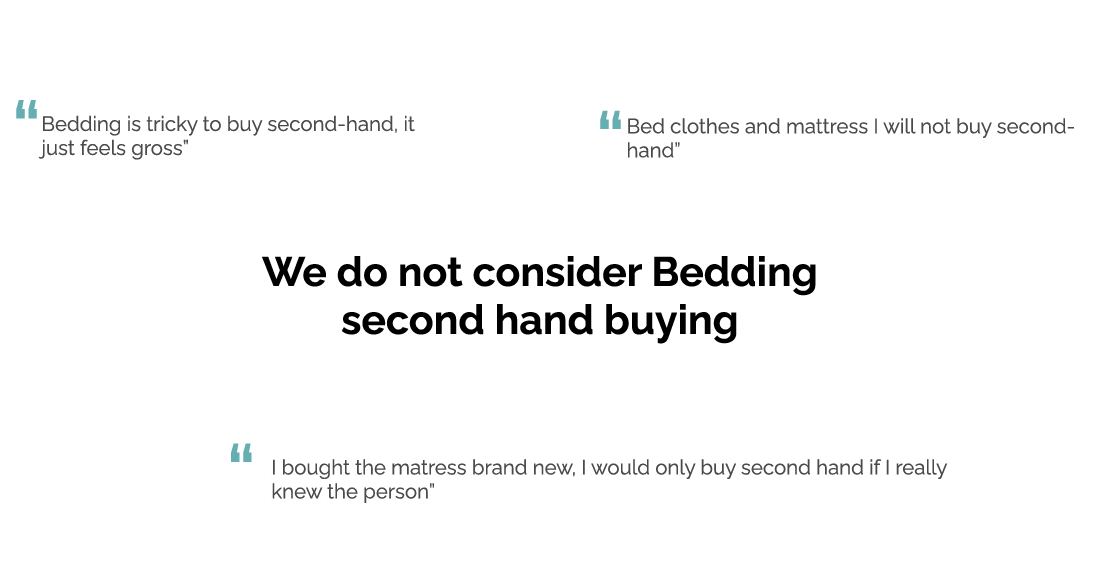
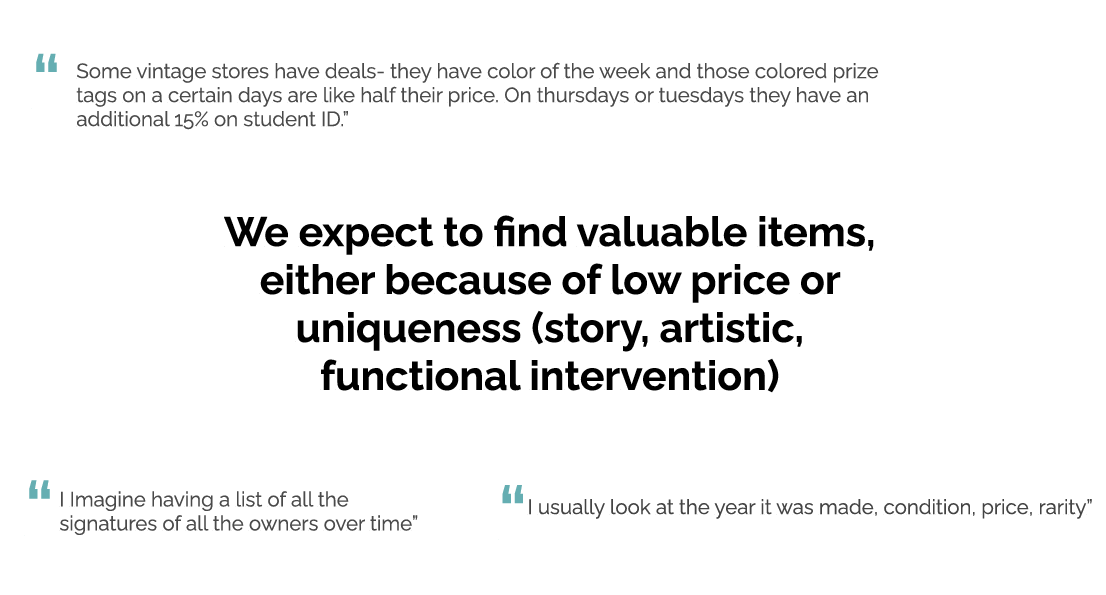
Several Interviews to Students, Student Life and Dorm Personnel, and Experts in Circular Economy were conducted, later affinitized to condense the data gathered. The learnings allowed to narrow the type of furniture to work with, and learn about some features that Students were reticent to let go in order to adopt the a new offering.
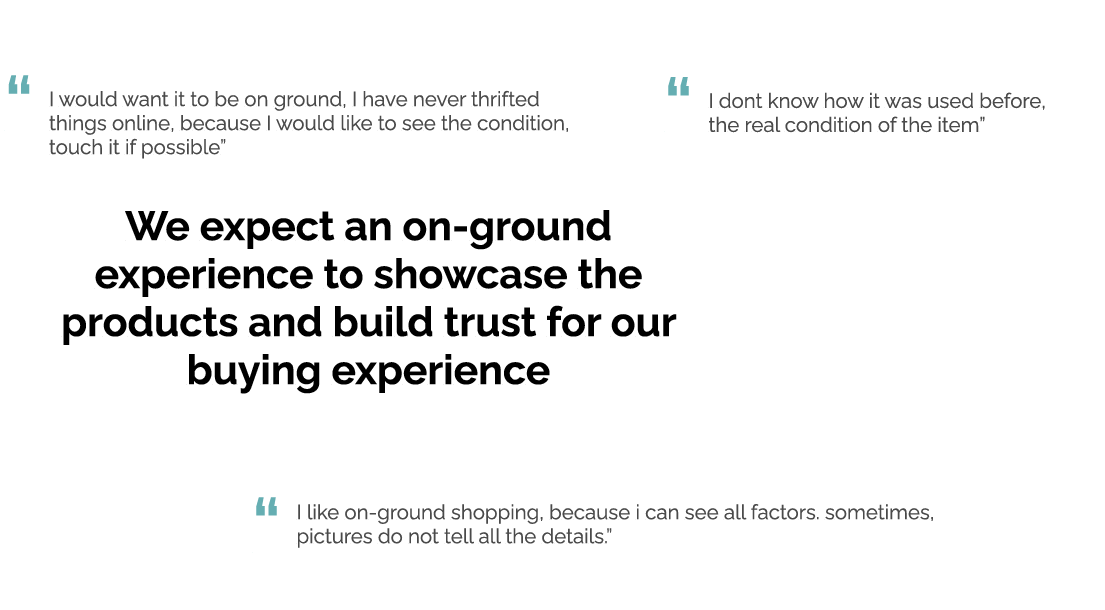

User Archetypes and Empathy Mapping
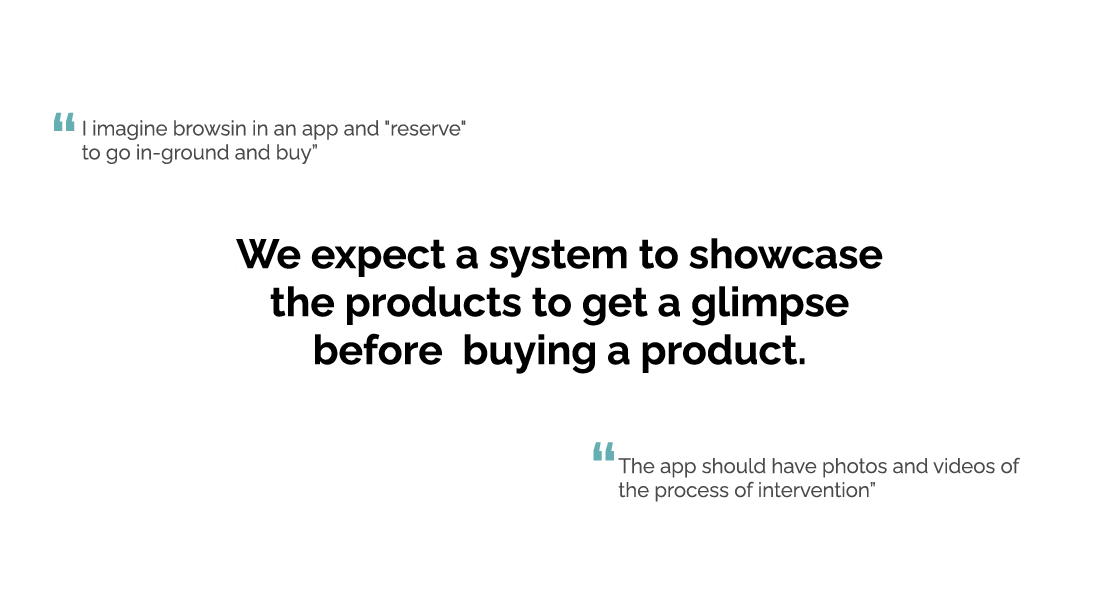
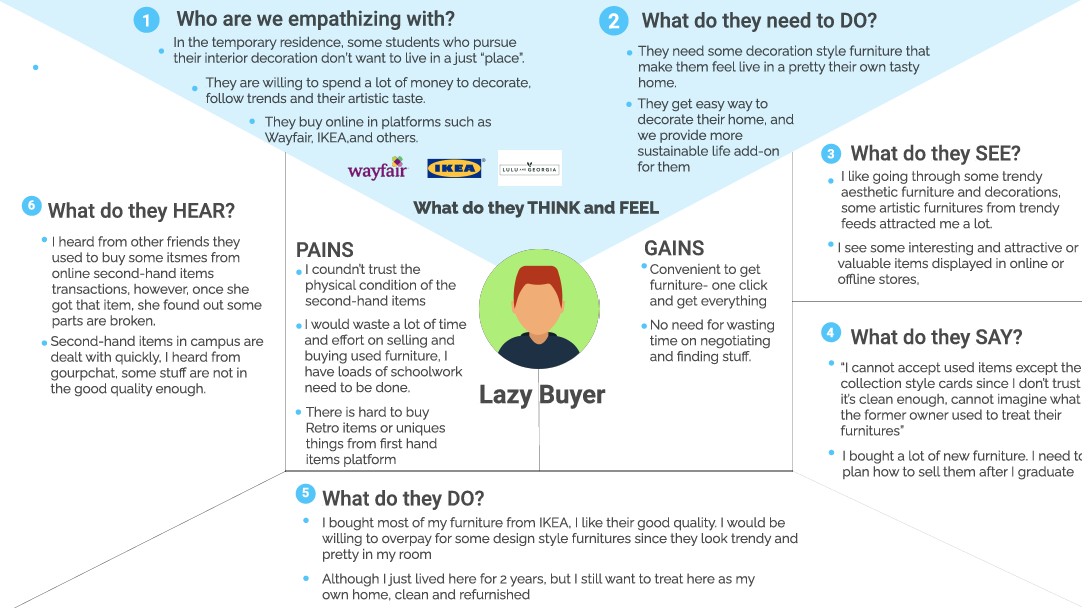
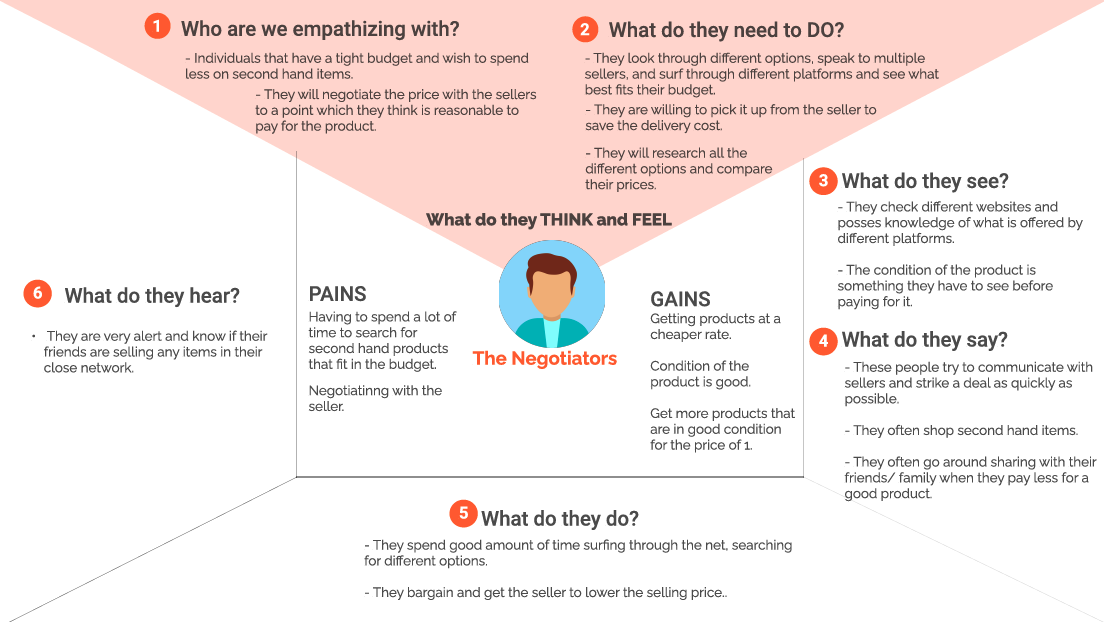
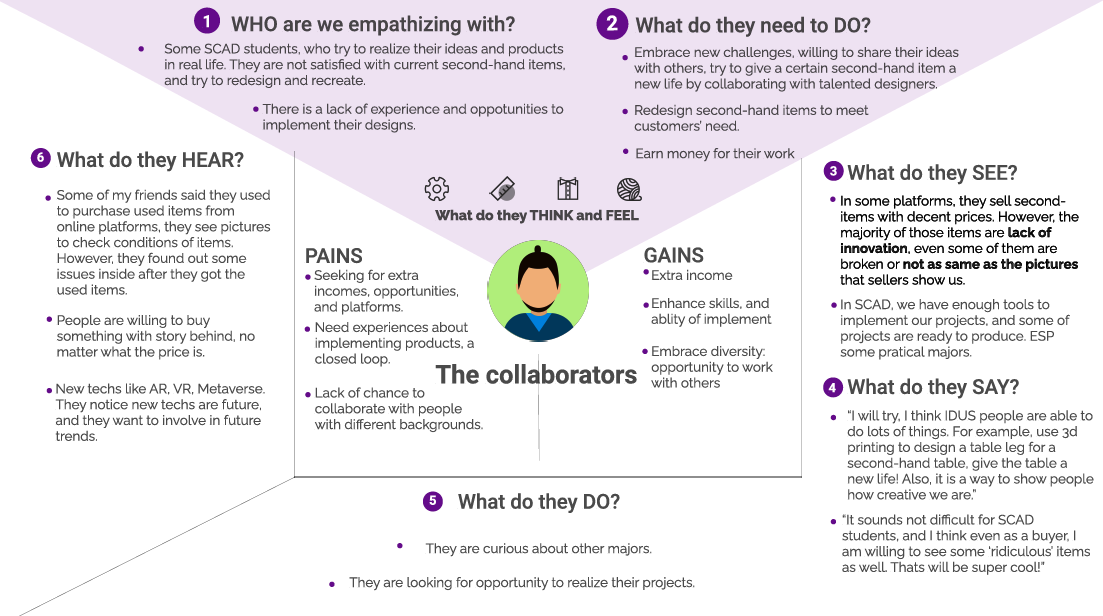
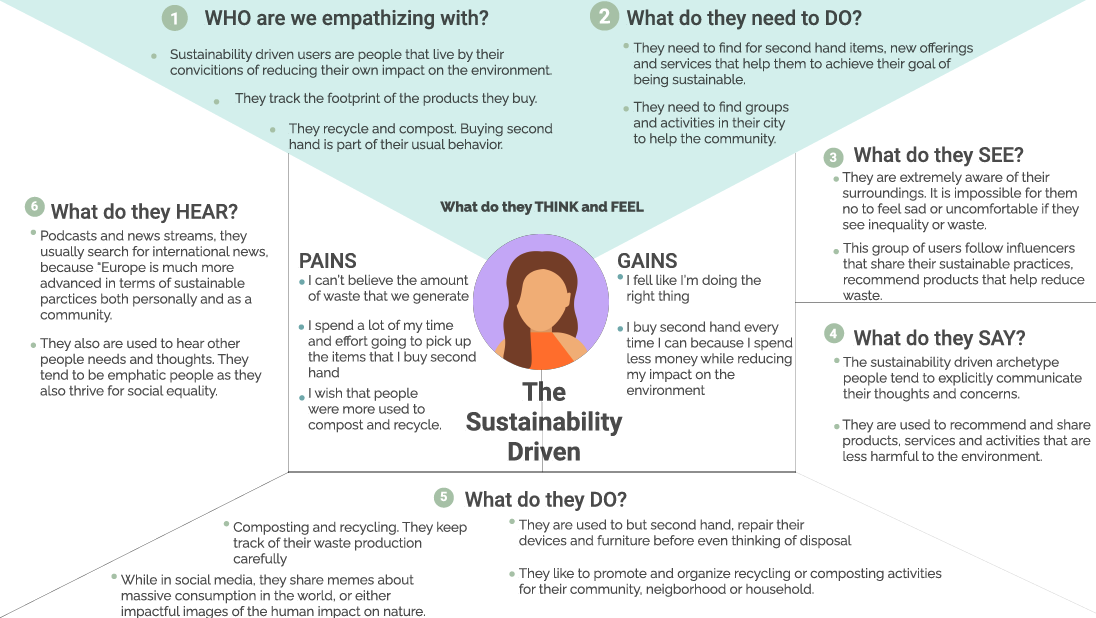
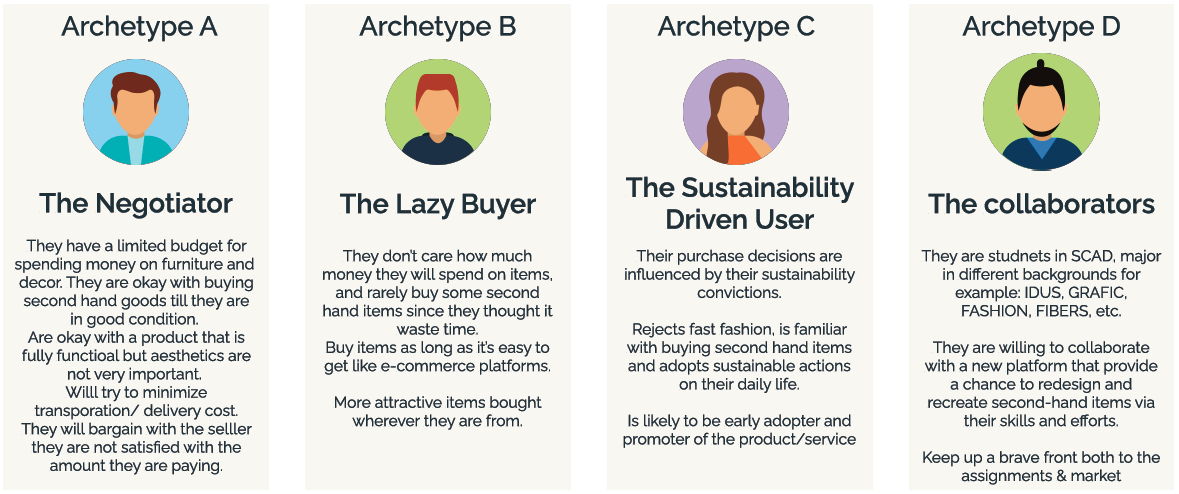
After getting from data to insights, we were able to identify four archetypes of users that present different behavior, purchase decisions. Our offering as furniture hub in Savannah for incoming students might be attractive to all four archetypes.
To Further describe their attitude, we employed Empathy maps to communicate their emotional state beyond the context of furniture buying preferences.
Competitor Analysis
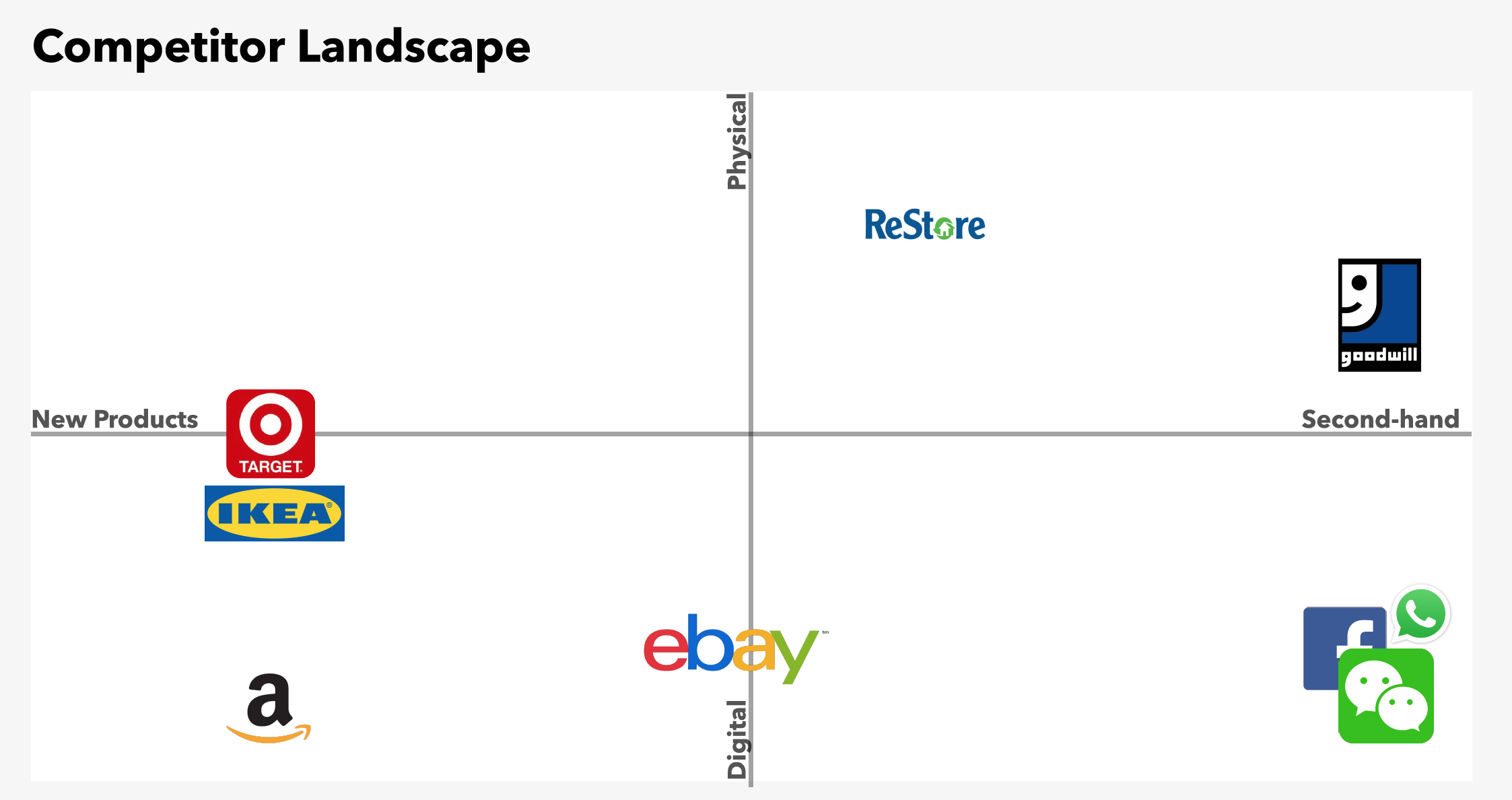
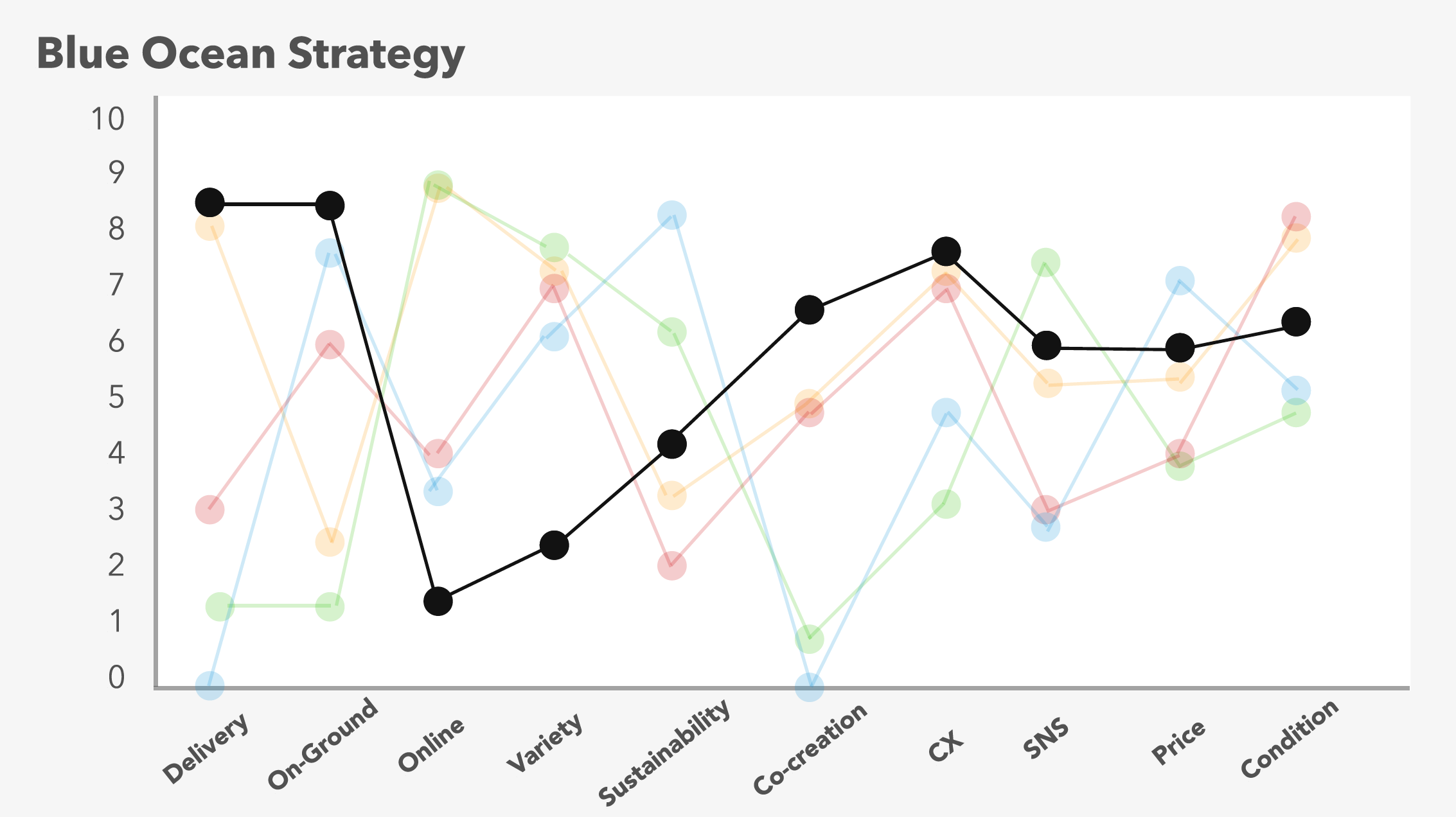
After knowing better our potential customers, it was time to map the competitors in the local landscape. An extensive analysis was done, deep diving into their Business Models.
The competitors vary from those who offer second hand items, large scale thrift stores, to brand new items; Online and Digital, and also Social networks where the community post their furniture for sale.
This exhaustive analysis of their value proposition, strengths and weaknesses (via SWOT analysis), informed a Blue Ocean Strategy Map, to identify in which areas of value should we push the competition, which ones should we reduce our offering and focus on differentiation.
Business Model Canvas and Value Proposition First Iteration
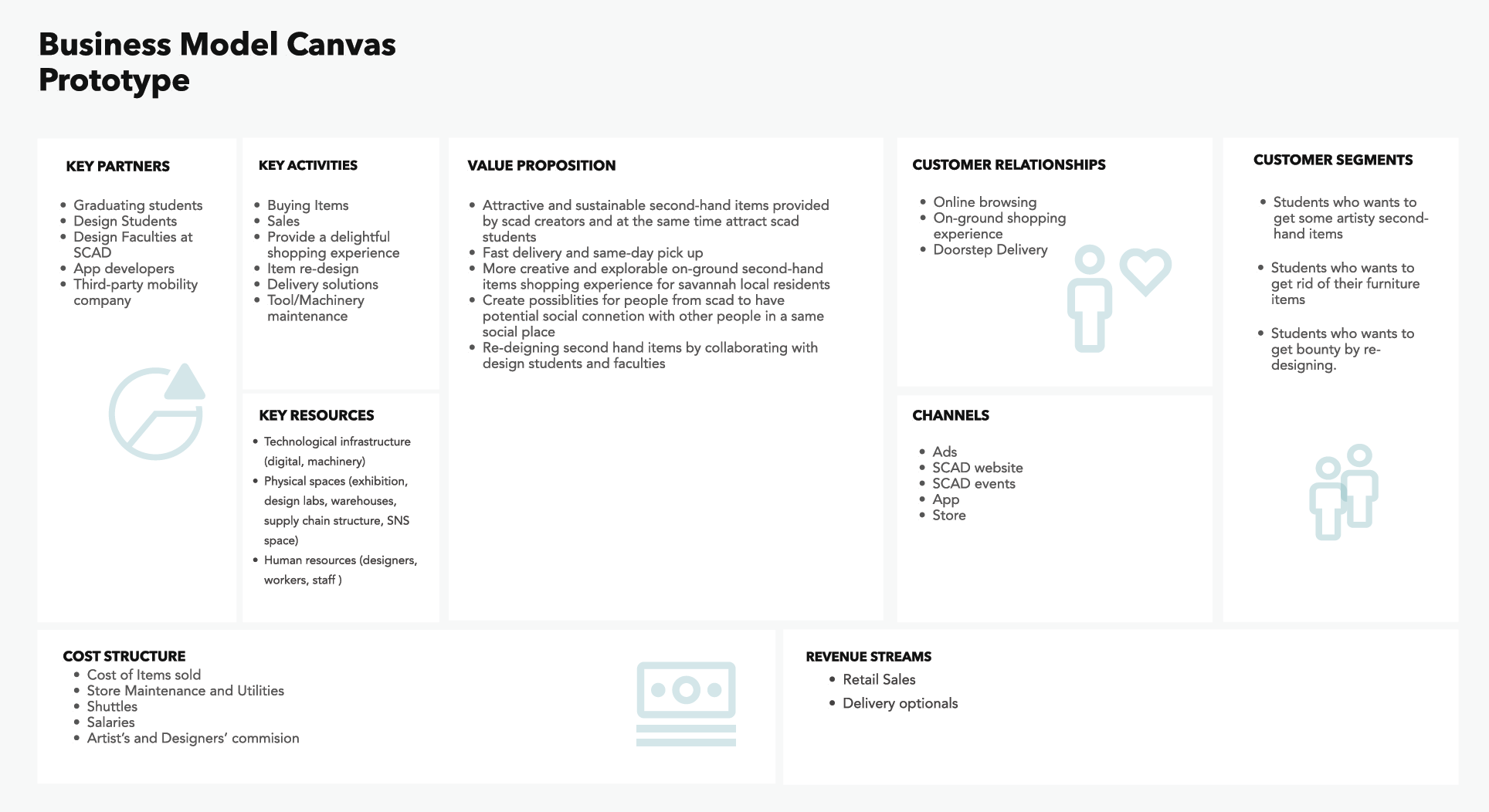
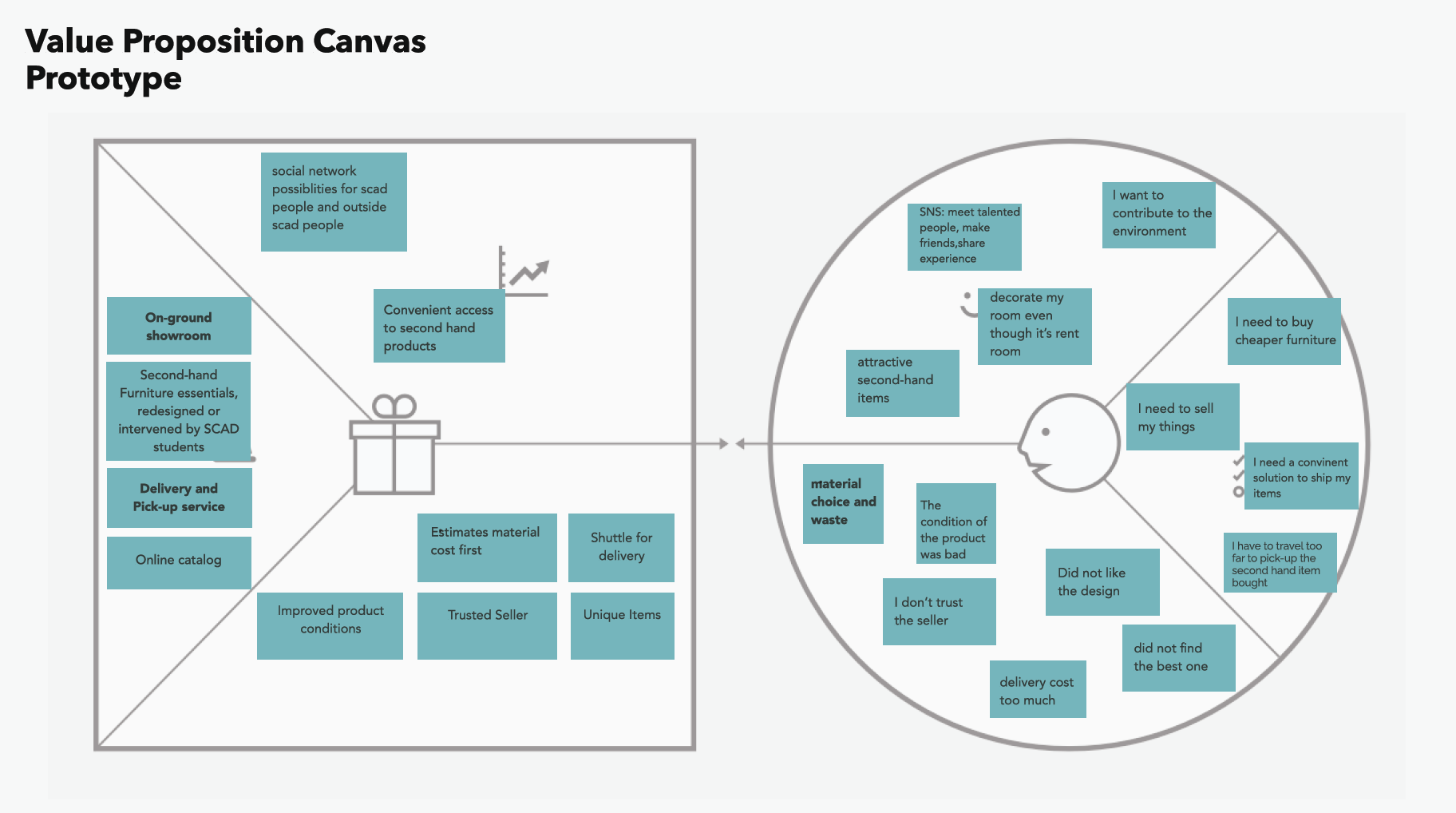
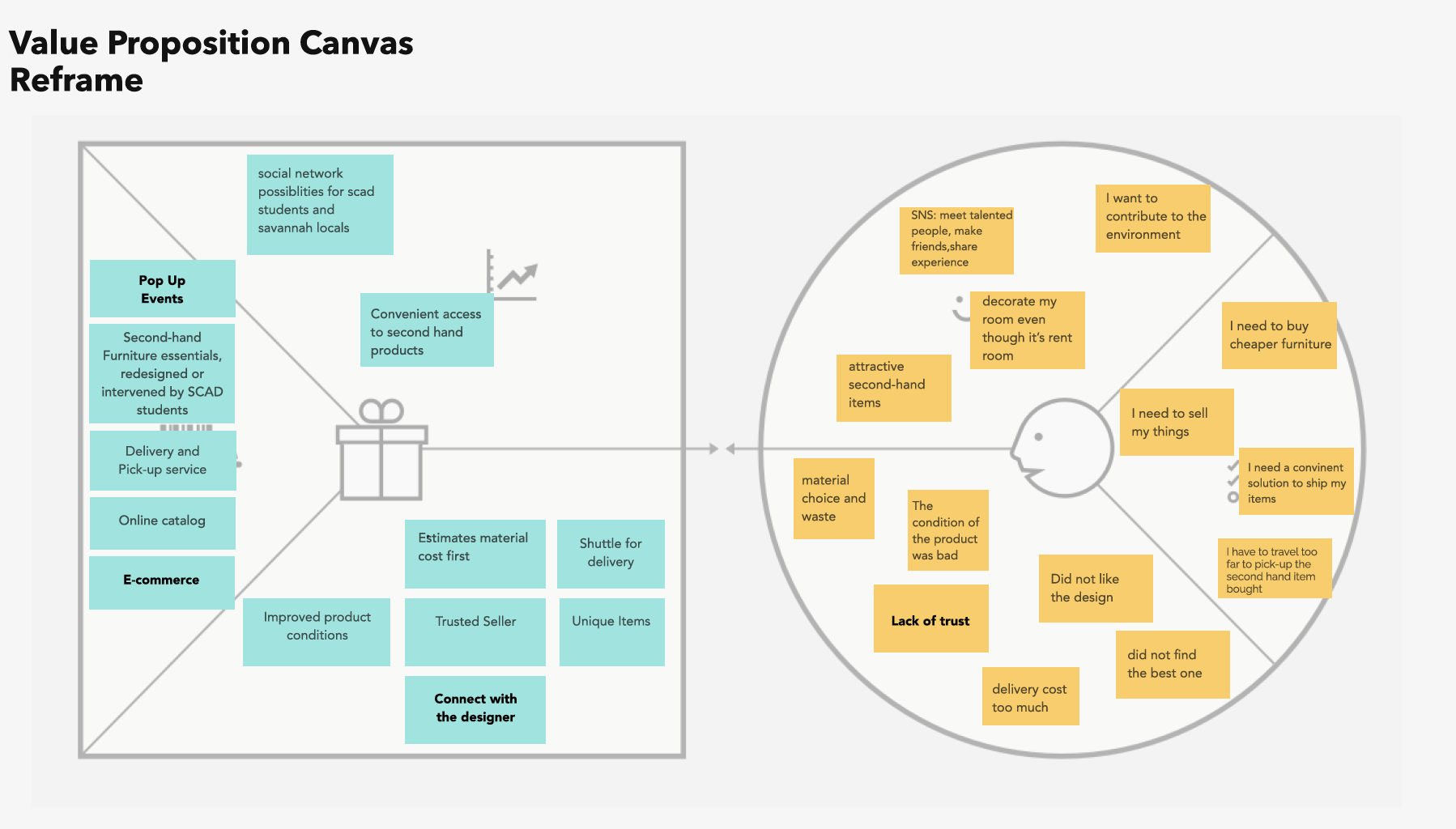
The first iteration of the Business Model and Value Proposition was mapped to get feedback from colleagues, experts and potential users. This model relied on a strong physical store experience that would enable the creative force at SCAD redesign the furniture, customers feeling immersed in the experience of a shop-workshop building. There were some important lessons learned that will be presented in the following section of User-Testing.
Differentiation and ZAG
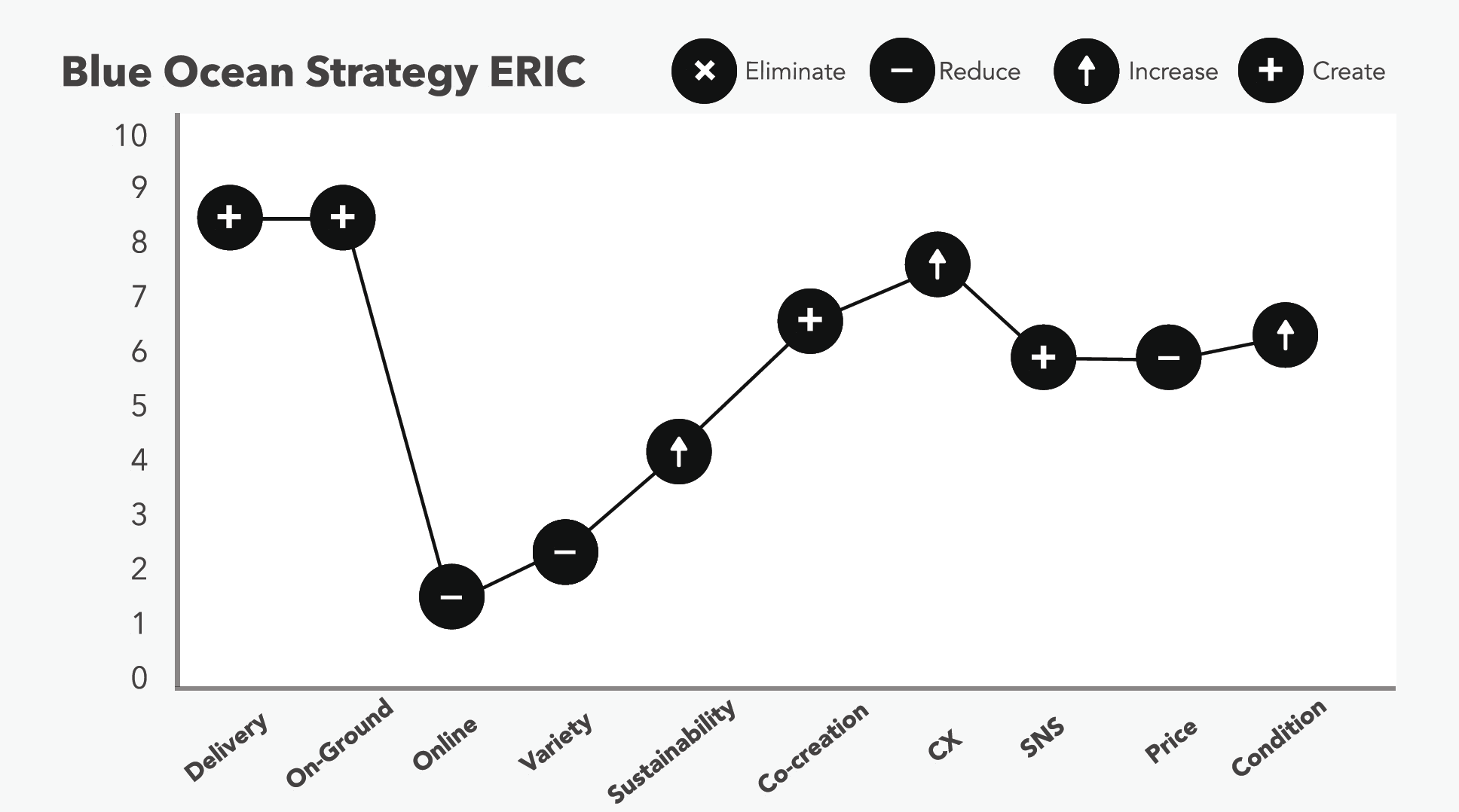
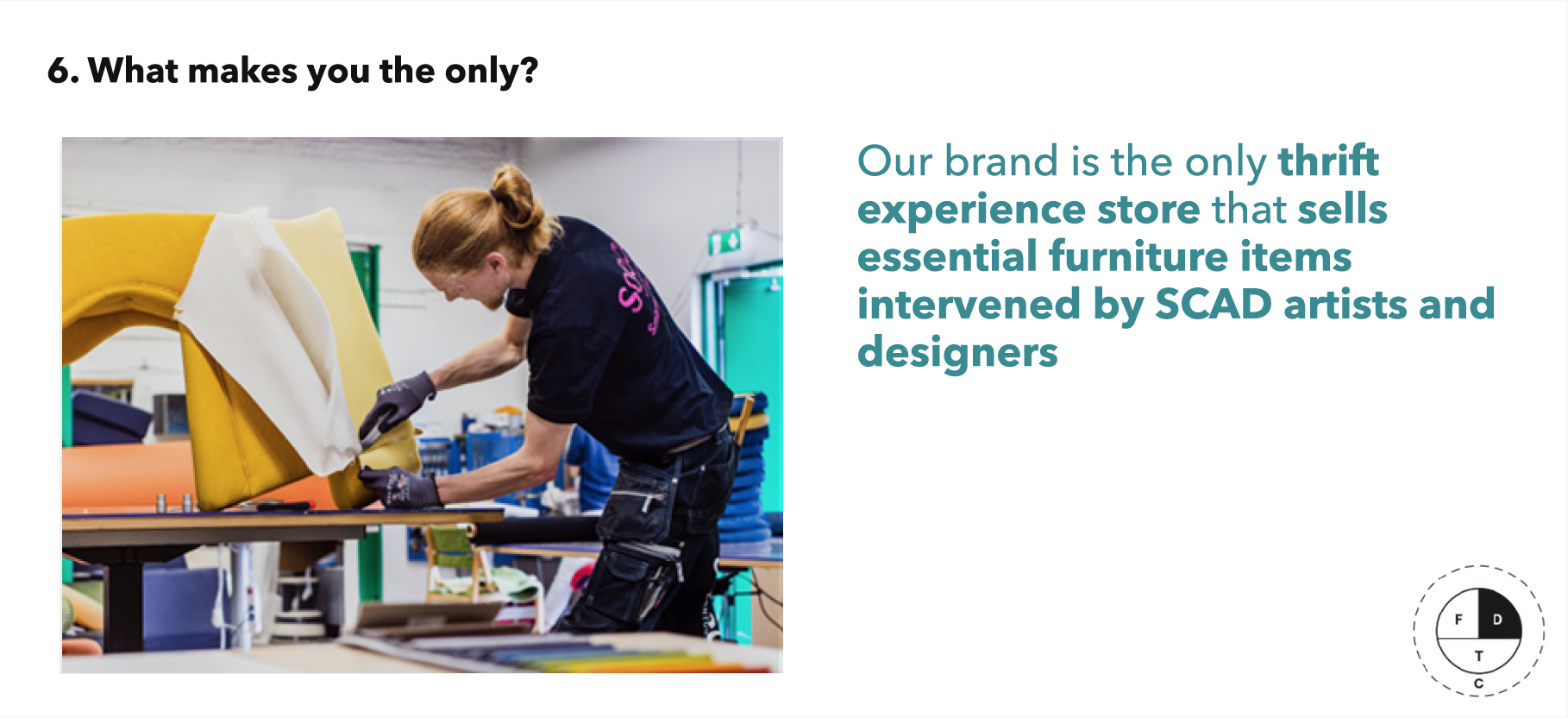
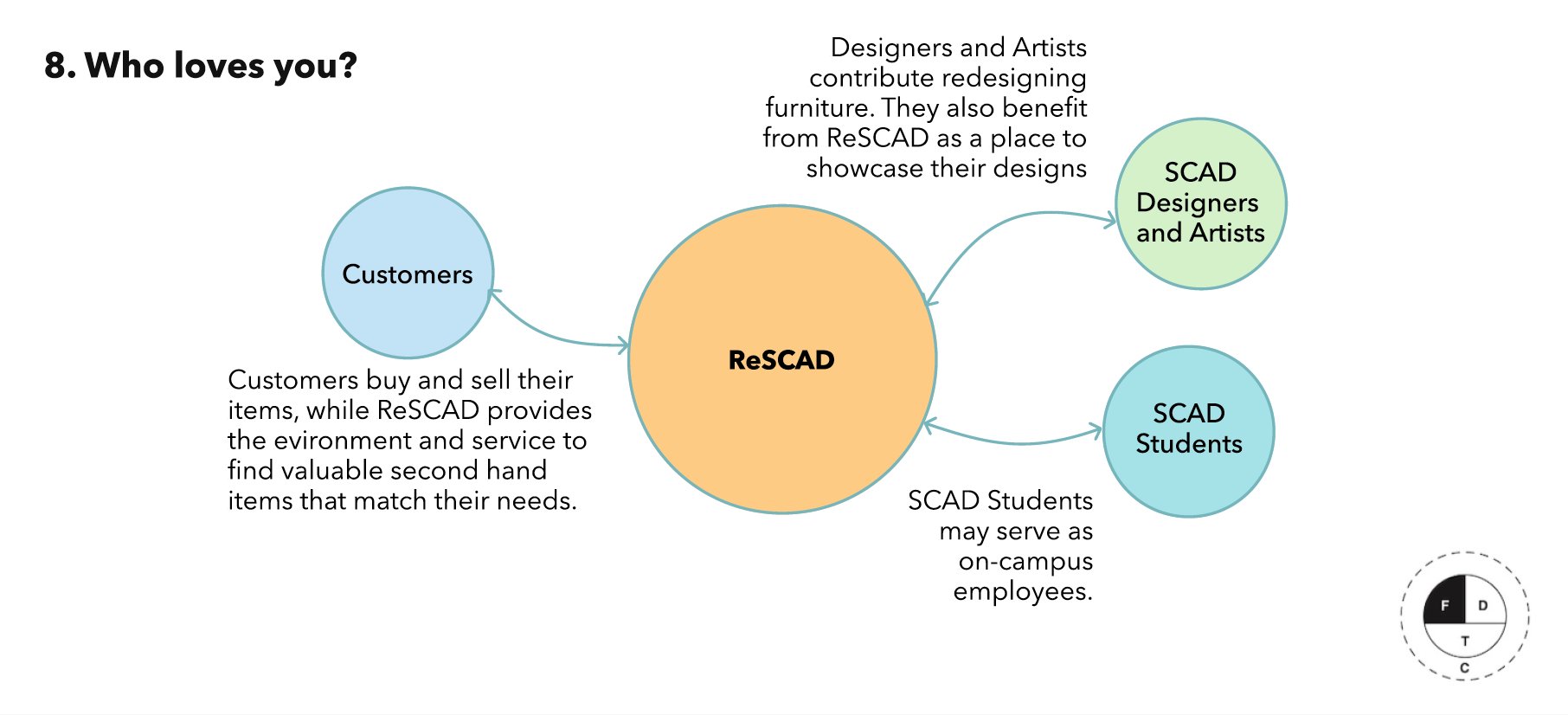
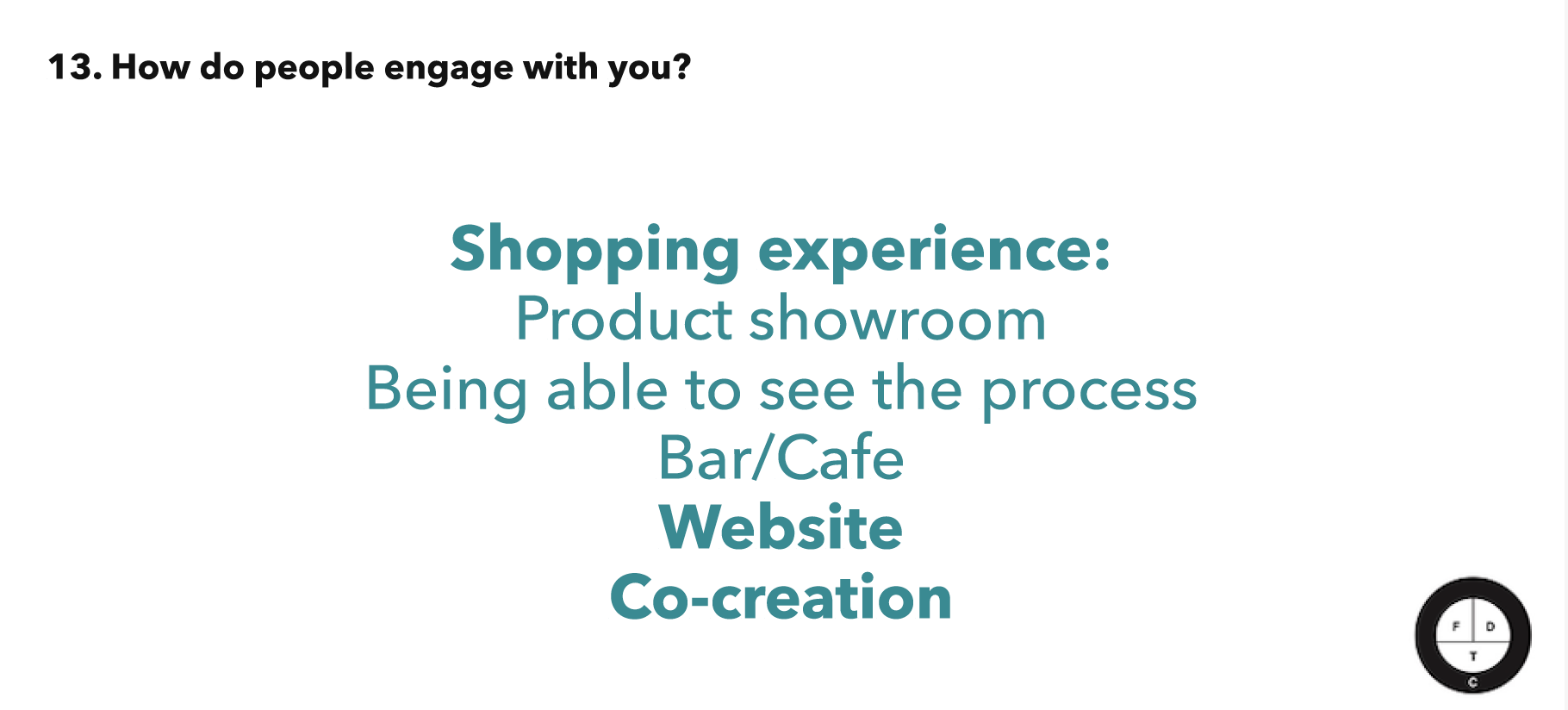
Following the Blue Ocean Strategy, Eliminate, Reduce, Improve and Create (ERIC) Framework was used to identify which areas to focus to navigate a Blue Ocean avoiding competition in saturated areas of the market. The 17 steps of ZAG where used to communicate and reflect on what would make this offering an attractive and unique players when introduced in the market. Some of the most relevant stages that describe our vision are shown in this section.
First Feedback and User Testing
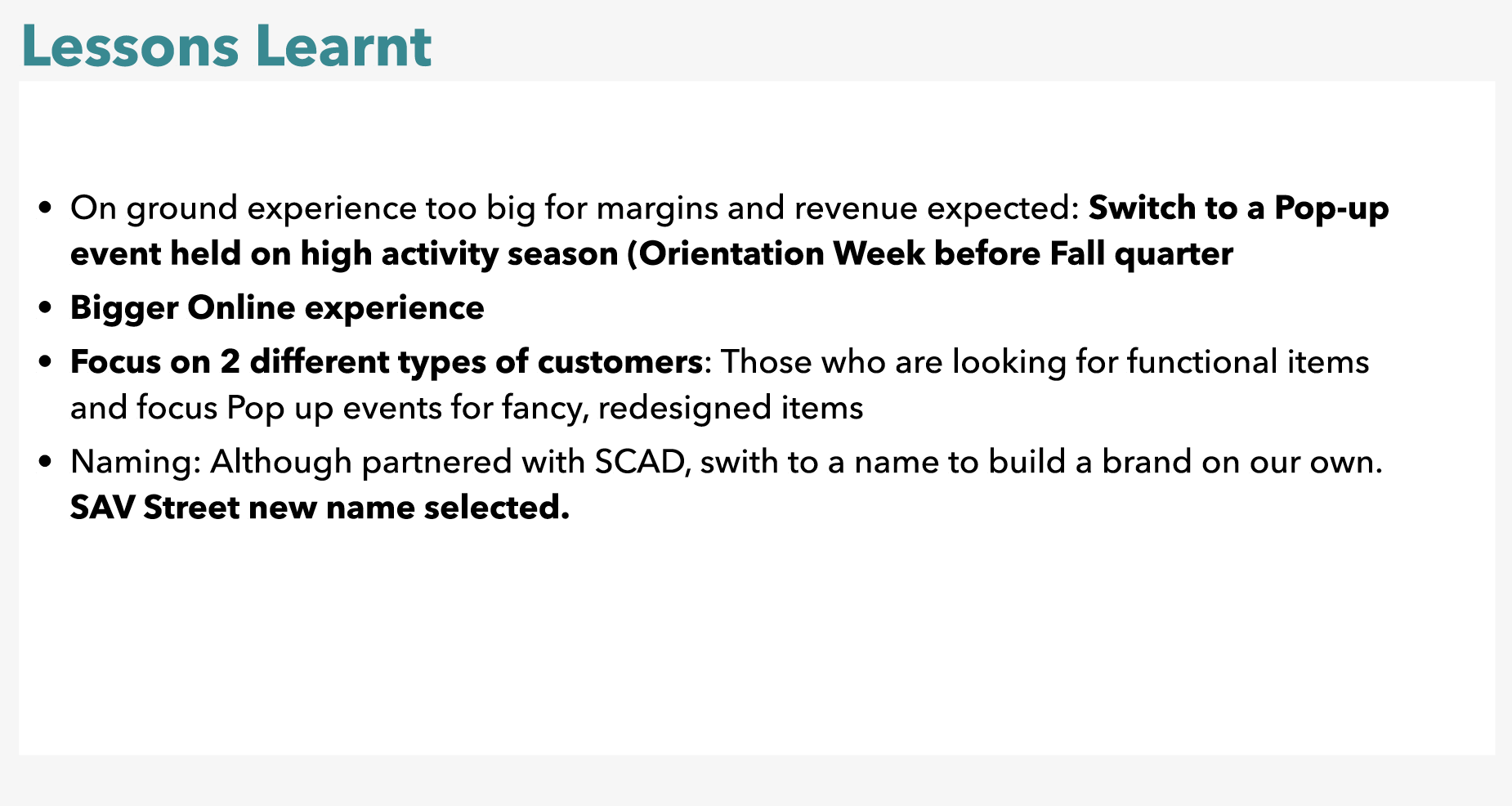
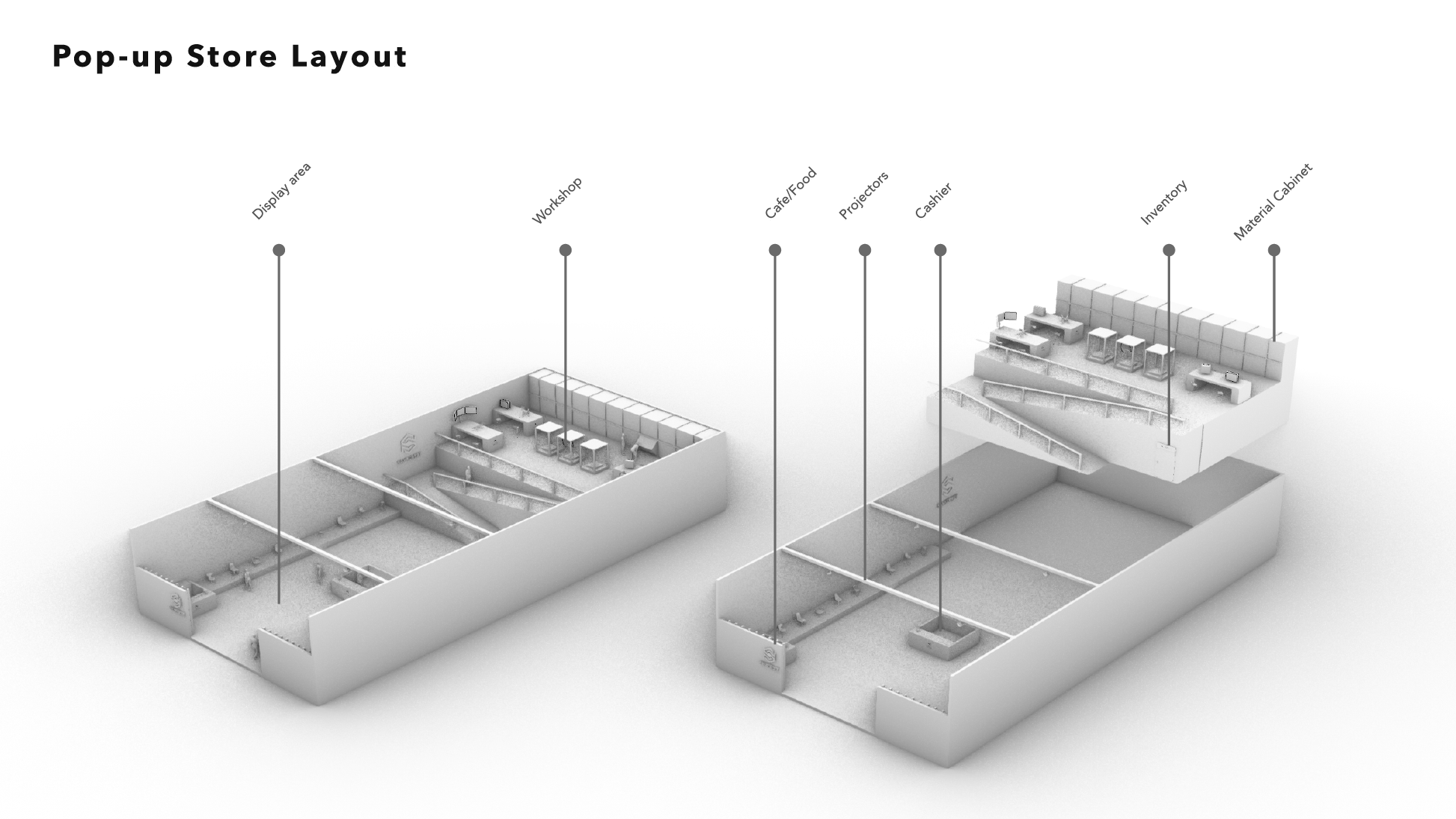
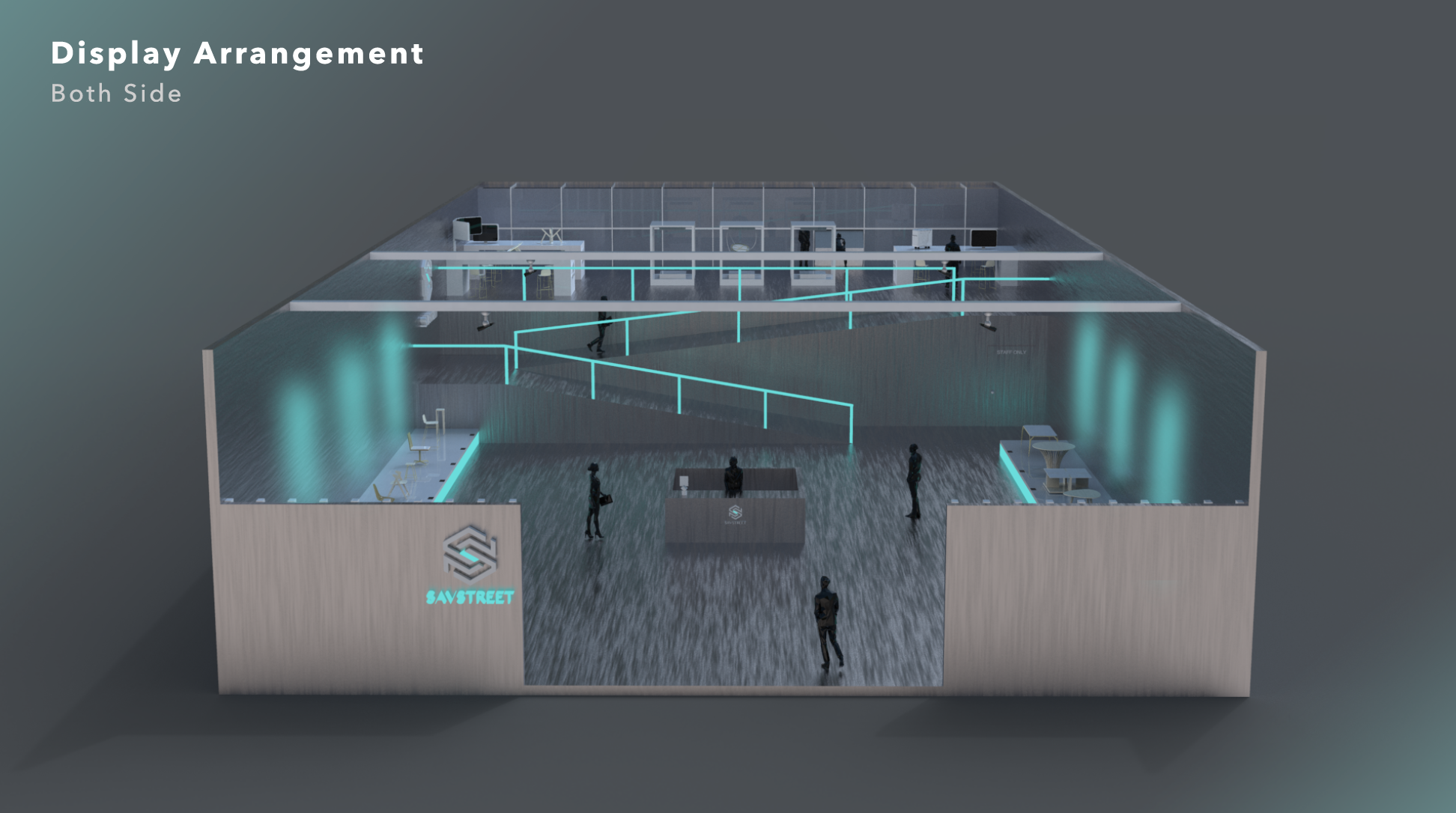
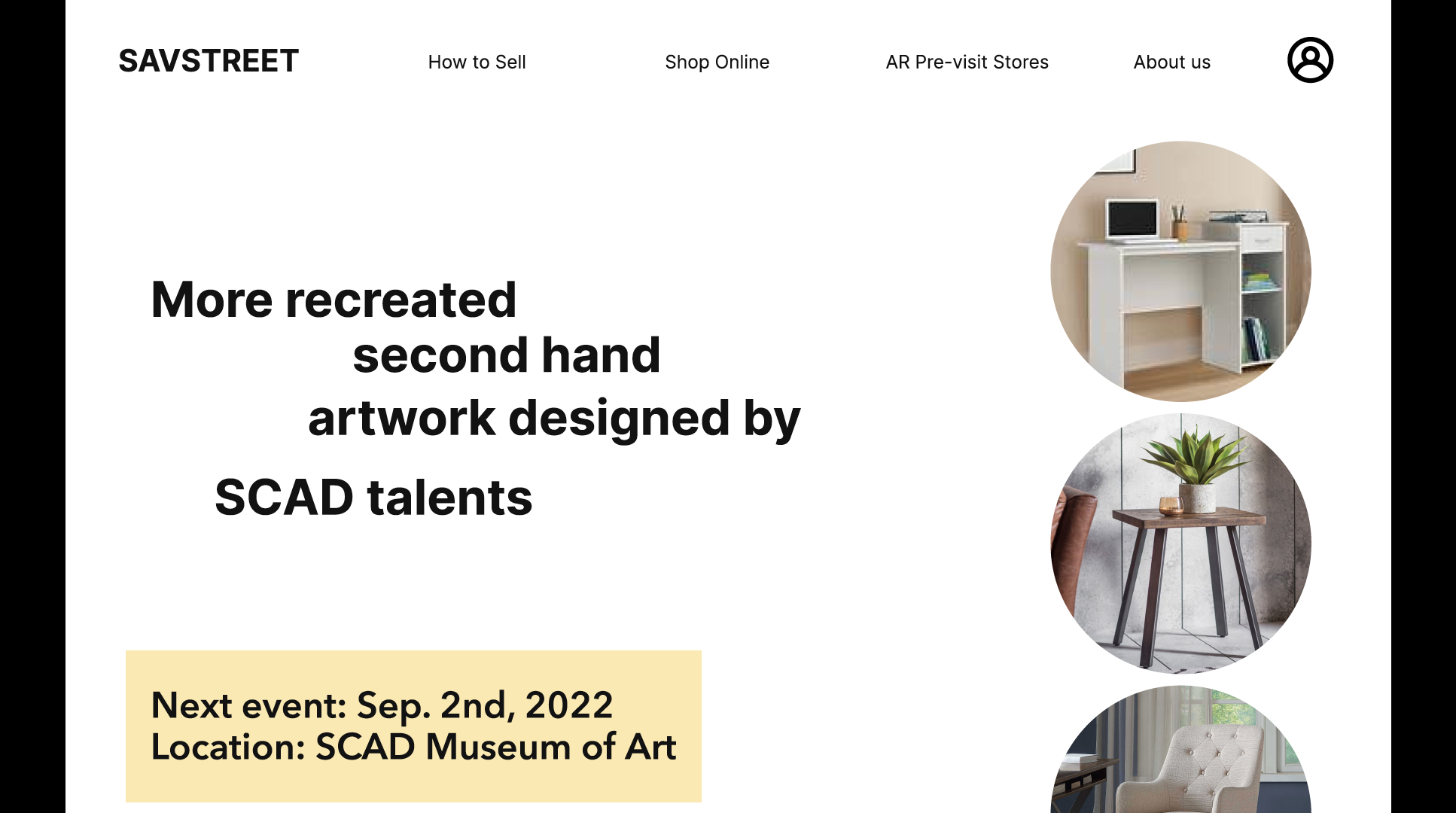
The first learnings came from expert and colleague feedback. Deploying a full physical location was a big capital expense upfront, and with marginal analysis we decided to switch to a pop-up event strategically deployed in high-revenue season and rely on a simple website experience to support the rest of the season.
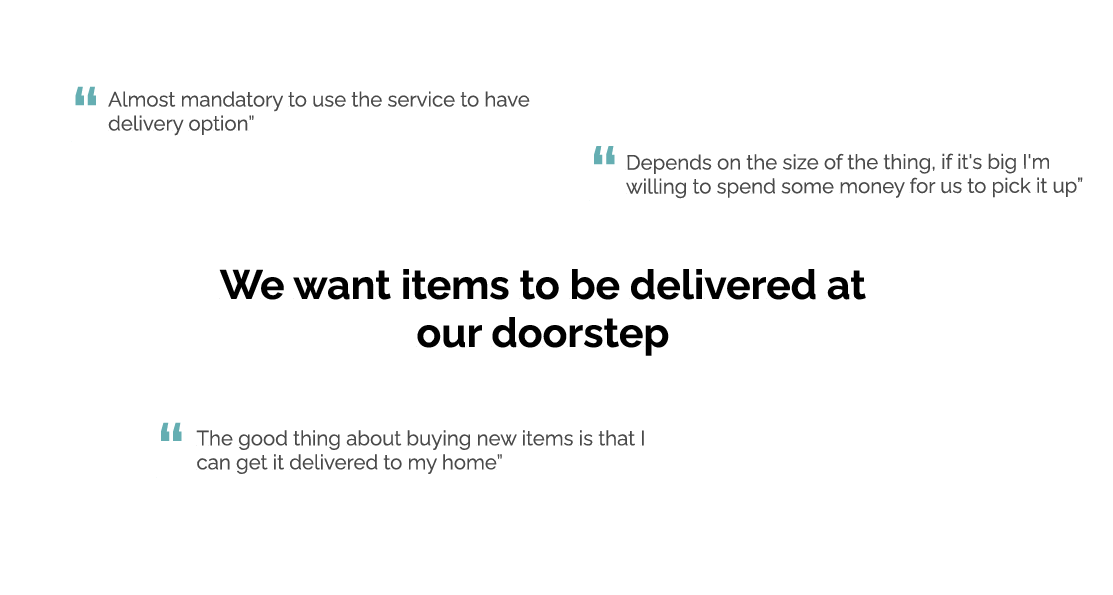
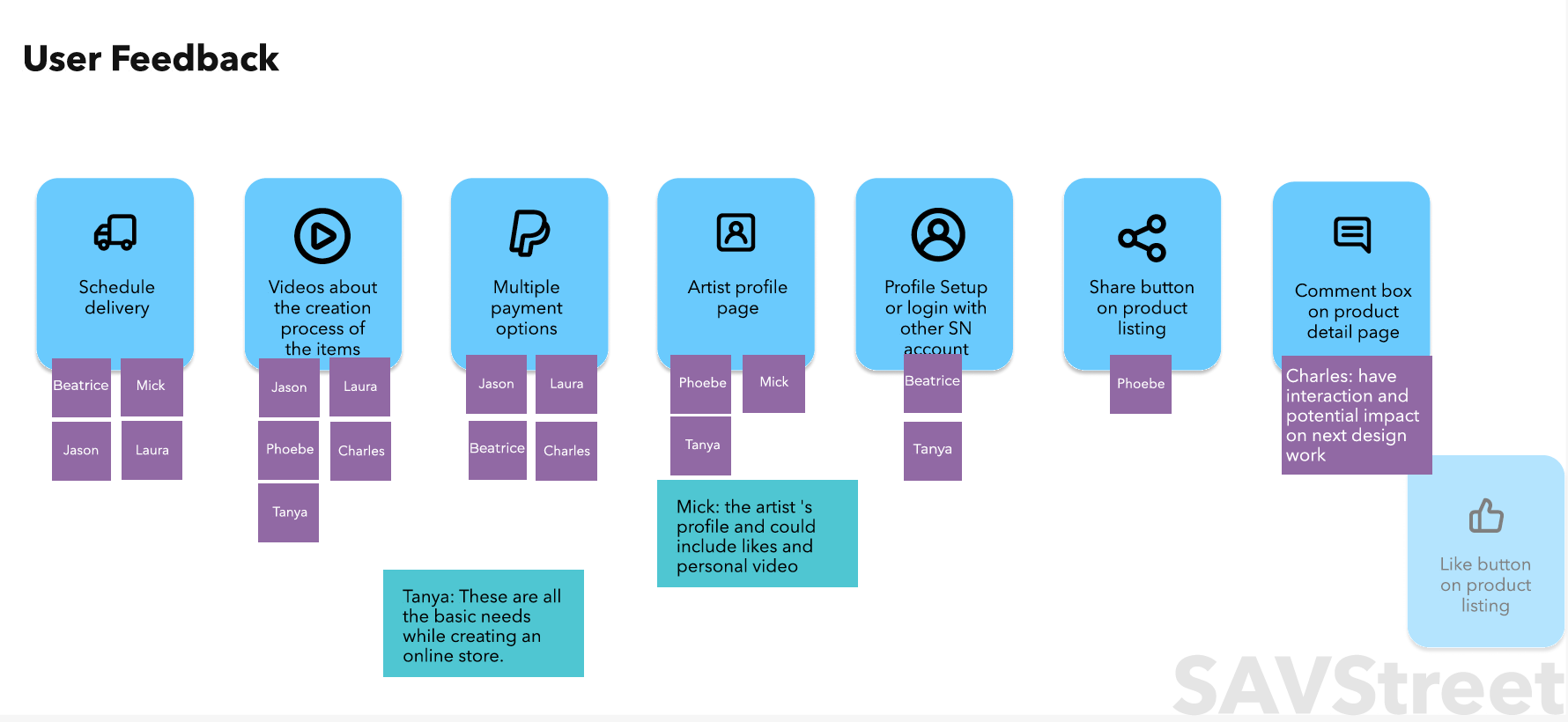
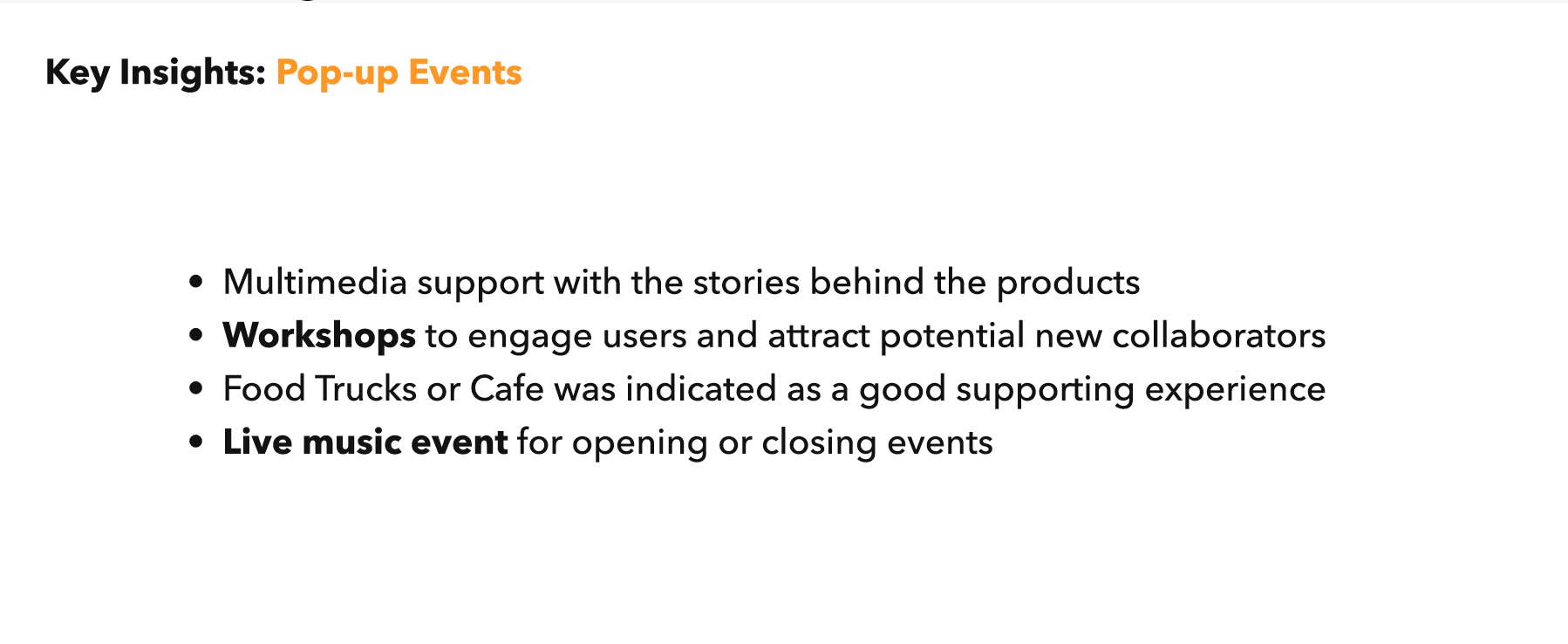
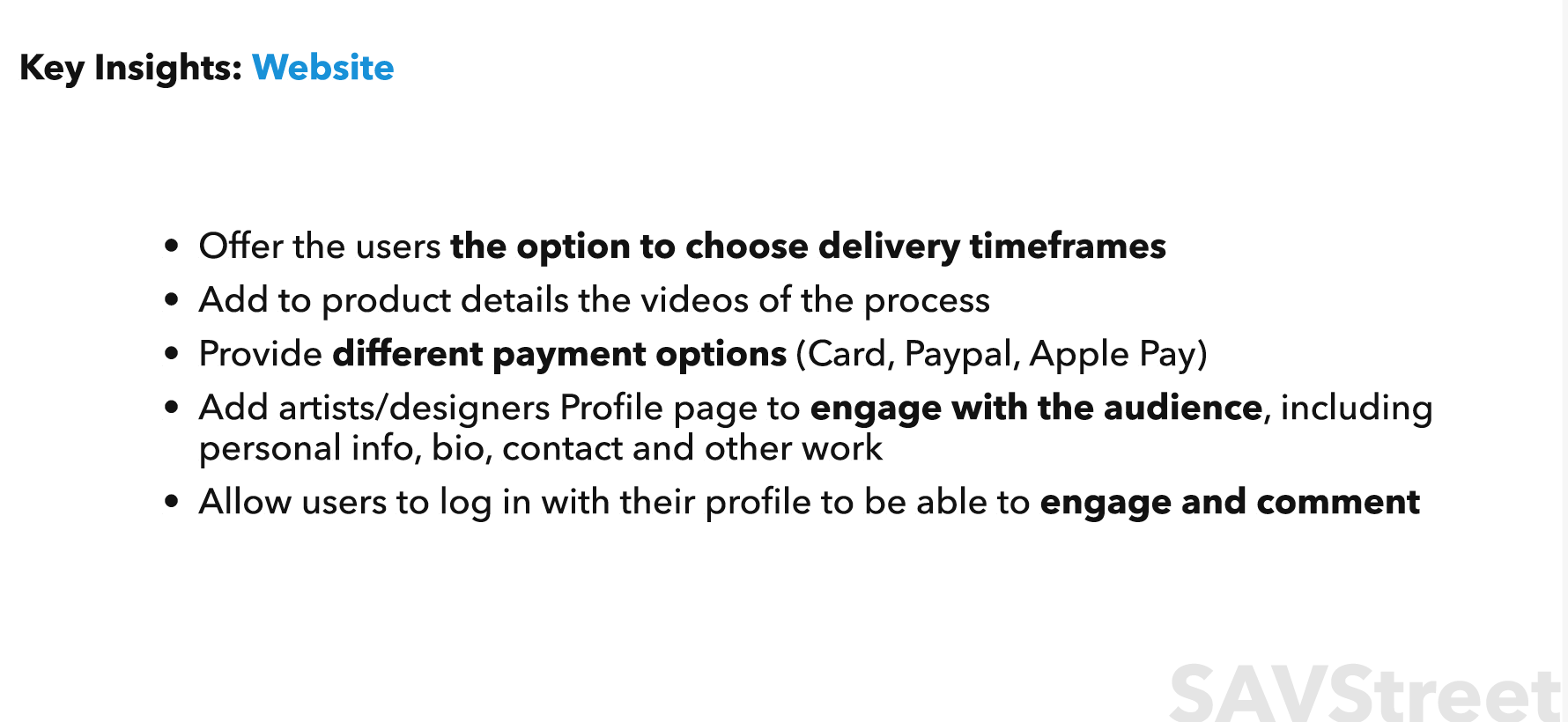
User testing was used for both physical and website prototypes to get information about the features that our proposition should include:
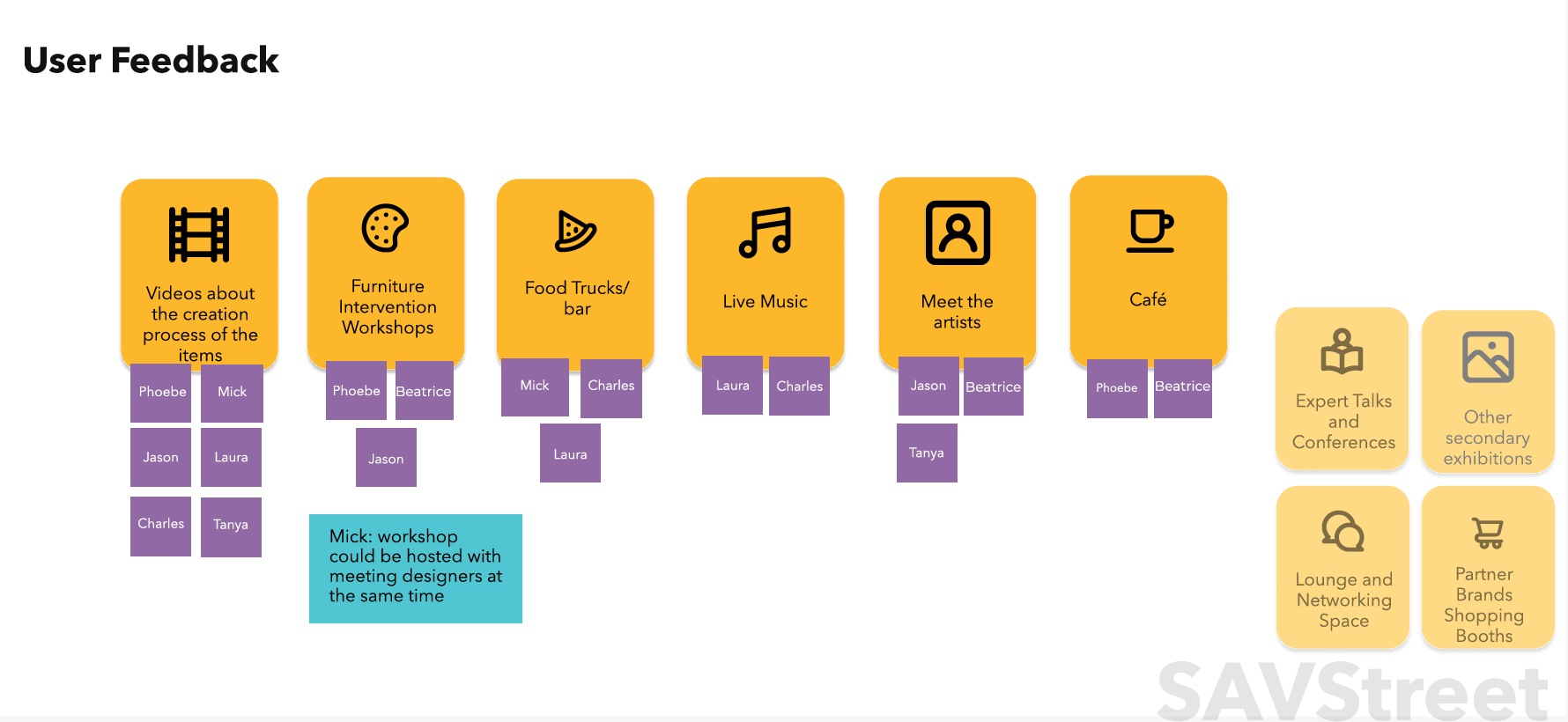
In-ground Offering
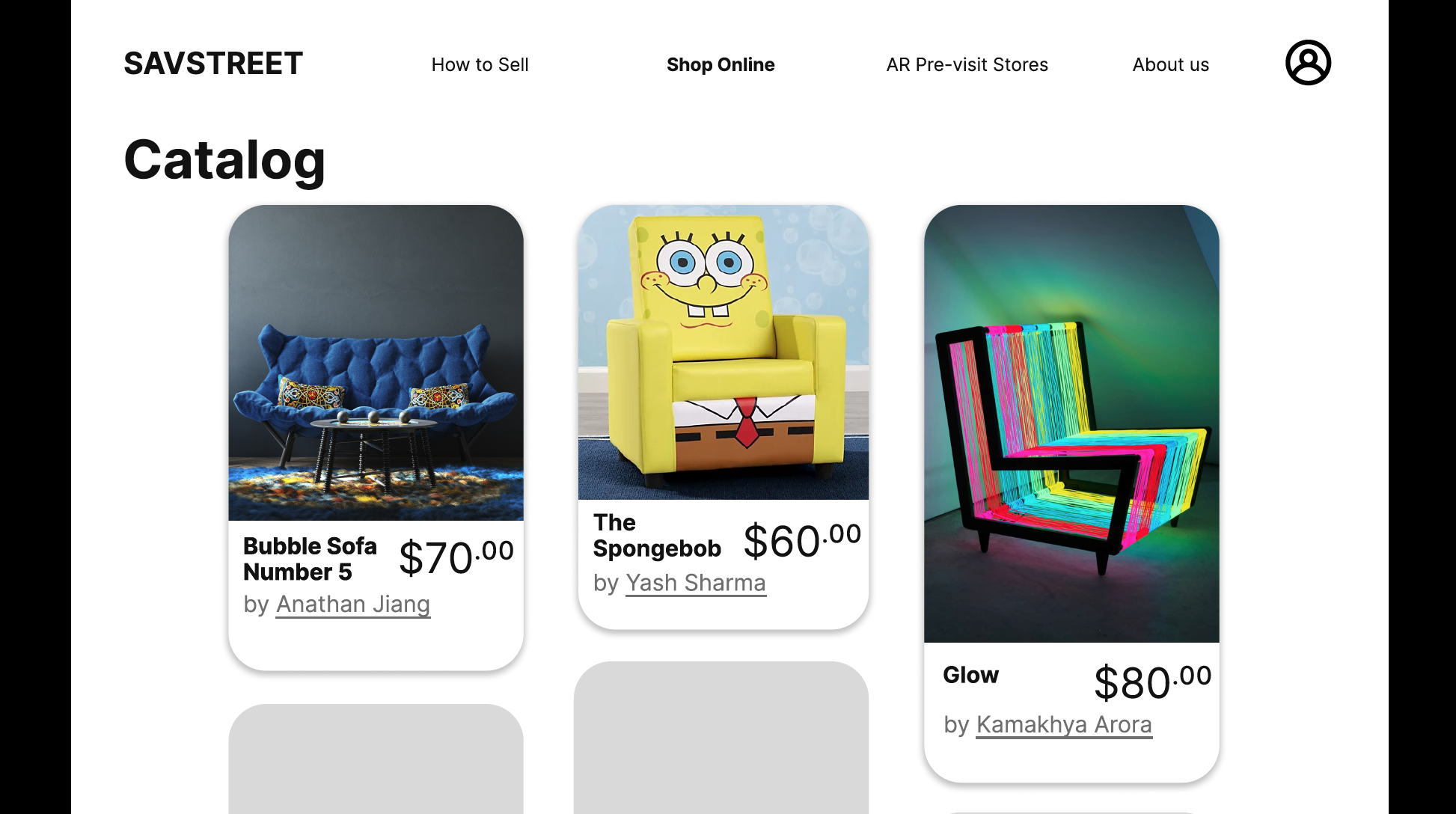
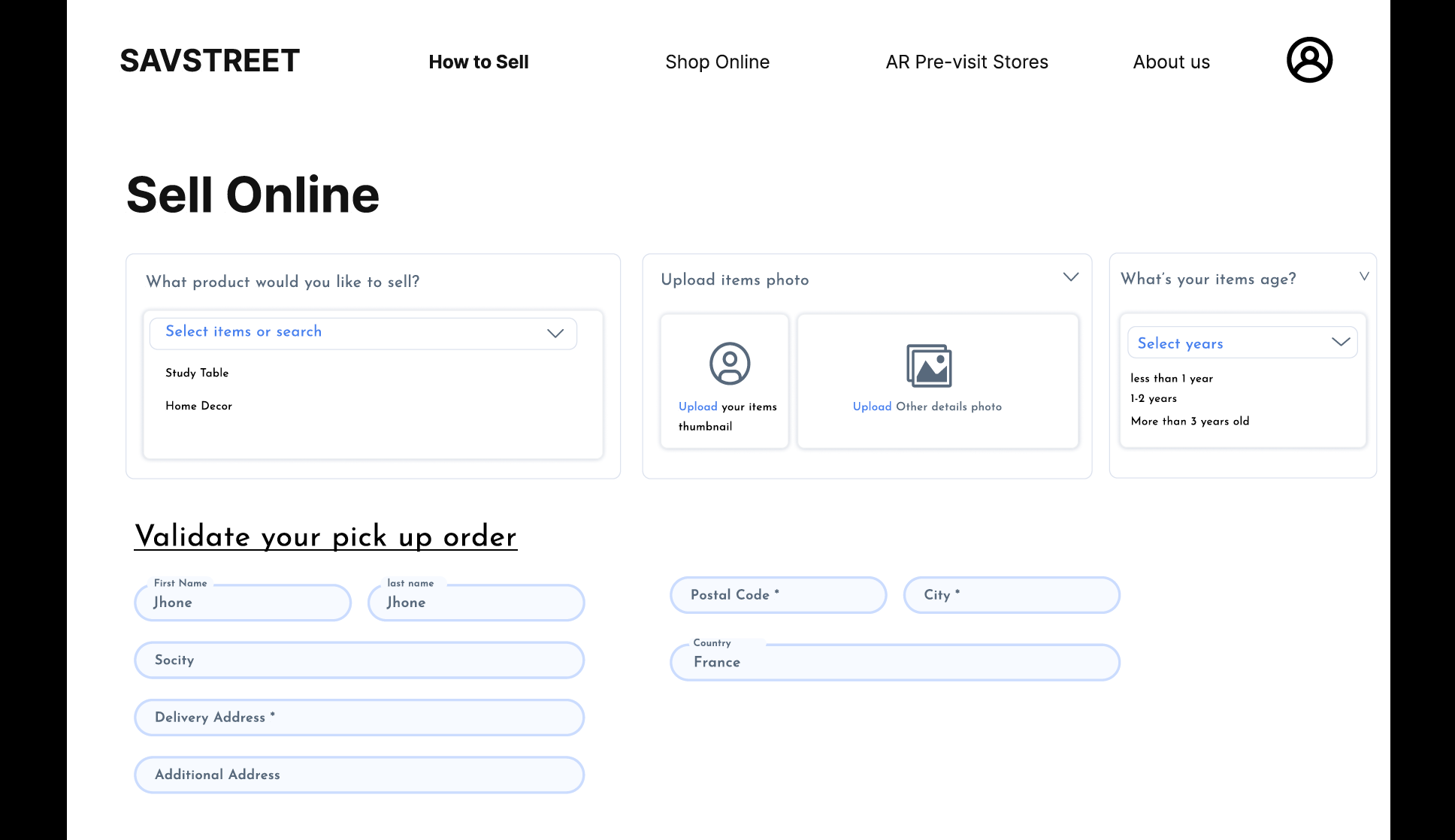
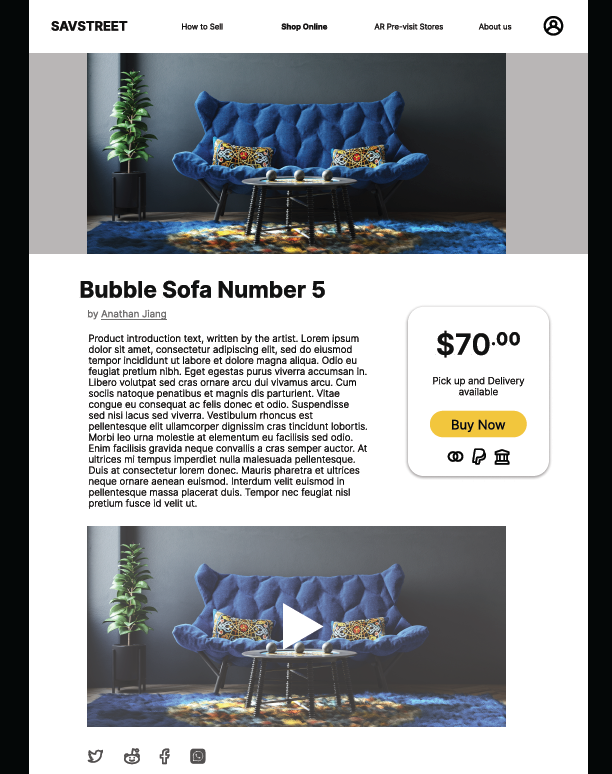
Online Offering
Final Prototypes, Business Model and Value Proposition